Flax Eggs: A Multi-Tool for Vegan Baking

In the magical world of vegan baking, there’s one unsung ingredient that stands out, and it is a humdinger—it gives incredible texture, it binds batters, and it is a source of joy for those who want to make an incredible plant-based cake. Let’s wander into the fantastical world of flax eggs and explore how they’re redefining the art of plant-based baking.
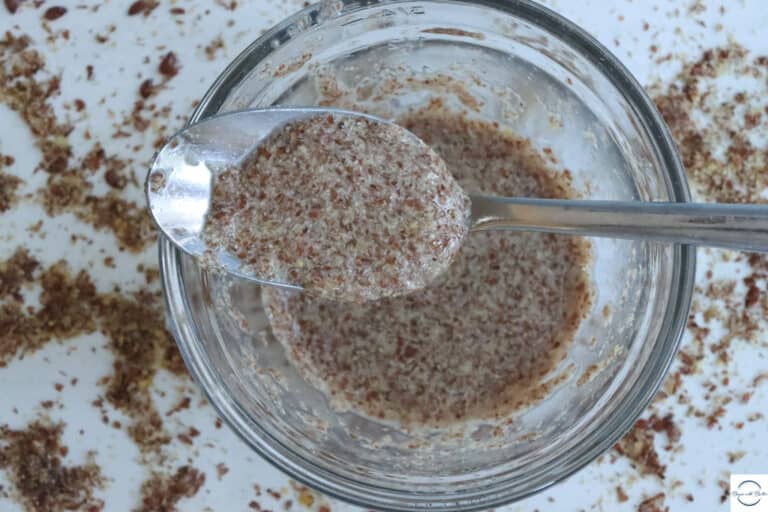
this is a photo of a completed flax egg
This lil’ miracle is a must for vegan baking.

Whether you’re a seasoned vegan baker or just curious about flax eggs, this post has everything you “knead” to get cracking and make your vegan desserts rise to the occasion.

What are Flax Eggs, Anyway?

Flax seeds, my baking besties, are a tiny but mighty source of dietary fiber, protein, and omega-3 essential fatty acids (that’s the good stuff, trust me). Chock-full of these healthy components, they’re not just adding structure to your vegan cakes, they’re also packing them with a nutritional punch.

I get it. We’re not making diet food. But I wanted to share that there are health benefits to flax eggs too. 😂

Made by simply combining water with flax meal, flax eggs mimic the binding properties of traditional chicken eggs.
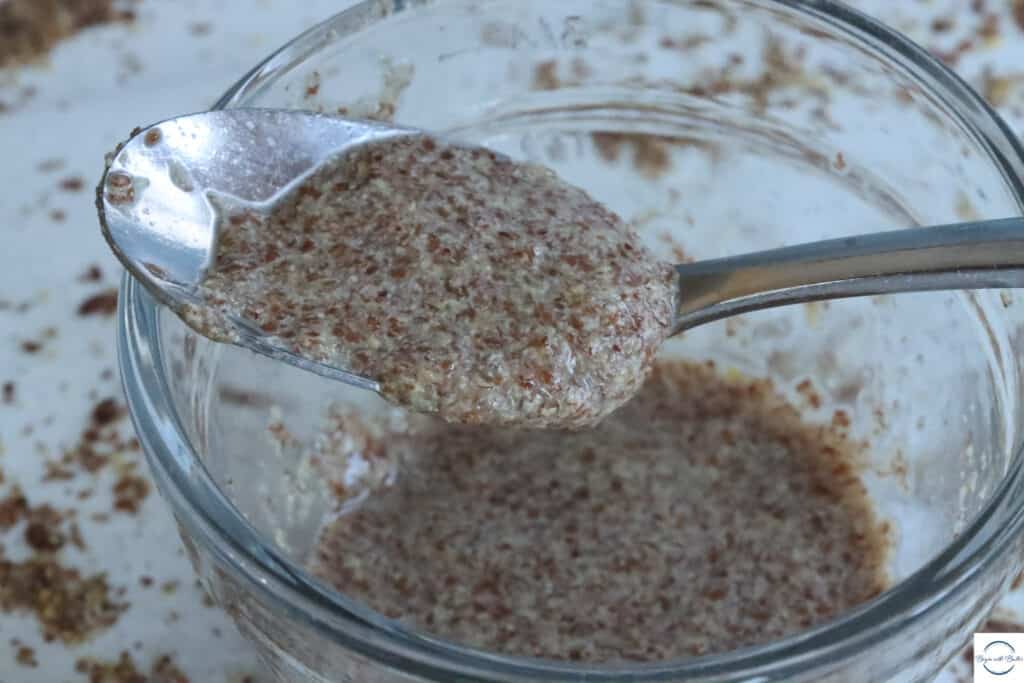
this is a photo of a completed flax egg

Why Should You Give a Flax?

Because of their magical binding properties, flax eggs are an egg-cellent (sorry, not sorry 😝) option for vegans, those with egg allergies, or anyone who has ever run out of chicken eggs (don’t judge…but that person is me). Who knew that such an unassuming little seed could pull off such a feat?

Plus, they’re high in omega-3 fatty acids and fiber, so your sweet treats are a little more guilt-free. Look, Vegan Snickerdoodle Pound Cake will never be health food, but it can be egg-free!

The Shelf Life of Flax Seeds: Short but Sweet

Though flax seeds have a short shelf life once opened, unopened packages can last up to a whole year in your pantry. So, unless you’re a commercial vegan baker, you don’t need to buy huge bags of flax seeds; if your local grocery store sells it in the self-serve aisle, that’s your best bet.

When you grind flax seeds into flax meal, the shelf life takes a bit of a dip (and not the yummy kind). Typically, flax meal can stay fresh for up to a week in your pantry, but if you want to play it safe, go ahead and pop it in the fridge, where it’ll be good for up to a month.

If you’ve had an open bag of flax seeds in your pantry for over a month, it’s probably time for a little refresh. Remember, fresh is best, so if that flax has been hiding in the back of your pantry, it’s time to give it a courteous farewell and get a new batch for your fabulous vegan baking adventures!

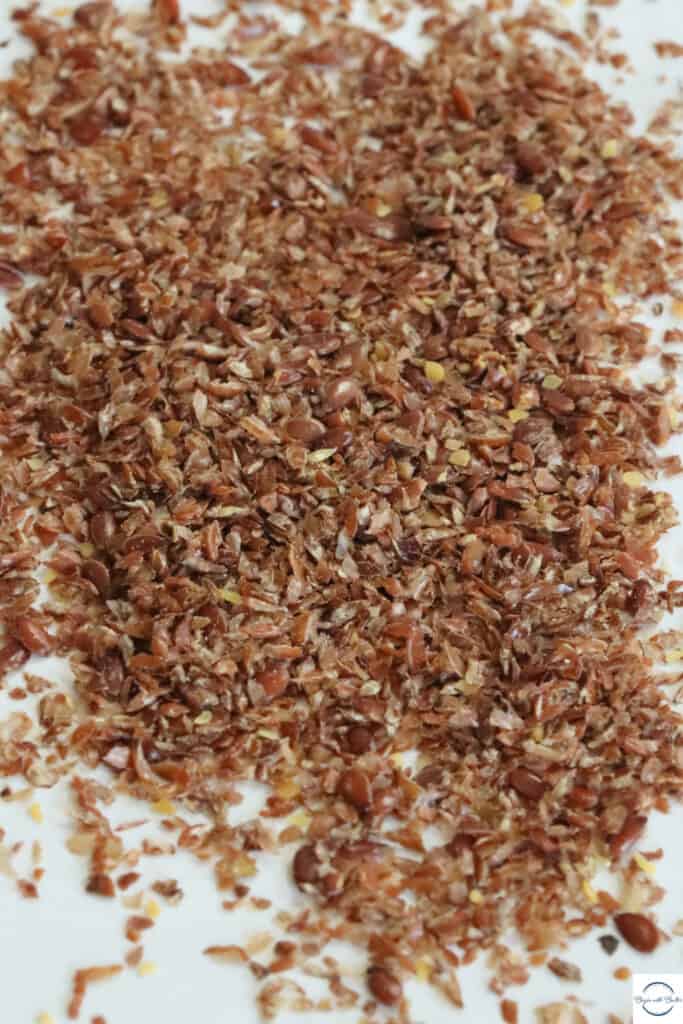
If you’re unsure about the difference between flax seeds and flax meal, take a look here:
Making Your Own Flax Eggs at Home

The first thing that you need to remember when making flax seeds is that you need flax meal, and not full flax seeds. You can either purchase pre-ground flax meal (or, as some brands call it, “milled flax seeds”), or you can grind flax seeds with your coffee grinder, blender, or mortar and pestle until they reach a fine, flour-like consistency.

** Pre-Ground Flax Meal, a Note: Pre-ground flax meal will almost always have a number of whole flax seeds in it. You can either sift out the whole flax seeds with a fine mesh strainer, or you can use a mortar and pestle to get everything to the same consistency. If you’re purchasing ground/milled flax seeds, my guess is that you’re looking for convenience, so a fine mesh strainer is the way to go!**

For every egg you need, just mix one tablespoon of ground flaxseed meal with 2.5 tablespoons of water. Let it sit for ten minutes, and it will come together as a goopy, golden-brown entity that’s ready for its role in your creation. This goop is, first and foremost, an important binder for your baked goods.

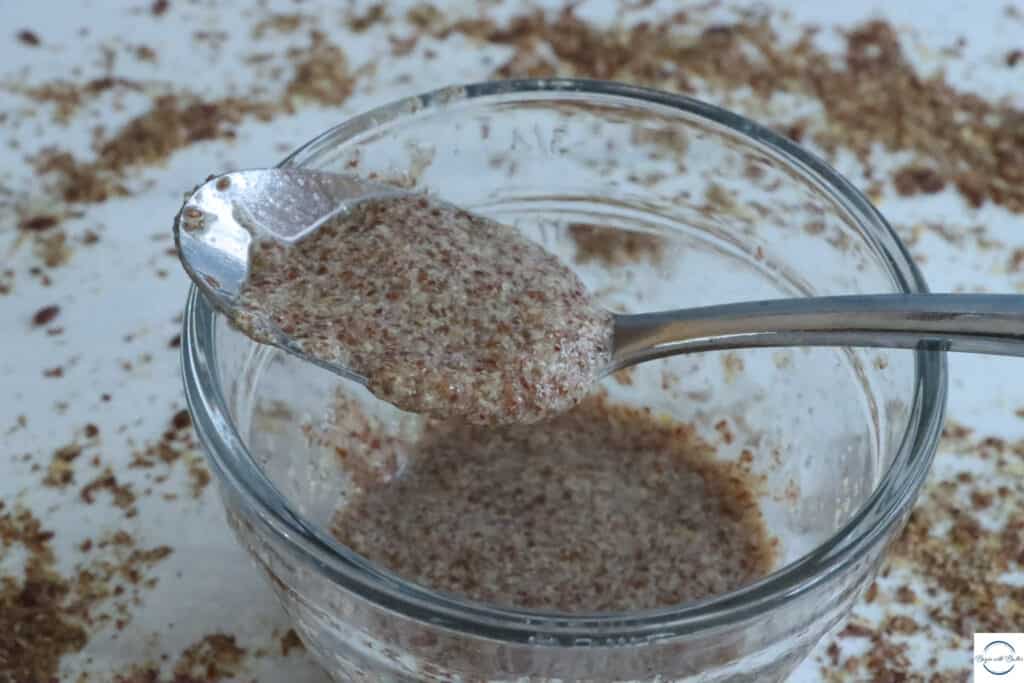
How do you know if the goop is good? Well, it should be the consistency of egg whites, and it should look like this:

(sorry for the freakishly large image 😩)

Texture Talk: Flax Eggs and Vegan Cakes

In vegan baking, as in traditional baking, texture is everything. If a vegan egg doesn’t provide the same binding effect that chicken eggs provide, vegan cakes can end up a little crumbly. Flax eggs bring a subtle chewiness and structural integrity, transforming a potentially dry or grainy cake into a masterpiece of moistness.

But Can I Sub Flax Eggs for Chicken Eggs?

In most recipes, the answer is a resounding yes; it usually a 1:1 replacement. To replace a chicken egg with a flax egg, simply whisk up one of these golden globs and you’re good to go. Just remember, like any vegan substitute, it’s all about finding balance. Some trial, a little error, and a whole lot of tasting will help you nail it. ❤️

There is some thought in the baking world that you can only sub up to two flax eggs in a recipe. With my vegan baking recipes, I successfully used up to FIVE flax eggs, and am happy to report that the results have consistently been delightfully delicious.

Versatility that Takes the Cake

Flax eggs know no bounds. From muffins to fluffy pancakes, they seamlessly fill the role of their avian counterparts. But perhaps their true pièce de résistance is in the pound cakes…

Pound Cakes that Pound with Flavor, Not Eggs

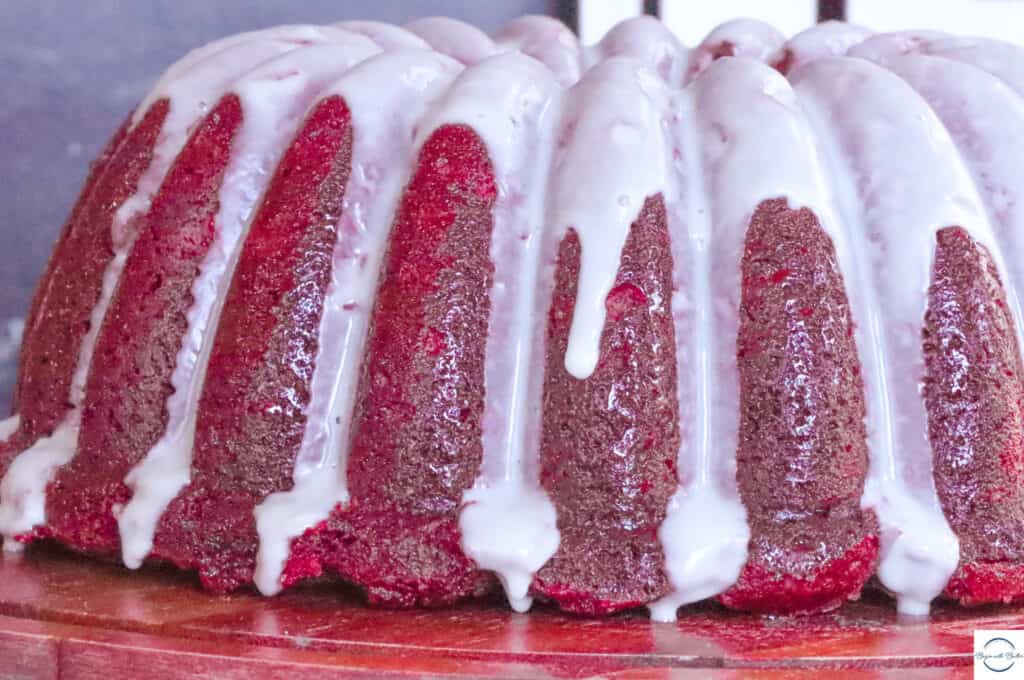
Vegan Red Velvet Pound Cake

For when you need something rich and velvety but you don’t want to use chicken eggs. This recipe is proof that some of the best reds are vegan. 😘
Vegan Snickerdoodle Pound Cake

Those cinnamon-sugar flavors in a cake that’s wonderfully dense yet tender—thank you, flax eggs, for making it possible.
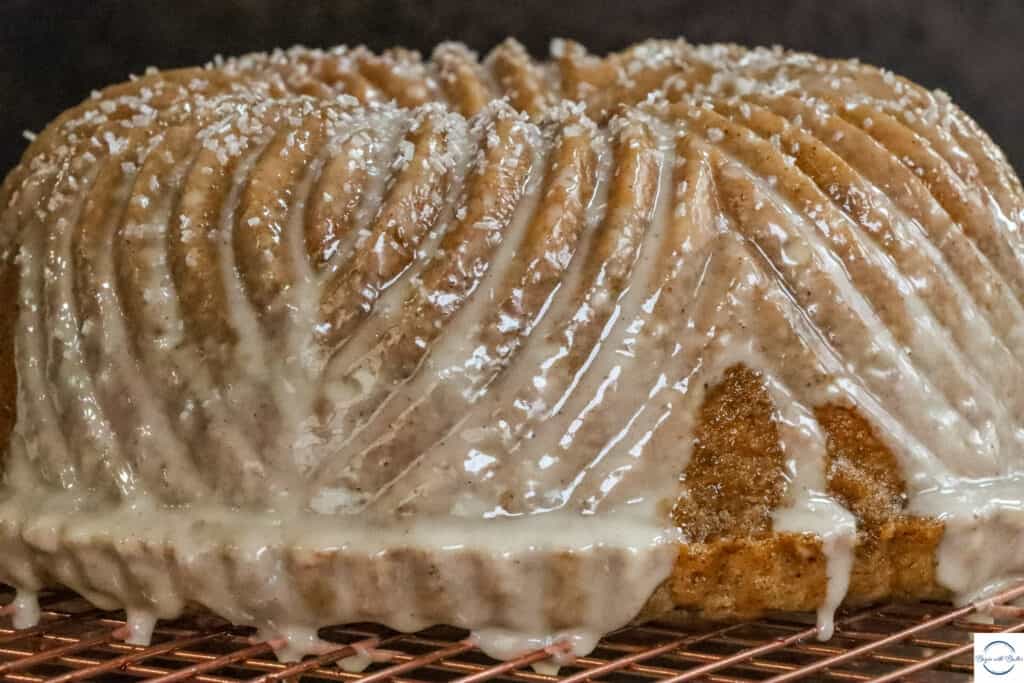
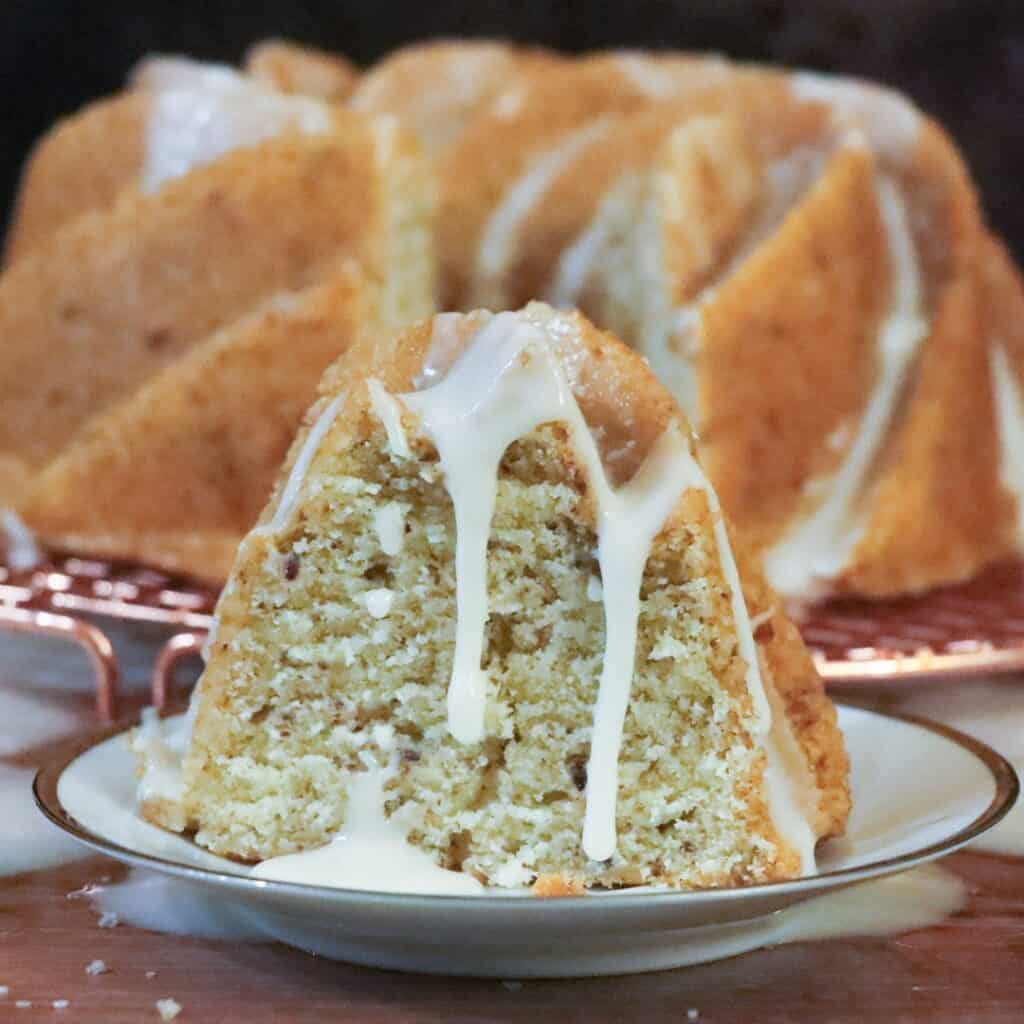
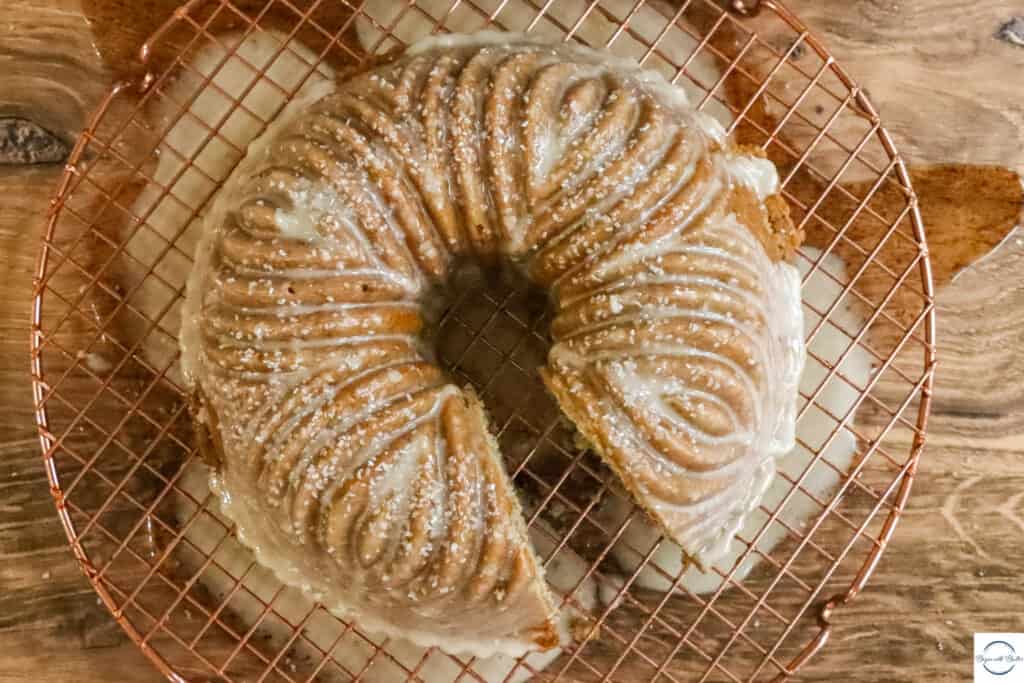
this is a photo of vegan snickerdoodle pound cake

Vegan Lemon Vanilla Pound Cake

When life gives you lemons (and flax meal), make the most lip-smackingly good lemon cake this side of non-vegan desserts.
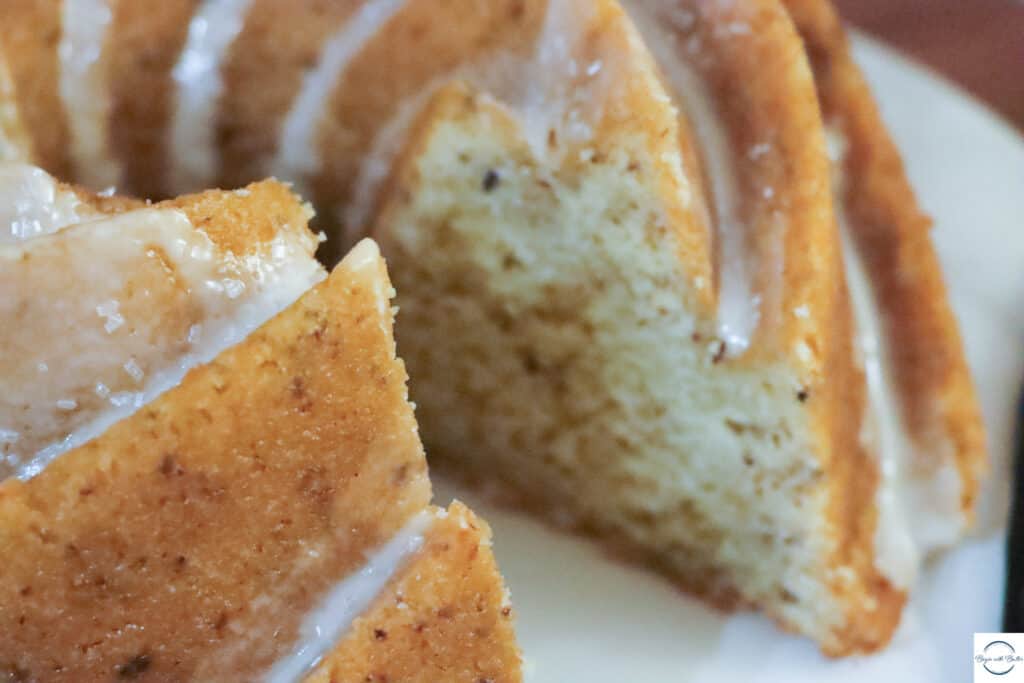
this is a photo of vegan snickerdoodle pound cake

Flax Eggs vs. Other Vegan “Eggs”: A Friendly Face-Off

Now, you might be asking yourself, “Why flax eggs? Aren’t there other non-chicken eggs out there?” And the answer is yes! Applesauce, mashed banana, and even silken tofu can play the part of eggs in your vegan recipes. However, none of these offer the vegan baker the multiple uses that the flax eggs offer.

Applesauce, with its sweet, fruity flavor, is a popular egg substitute that brings a moist, dense texture to baked goods. But here’s the catch – that sweetness will often significantly alter the flavor profile of your recipe. And while it’s great for moisture, applesauce doesn’t quite have the same binding power as flax eggs.

Next we have the lovely mashed banana. It’s a classic choice as an egg alternative, especially when you’re going for a sweet, moist finish. But here’s the scoop, my cake-loving companions. While bananas can bring a lovely moistness to your bakes, they again don’t quite have the same binding magic as flax eggs. Plus, banana again brings its distinctive flavor to the party, which, delicious as it may be, might not be the taste you’re after for every recipe.
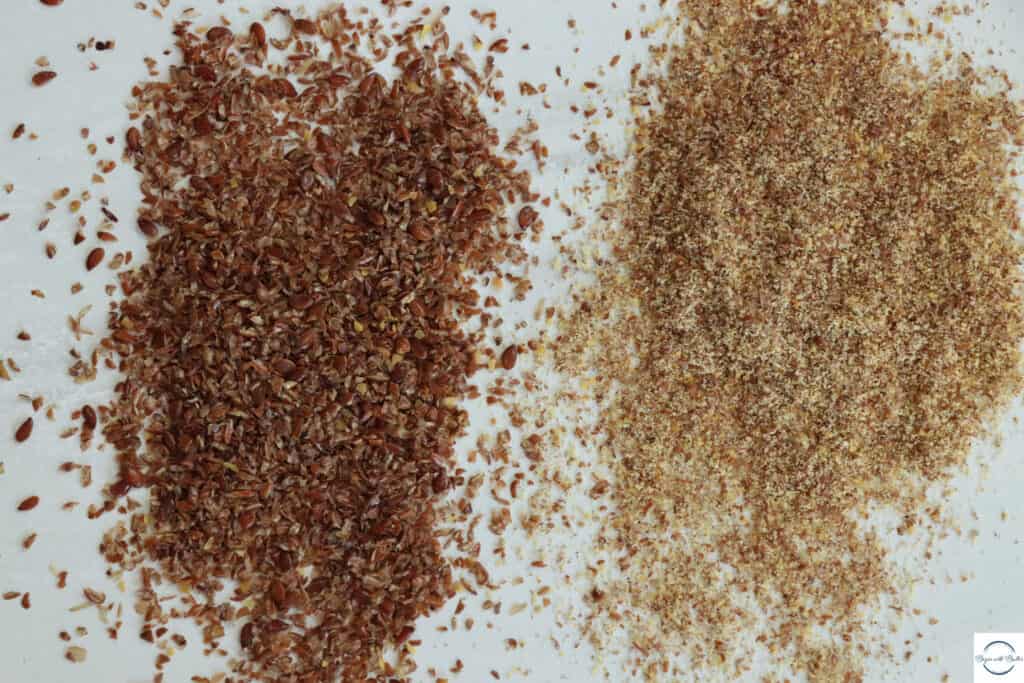
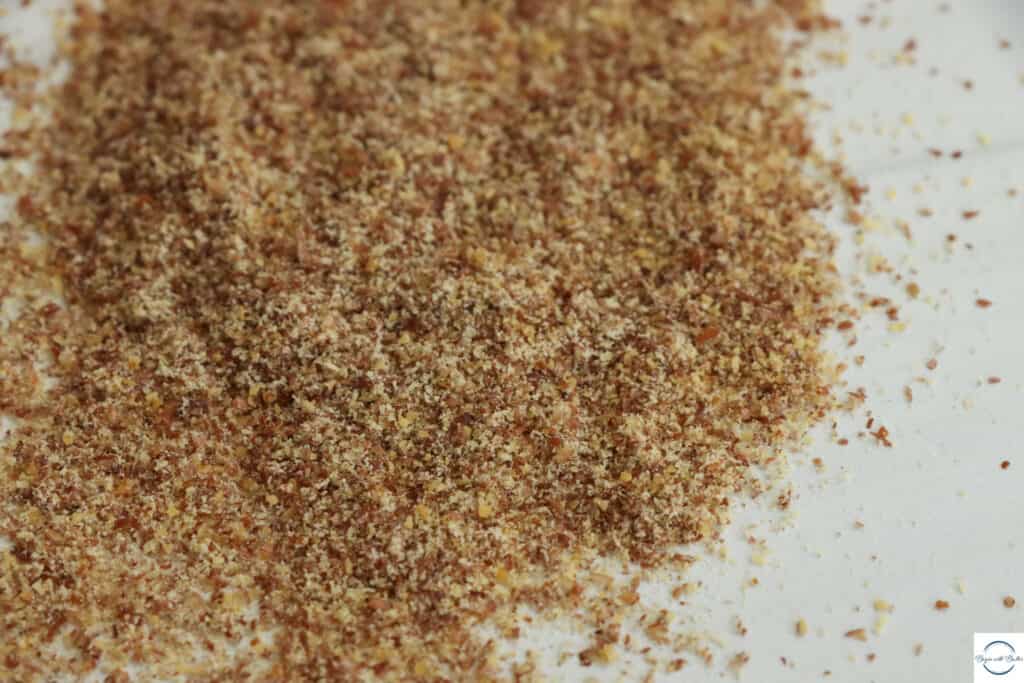
this is a side-by-side photo of whole flax seeds and milled flax seeds

Alright then, onto the silken tofu. This mild-mannered marvel is often used as an egg substitute in denser cakes and brownies. But here’s the scoop – while silken tofu can bring an enviable creaminess to recipes, it again lacks the binding power that flax eggs flaunt so effortlessly. So if you’re facing the “to tofu or not to tofu” conundrum, flax eggs are a safe, reliable, and pantry-friendly bet to bring that perfect balance of moistness and structure to your vegan bakes. 🍰

TL;DR version: nothing binds like flax eggs, and that is a major requirement of eggs in any baking recipe.

Tips and Tricks that Crack the Code of Flax Eggs

FAQstastic: Commonly Asked Questions

Why do we need to grind flax seeds into flax meal to make flax eggs?

The outer layer of a flaxseed is quite hard and tough, and does not really contribute the necessary binding properties to the flax egg. That’s why we grind the seeds into flax meal. Doing so breaks down that stubborn outer shell, releasing all the good stuff inside – the nutrients and the oils that give flax eggs their binding power. So, in essence, grinding flaxseeds into meal ensures that your baked goodies get the maximum benefit from this super-seed and help mimic the binding properties of traditional eggs. Remember, patience is key here – those little seeds can be stubborn, but your efforts will be rewarded in the delicious end result!

Can I use a mortar and pestle to grind my flaxseeds into flax meal?

Absolutely! If you’re in a pinch or just love the old-school charm, a mortar and pestle can be a great way to grind flaxseeds into meal. Simply toss the seeds into the mortar, grab that pestle, and grind away until you reach the consistency of flour. But, remember this: flaxseeds are a bit stubborn, so arm yourself with a little patience. Once you’ve got your homemade flax meal, you’re all set to whip up your flax eggs.

What’s the ideal flax meal to water ratio?

One tablespoon of flax meal to 2.5 tablespoons of water. This maintains the viscous texture that marks a quality flax egg.

Can I use flax eggs as a 1:1 replacement for chicken eggs in any recipe?

A: Great question! For many baking recipes, it’s a very safe bet. You can replace each chicken egg with one flax egg (1 tablespoon flax meal mixed with 2.5 tablespoons water). But remember, every recipe is its own unique adventure in the kitchen. Some might need a little tweaking. So, keep your taste buds at the ready and don’t be afraid to experiment. After all, a little culinary curiosity is the key to cracking the code of perfect vegan baking.

How long do flaxseeds last?

Great question, my fellow flax enthusiasts! Whole flaxseeds in an unopened container can stay fresh for up to a year if you store them in a cool, dark place. But once they’re ground into flax meal (the form we use for our superstar flax eggs), they can go rancid more quickly. So, if you’re grinding your own flaxseeds—or if you’ve bought pre-ground flax meal—keep it in an airtight container in the fridge. It’ll stay fresh there for about a month. And remember, a fresh flax egg is a happy flax egg!

Can I make flax eggs in advance?

Definitely! Mix up a batch and store it in the fridge for up to a week. It’s like having a loyal egg carton that never cracks or gets its contents all over the kitchen floor. Unless the container is glass. And that glass container falls to the floor. 😑

Are there any flax egg pitfalls I should avoid?

Don’t skimp on the mixing or the resting time. The flax egg needs a good mix and about ten minutes to thicken. Don’t be afraid to stir a few times during the rest time to! Also, ensure you’re using flax meal, not whole flaxseeds. The meal has already been milled, which really helps the egg impersonation. If you can only find flax seeds, it’s time to give that coffee grinder a whirl!

Where can I find flax seeds?

You can find them at your local grocery store! I prefer the Bob’s Red Mill brand (**please note, this is an affiliate link**).

Conclusion

Flax eggs are not only an amazing baking ingredient in the vegan baker’s toolkit, but also a small step you can take towards increasing your baking arsenal. So go on, whisk up a batch, raise a spatula, and let your next sweet adventure begin—with flax eggs leading the charge!

Remember, the kitchen is your playground, and each recipe is an invitation to play. So play with your food, experiment with flax eggs, and always bake with love. It’s the most important ingredient, after all.

Stay tuned for more tips, tricks, and all-around baking awesomeness. And if you have any topics you’d like to see covered or questions that are on the tip of your batter-dipped tongue, let me know! I’ll be right here, ready to assist, educate, and egg-cite your baking journey.

Cheers to all the bakers—veterans, rookies, and everyone in between—who dare to elevate their desserts to new (eggless) heights. The flax egg is at your service!
Panna Cotta with Strawberry Sauce

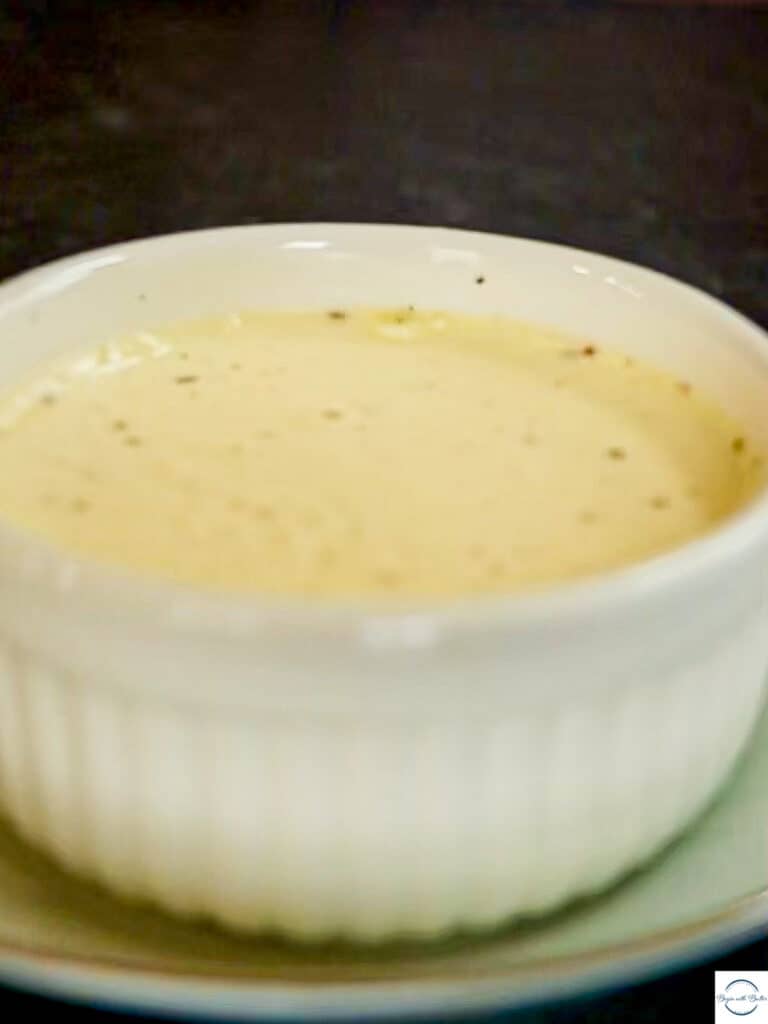
Hey Friends! Valentine’s Day is on the horizon, which means that love is in the air. 😊 ❤️ What better way to celebrate Valentine’s Day this year than with this incredible Panna Cotta with Strawberry Sauce, a dessert that positively oozes romance? In this special blog post, you’re to be whisked away on a journey to create this absolutely sensational dessert. It’s so simple, you might not believe me when I tell you that it’s one of the most decadent things I’ve ever eaten.

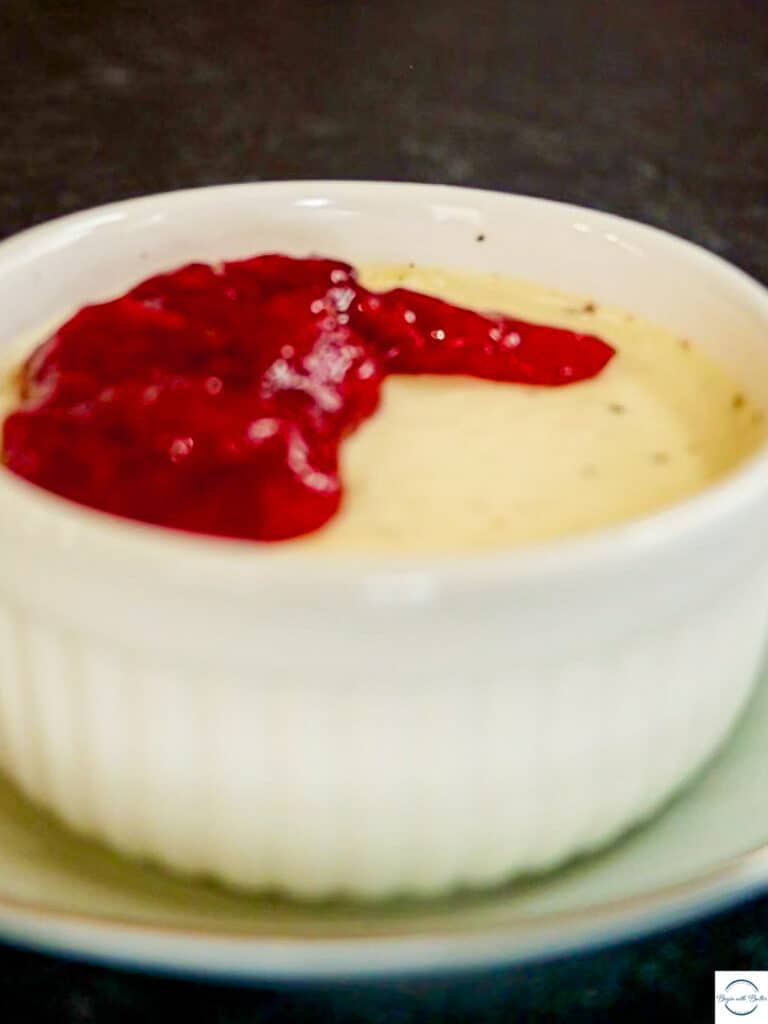
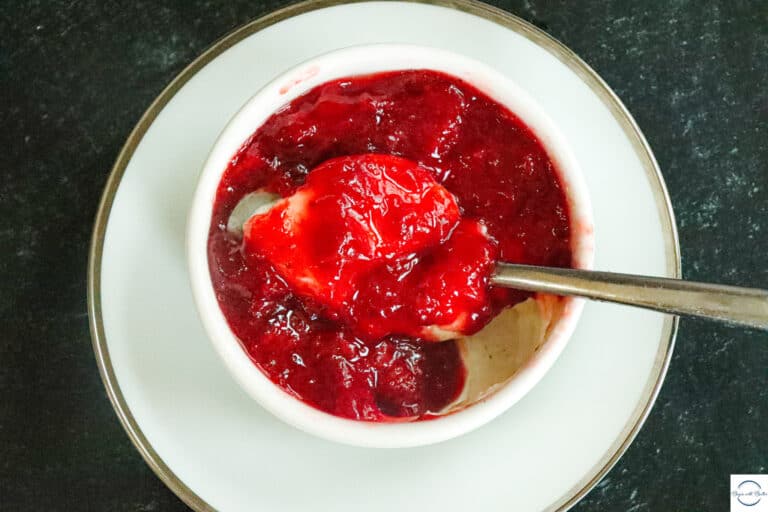
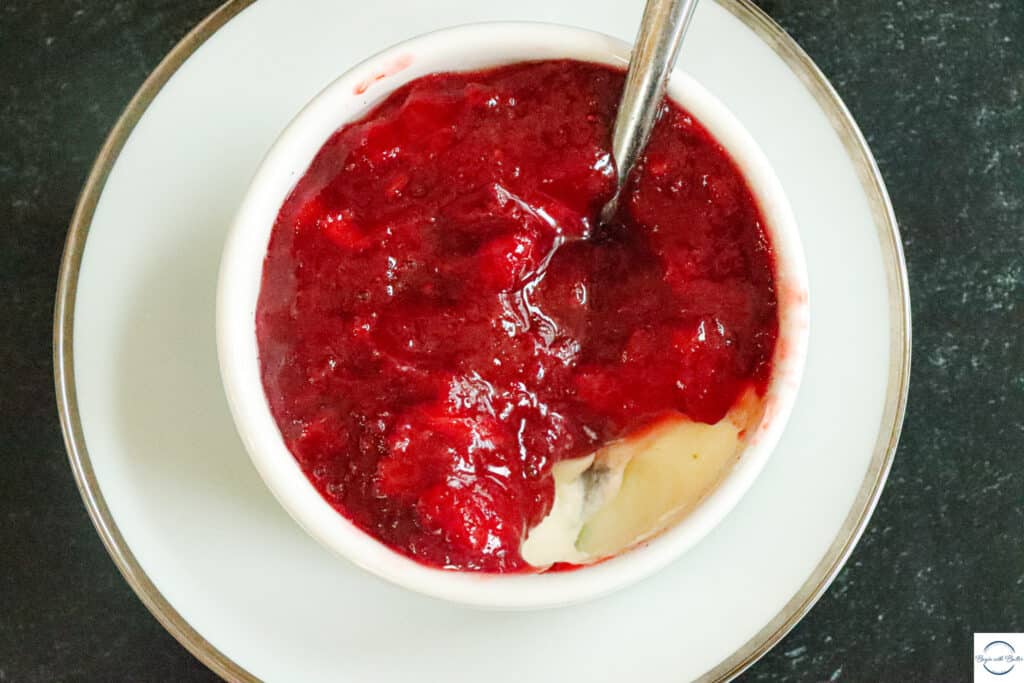
This is a photo of Panna Cotta with Strawberry Sauce.

Picture this: a candlelit dinner, soft music playing in the background, and the exquisite taste of homemade Panna Cotta with Strawberry Sauce, shared with your special someone. So, let’s dive into the art of crafting a dessert that will make your Valentine’s Day truly unforgettable.

What is Panna Cotta?

Panna Cotta, the silky Italian dessert that has become synonymous with romance, boasts a history as rich and smooth as its texture. Originating from the picturesque regions of Northern Italy, particularly Piedmont, this iconic treat’s roots can be traced back to the early 20th century.

The name “Panna Cotta” translates to “cooked cream” in Italian, reflecting its essential ingredients and preparation method. The dish likely evolved from traditional Italian custards, with a distinctive twist that sets it apart.

This is a photo of Panna Cotta.

The dessert’s velvety consistency and delicate flavor soon captured the hearts of food enthusiasts worldwide. Panna Cotta became a staple in romantic dinners and special occasions, celebrated for its ability to evoke a sense of indulgence and sophistication.

As the years passed, Panna Cotta continued to evolve, with chefs experimenting with diverse ingredients and artistic presentations. Today, it stands as a symbol of love and romance, gracing tables on Valentine’s Day and other amorous celebrations. With its decadent allure and timeless charm, Panna Cotta remains a dessert that sweetens the most intimate moments in the tapestry of culinary history.

Panna Cotta Ingredients

  • Heavy Cream: Choose the richest heavy cream you can find. You’re aiming to melt your person’s heart with a velvety texture.
  • Sugar: The sweetness from this dessert comes from granulated sugar.
  • Gelatin: Gelatin is the magic ingredient that creates panna cotta’s trademark silky-smooth consistency. Let it work its charm and bring your dessert to life.
  • Vanilla Bean or Extract: Vanilla bean truly elevates the flavor profile of this super simple dessert. You can also opt for pure vanilla extract if you’re unable to source vanilla beans.
  • Strawberry Sauce (optional, but highly recommended): Friends, I added The Best Strawberry Sauce to the blog a while ago, and it pairs perfectly with this delectable dessert. It adds a beautiful burst of color and acidity to your panna cotta.
This is a photo of Panna Cotta with Strawberry Sauce.

How to Make this Panna Cotta with Strawberry Sauce

Step 1: Bloom the Gelatin

Begin by blooming the gelatin in cold water or milk. This sounds difficult, but it simply means to pour the gelatin in a single layer over the cold liquid, and allow it to soften and prepare for its starring role in your panna cotta.

Step 2: Warm the Cream, Vanilla Beans, Vanilla Bean Pod, Salt, and Sugar

In a saucepan, gently warm the heavy cream, vanilla bean (making sure to scrape all of those gorgeous beans out of the pod!), the vanilla bean pod, the salt, and the sugar over medium heat. Watch it carefully and warm it only until the sugar and salt dissolve. You do not want this to come to a boil, but you want to make sure there are no solids in your panna cotta.

Step 3: Incorporate the Bloomed Gelatin

Introduce the bloomed gelatin into the warm cream. Stir *gently* until the gelatin dissolves completely,

Step 4: Pour into Molds (or Heat-Proof Containers, Like Yogurt Jars or Ramekins)

Pour the Panna Cotta mixture into molds, and get ready for the hard part. The wait.

Step 6: Chill

Place the molds in the refrigerator and let your Panna Cotta set for at least four hours, but preferably overnight. I promise, Friend, that this dessert is worth the wait.

Step 7: The Grand Reveal

You can either unmold the panna cotta onto serving plates, or you can serve it right in the cute container. Either way, it’s a beautiful sight to see. To unmold, simply put the panna cotta into a small bowl with warm water to loosen the mold for about thirty seconds, then turn the mold over onto a dessert plate. It’s so impressive when done correctly, but you want to practice this before the big reveal.

The Strawberry Sauce

Once your panna cotta is done, you can add your strawberry sauce straight to the top. Use a little or a lot; that part is up to you! This strawberry sauce adds the perfect touch of tartness to this beautifully sweet dessert.

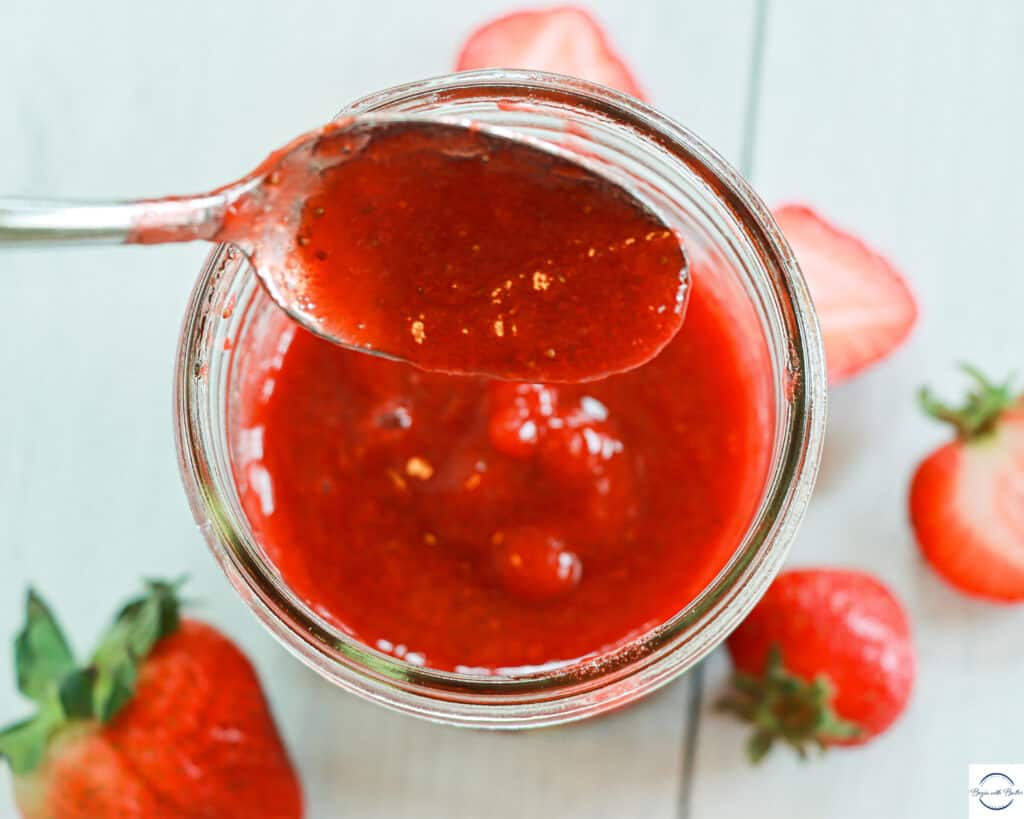
This Strawberry Sauce is the quintessential dessert topping that transforms a simple Panna Cotta into a symphony of sweetness. Crafted from ripe, succulent strawberries, this ruby-red elixir captivates with its vibrant hue and intoxicating aroma.

This is a photo of Strawberry Sauce.

The sauce begins with handpicked (or, if you live in a frozen tundra like me, frozen!) strawberries, bursting with natural sweetness and a hint of tartness. Meticulously simmered to perfection, the strawberries form a velvety concoction that promises to elevate your panna cotta.

As you spoon the strawberry sauce over the completed Panna Cotta, it cascades like a ruby waterfall, creating a tantalizing visual masterpiece. Each bite is an amazing dance of creaminess and fruity flavor, as the sauce imparts its fresh, sun-kissed essence to the silky canvas of the dessert.

Once you’ve done these steps, you get to step back and realize what you’ve just done. You will have just crafted a delicious, simple panna cotta with strawberry sauce that’s destined to become a cherished memory. As you and your special someone indulge in this romantic dessert, may your Valentine’s Day be filled with joy, connection, and the sweetness of shared moments. Here’s to love, laughter, and the delightful journey of creating unforgettable memories together. Happy Valentine’s Day!

How to Effectively Use Vegan Butter in Baking

10

Happy New Year, Friends! As we begin baking and cooking in 2024, some of us are looking for swaps for traditional baking ingredients. I’m here to help! And we’re starting today with five facts (and three observations) about vegan butter. I want you to be able to successfully use vegan butter in your baking, and that starts with knowing the ingredient with which you’re working.

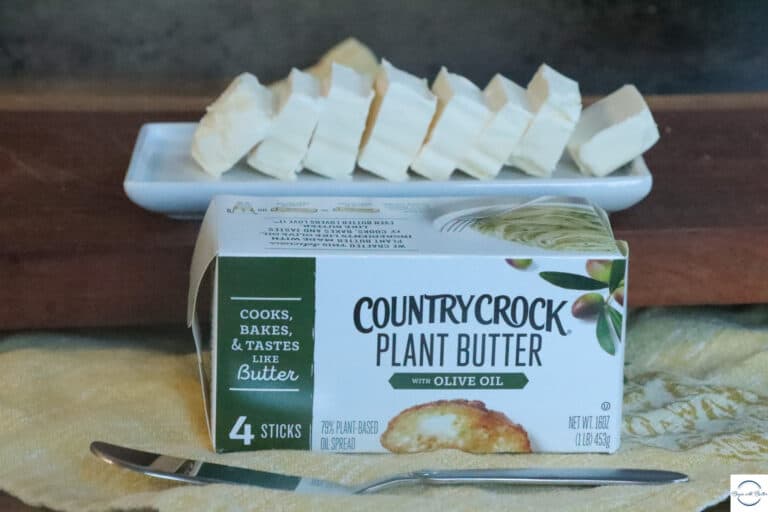
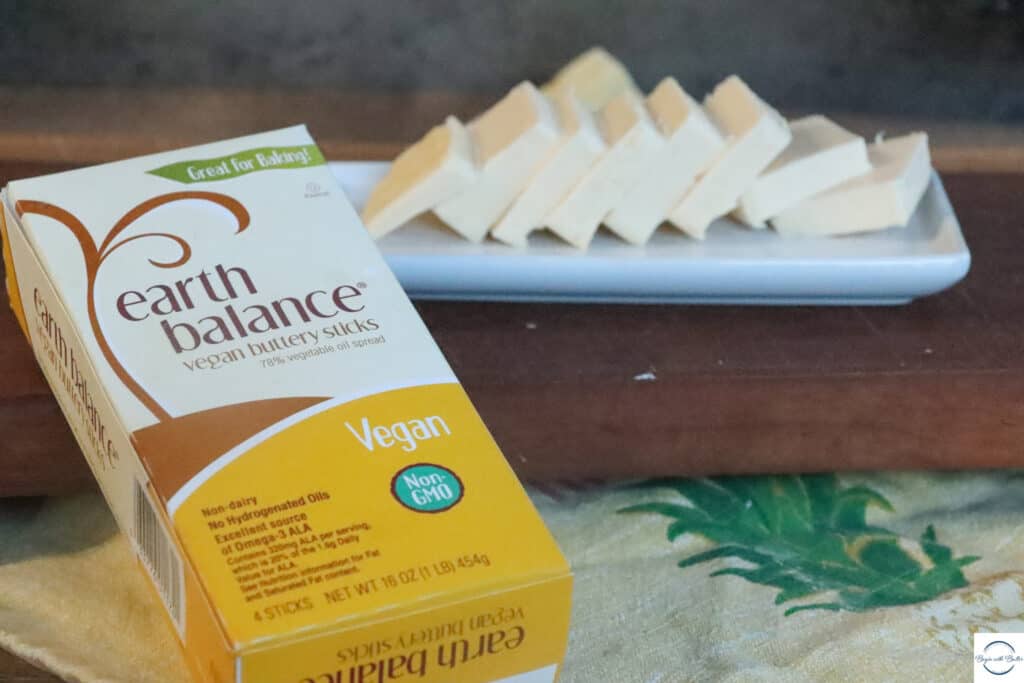
This is a photo of vegan butter.

Baking Besties, swapping ingredients can be great, or it can be completely disastrous. And this is not the economy to be wasting money on disastrous baking experiments. So…I did the work for you so that you can go forward confidently with your recipe swaps. Because learning the science of your baking ingredients is the very best way to gain confidence as a baker.

Let’s go!

In this Article:

1. What is Vegan Butter? And is it the Same as Plant-Based Butter?

Vegan butter is butter! It’s simply butter that’s not made from dairy products (dairy milk and/or cream). YES, there are differences between the texture of vegan butter and dairy butter. That is to be expected, since the composition and processing of the two types of butter are quite different.

This is a photo of vegan butter.

And yes, vegan and plant-based butter are the same thing. The terms are used interchangeably in the world. So, when I’m talking about vegan butter, just know that I’m talking about plant-based butter. And vice versa.

2. How is Vegan Butter Made?

Vegan butter is made by combining vegetable oil (olive, avocado, canola, etc.) with an emulsifying ingredient. Sometimes, nutritional yeast, herbs, or vegan preservatives are added to impact taste and texture of the finished product.

What is an emulsifying ingredient, you ask? Great question!

This is a photo of vegan butter.

An emulsifying ingredient is a thickener that takes oil (a liquid ingredient) and changes it to a butter-like state. That means that it’s not quite liquid and not quite solid. This same reason is why dairy butter is solid when it’s cold, but it softens at room temperature, and it melts when heated. The point at which butter softens/melts is called its melting point, which is typically between 90°F-95°f, depending on the fat/water ratio in the butter.

These same qualities exist for vegan butter. Once added, the emulsifying ingredient thickens the oil, causing it to solidify in a similar manner to dairy butter. The mixture is then processed with additional ingredients (if necessary) and refrigerated. Vegan butter also has a melting point: it is typically between 75°F and 95°F, again depending on the fat/water ratio in the butter.

Some examples of emulsifying ingredients are: coconut oil, nuts, plant-based milks, and lecithin (from soybeans).

3. Are There Cultured and Non-Cultured Versions of Vegan Butter?

Yes! Cultured vegan butter is made by adding active cultures to the emulsion, before processing it into butter. It creates a tangy, buttermilk-y taste that is more similar to cultured dairy butter.

Non-cultured vegan butter is simply vegan butter that does not contain those active cultures.

4. What is the Fat Content of Vegan Butter?

This is where things get a little wonky. While dairy butter has to have at least 80% in order to be called butter, there are no such rules for vegan butter. As a result, the fat content for vegan butter can fall between 60% and 80%.

Why is this important? Because butter, most of the time, is the largest source for fat in your recipe. Fat = flavor, and we don’t want to skimp on that in our baked goods. Additionally, fat is a tenderizer, which means that it breaks down protein bonds from your flour to create a luxurious mouthfeel.

This is a photo of vegan butter.

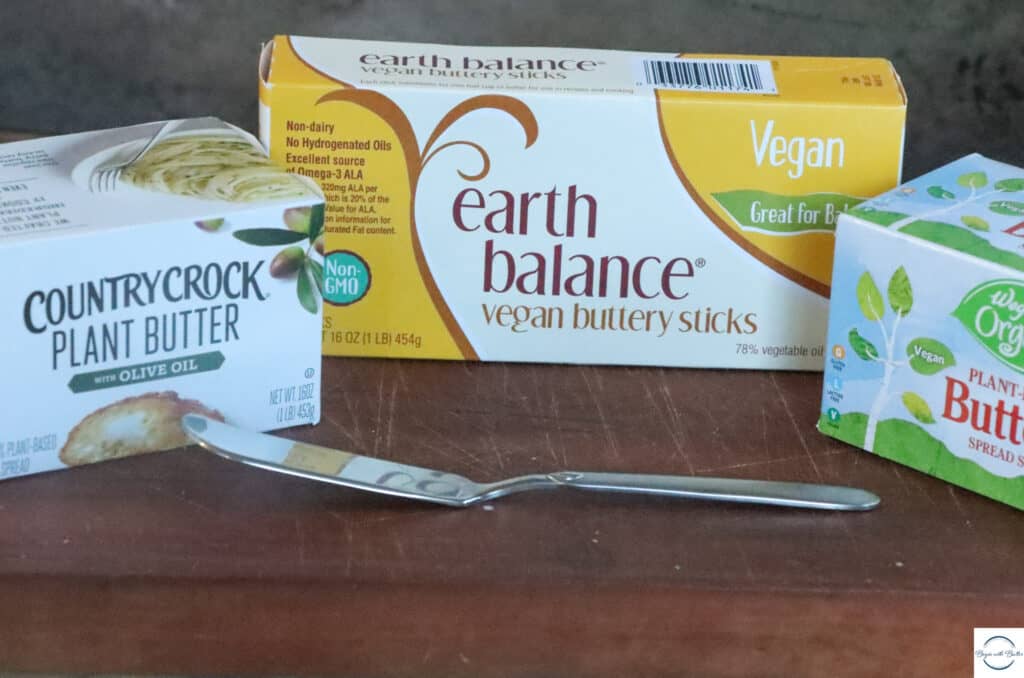
For this reason, when working with vegan butter, I always, always, always make sure that I’m working with a higher-fat vegan butter. There are three vegan butter brands that I’ve worked with on my vegan baking journey: Earth Balance, Country Crock, and Wegmans (store brand). There are a few more that I really want to try, so keep your eyes peeled on this blog post for updates!

Earth Balance clocks in at 78% fat. This means a very luxurious mouthfeel! Also, taste-wise, it’s quite similar to dairy butter.

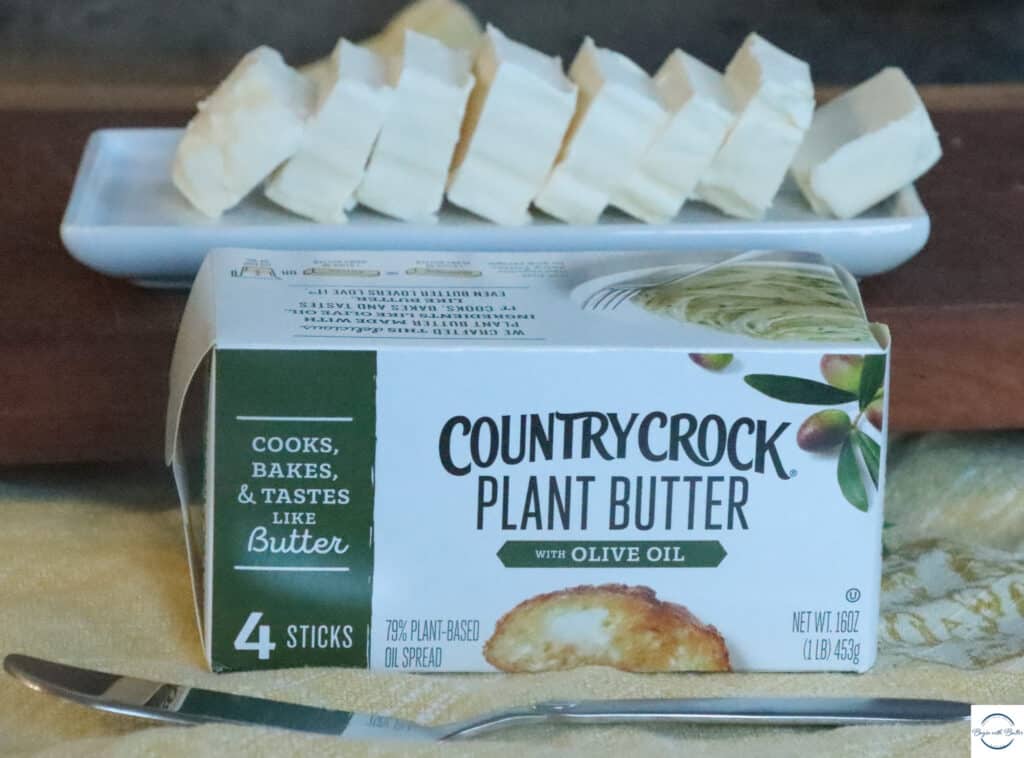
Country Crock Vegan Butter checks in at a nice 79% fat. Again, this creates an amazing mouthfeel! Taste-wise, it is a little different than traditional dairy butter, but not in a bad way. And since we are not comparing apples to apples, we’re not looking for vegan butter that tastes exactly like dairy butter. 😊

Wegmans has the lowest fat content, checking in at 65%. The rest of the content is water. Just like with dairy butter, more water means that it takes longer to come to room temperature; the texture of a cake will be a bit tougher with this butter. The lower fat content also impacts flavor, though Wegmans did an admirable job of enhancing the flavor.

I use these as an example to show that vegan butter can run the gamut as far as fat content is concerned. For baking, you want the higher-fat stuff, since it’s doing a lot of heavy lifting on the flavor.

5. How to Swap Vegan Butter for Dairy Butter

It’s a 1:1 swap! If a recipe calls for 227 g (or 1 c) of dairy butter, you can use the same amount of vegan butter as an equal swap.

Remember, though, that for baking, you want a higher-fat vegan butter.

6. How Do They Perform in Baking?

Butter has a few important functions in baking: 1) it helps with rise (when creamed properly with sugar); 2) it impacts taste and texture; and 3) it impacts caramelization. In testing the above brands, I observed the following:

Earth Balance and Country Crock vegan butters creamed beautifully. They both got extremely light and fluffy, like a dairy butter, and they helped create a tremendous rise in my vegan pound cakes.

The taste and texture were similarly excellent with Earth Balance and Country Crock vegan butters. While these cakes do not have the extreme buttery flavor that you might expect from a pound cake (stay with me here, dear reader), the texture held its own against any and all dairy butter cakes.

I said it. Texturally, these are two great butters for vegan baking.

And the taste…well, if the speed with which they disappeared is any indication…the taste was quite good (I agree with this observation by the way). 😊

And finally, that pound cake crust. Because a pound cake just isn’t the same without it. While butter is not the only thing that is responsible for that gorgeous caramelization, it plays a big part. And Friends, FRIENDS, Earth Balance and Country Crock for the win. So far in my vegan baking journey, I’ve been extremely impressed with these two butters for baking. I will definitely continue to use them as I continue experimenting!

7. How Do I Use Vegan Butter?

You might have noticed that I consistently harp on emphasize the need to allow butter to come to room temperature before you use it. The same is true here!

This is a photo of vegan butter.

The key to bringing any butter to room temperature is knowing the melting point. Typically, a higher-fat butter takes less time to come to room temperature for baking; for example, I allow my Vermont Creamery butter to sit out for at least an hour before using. That’s a safe amount of time to allow a high-fat vegan butter to sit out at room temperature as well.

Once it’s room temperature, you use it as you would any other butter. If you have a good quality vegan butter, you’ll find that you quickly get confident working with it, since it will perform similarly to the dairy butter that you’ve used in the past. 😊

8. Vegan Butter is Still Butter

This means that it is still a fat. We are not using butter because we are trying to save calories, or create diet baked goods. We are using vegan butter because we are trying to make baked goods that conform to a plant-based lifestyle.

As those of you who tried to go plant-based by eating french fries already know…there are many, many ways to eat unhealthy foods while eating plant-based. (No shame, I was one such person a long time ago. 😂)

It is my personal opinion that vegan butter:1) works much the same as traditional dairy butter, when it is worked properly; 2) gives excellent texture to baked goods, when you use a high-fat vegan butter; and 3) lends excellent color and flavor. These are the reasons why I am excited to work with vegan butter this year, as I expand the vegan offerings on the Begin with Butter site.

Want to Learn More About Dairy Butter Too?

Check out this post: The Basics of Butter!

I sincerely hope that this has been helpful for you! À bientôt!

No-Churn Vanilla Bean Ice Cream

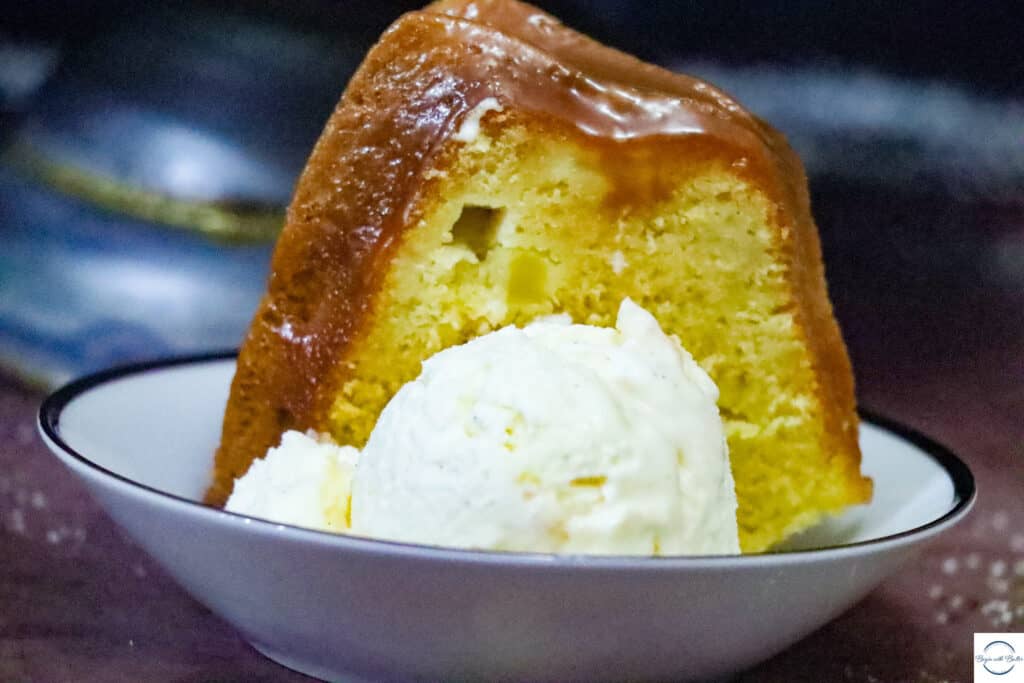
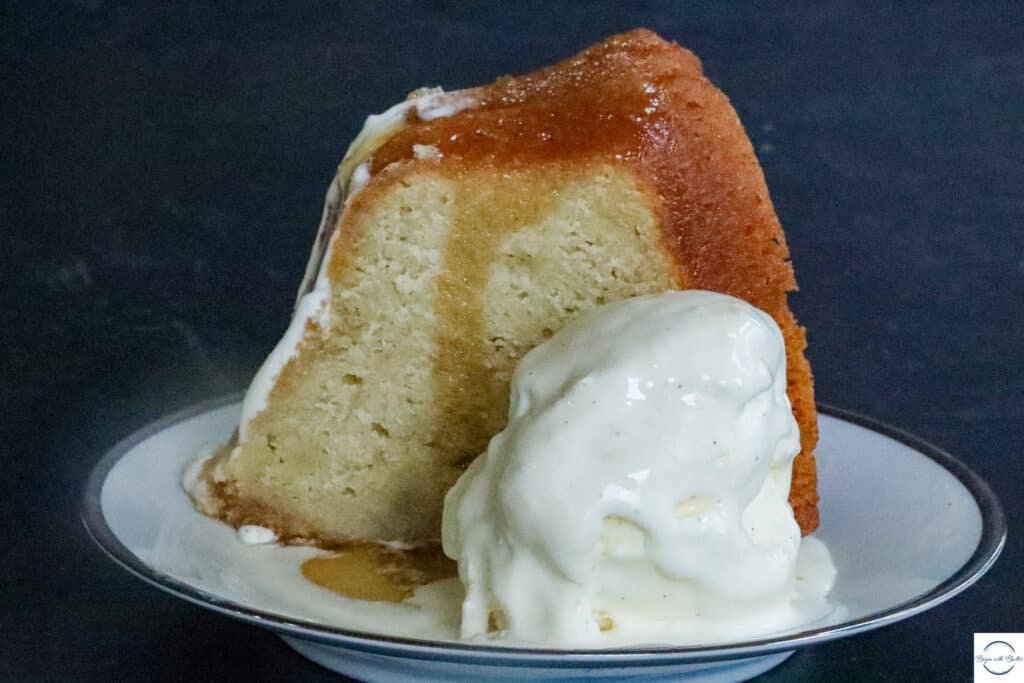
Hey Y’all! How about a bonus day for the Twelve Days of Pound Cake? Yes? Great! Because today, I have for you, the most delightful accompaniment for the pound cake lineup this season: My No-Churn Vanilla Bean Ice Cream.

Those of you who love cake with ice cream can delight in the fact that this one comes together in a literal flash. ⚡️

So, on this 13th day of the Twelve Days of Pound Cake, we have…ice cream. 😊

About this No-Churn Vanilla Bean Ice Cream

This No-Churn Vanilla Bean Ice Cream comes together with a whopping FOUR ingredients. If I’m baking, you’d better believe that there’s a container of this chilling in my freezer. Because it pairs so beautifully with just about any baked dessert. I showed this gorgeous ice cream during the latter part of my Twelve Days of Pound Cake this year, and when I say it added the sweetest special touch.

How to Make This Ice Cream

*Friends, this post contains affiliate links. If you purchase directly from those links, I get a small commission, but they are products that you will find in my very own kitchen!*

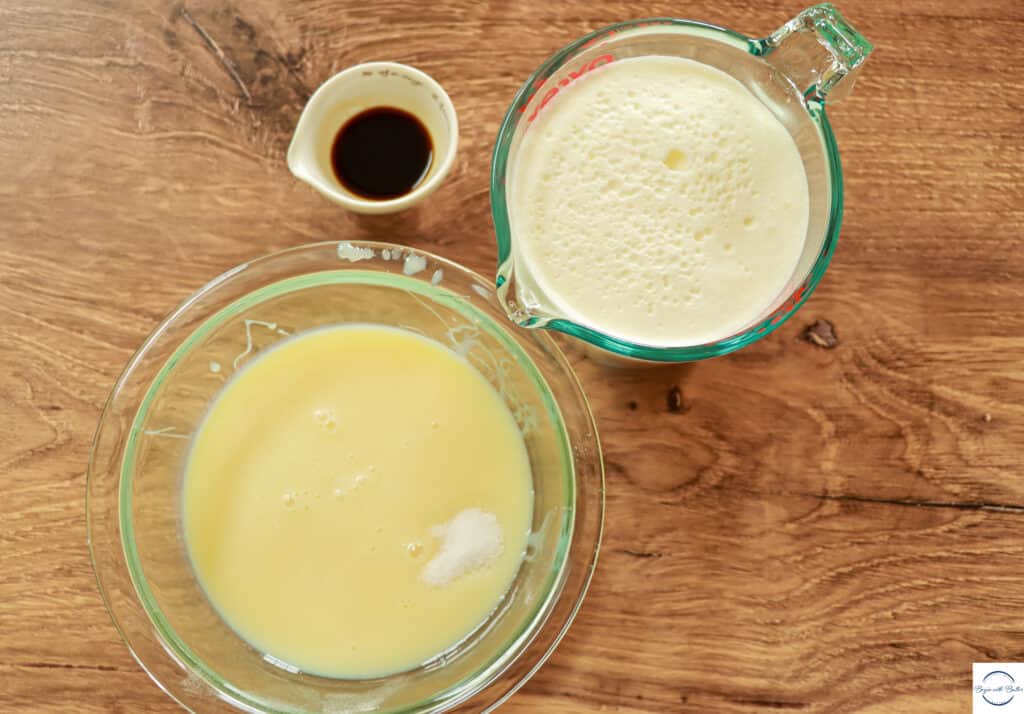
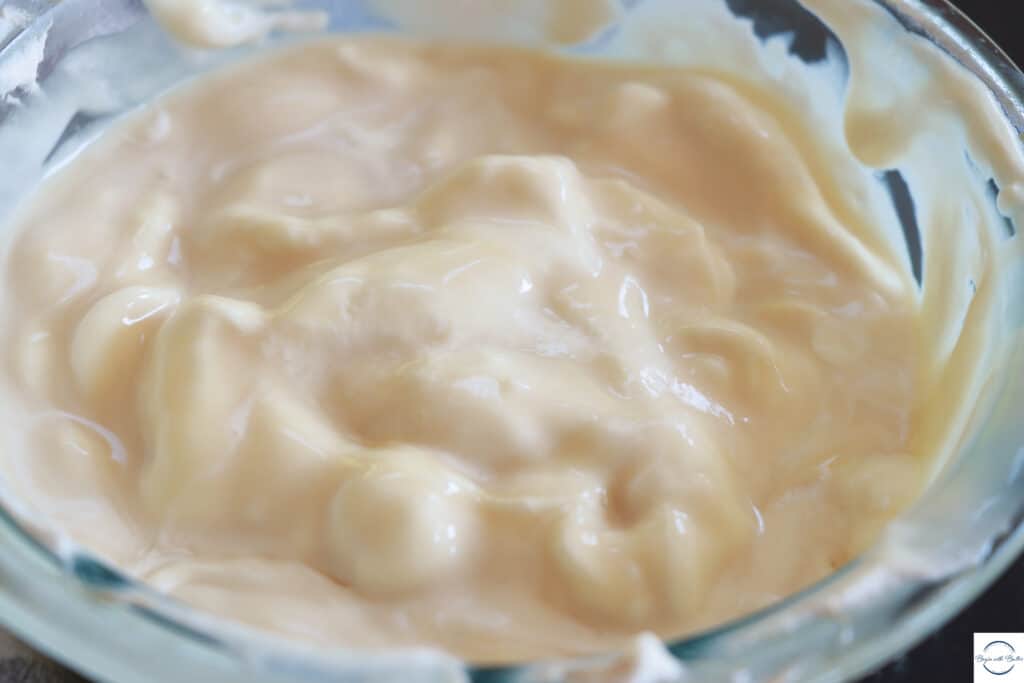
Start this ice cream by combining the sweetened condensed milk, seeds of one vanilla bean (or 2 tsp vanilla extract), and 1/2 tsp of fine salt in a medium-sized bowl. Once it’s completely combined, set it aside.

Salted Caramel No-Churn Ice Cream base picture
You can use either a whole vanilla bean or 2 tsp of vanilla extract for this recipe.

Place the heavy whipping cream in a large bowl. Using a balloon whisk or a mixer, whip the heavy cream to stiff peaks. Make sure to start off slowly with this, or else you’ll splatter heavy cream everywhere!

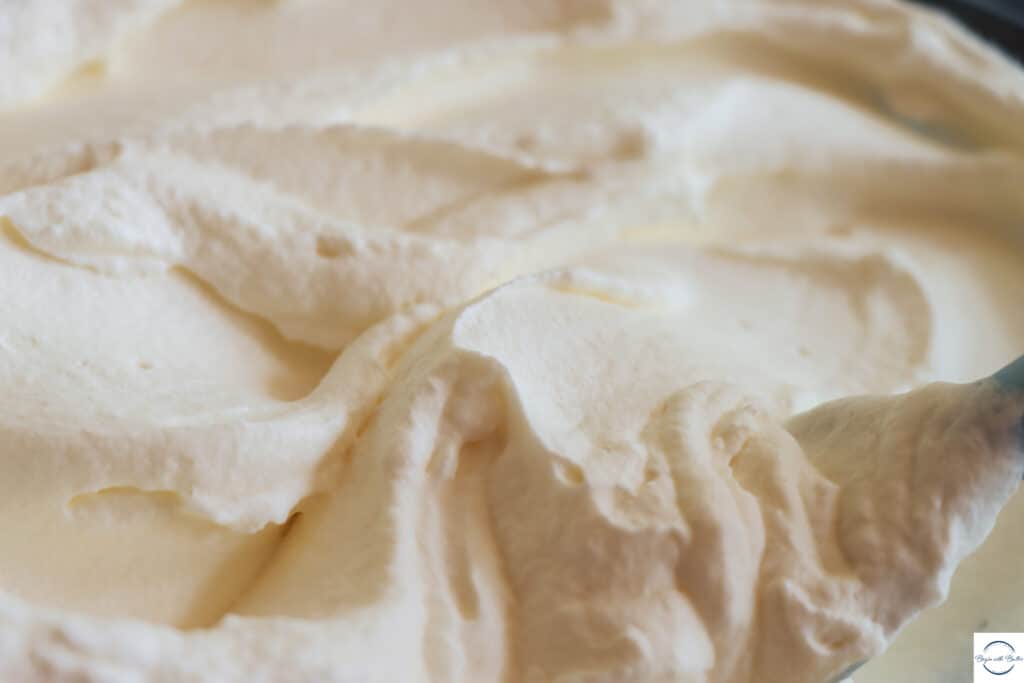
After a few minutes, you’ll have a luscious, decadent, absolutely divine whipped cream that looks like this:

Whipped cream picture for salted caramel no-churn ice cream

It might seem hard to believe that this is the outcome at the beginning, but keep with it!

Once you’ve reached this point with your whipped cream, add half of the whipped cream to the ice cream base. Fold together until you get a lumpy, bumpy mess.

Yes. A lumpy bumpy mess. We don’t want to mix completely at this point because we don’t want to deflate all of that yummy air from the whipped cream.

So we’re looking for this:

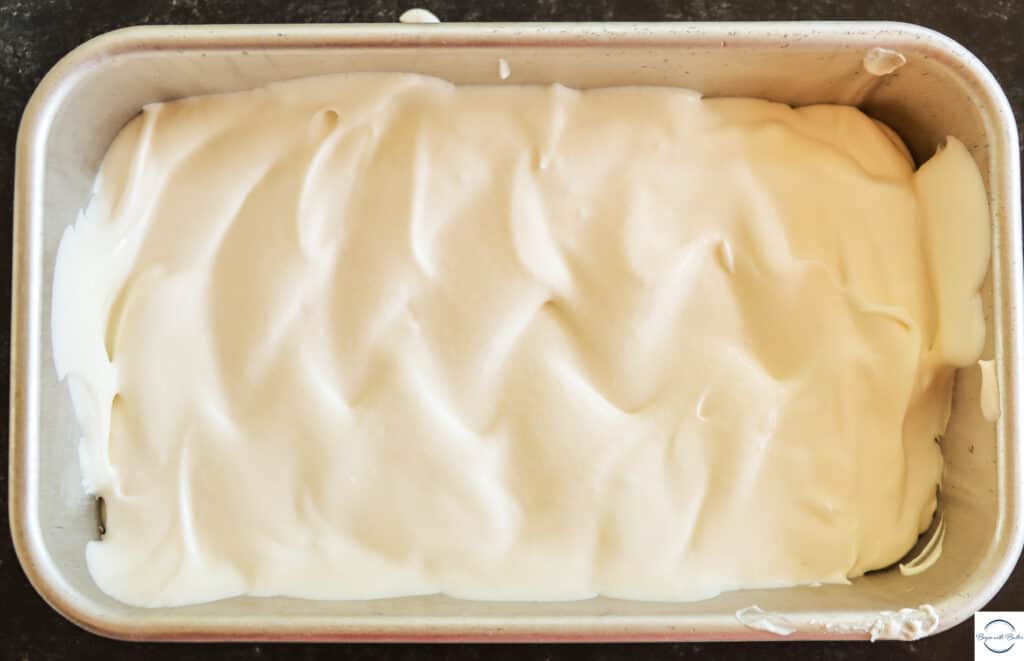
Next, fold the lumpy, bumpy mess into the remaining whipped cream. Gently continue folding until you have a smooth, combined mixture. Place the ice cream in a 9×5″ or 8″x8″ pan:

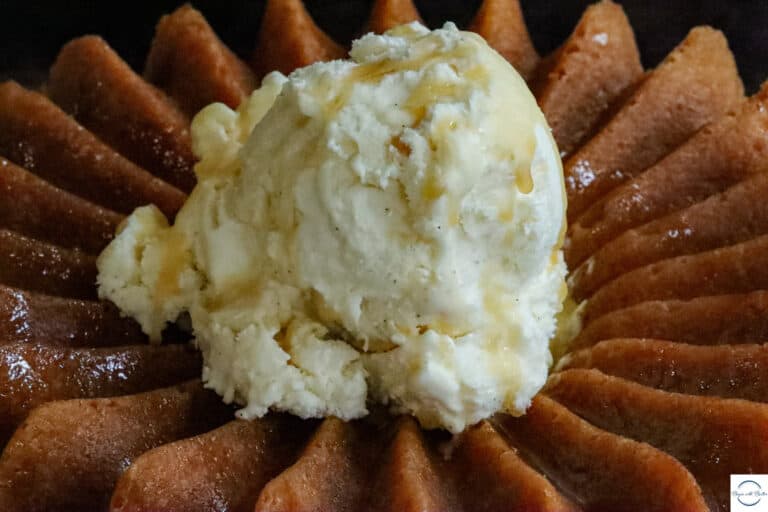
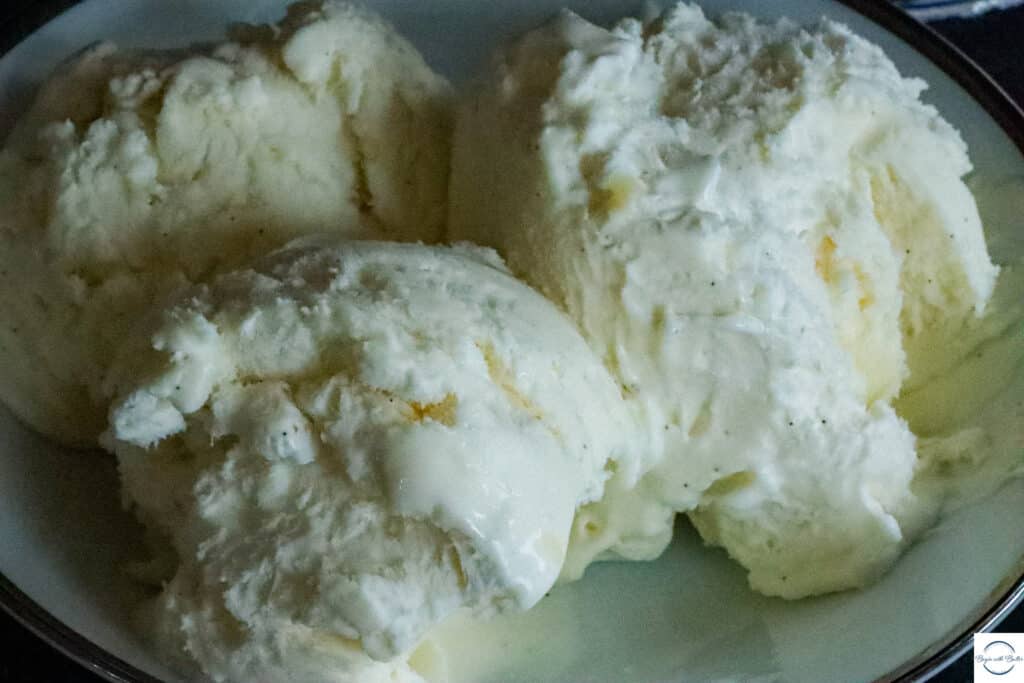
This is a picture of vanilla bean ice cream.

Freeze the ice cream for at least six hours before serving. It will be hard to wait, but it will be so worth it!

Enjoy, Friends!

Honey Apple Pound Cake

Friends, I’m admittedly a bit weepy as I type this last blog post. Kinda like when I’m 1/3 of the way through the most delicious black beans and rice, and I get sad thinking that there will be a time when those black beans will be literal history. Because today is Day 12 of the Twelve Days of Pound Cake, and that means that our 2023 season is coming to an end. And oh, what an end. Because today? TODAY? We’ve got Honey Apple Pound Cake.

Honey Pound Cake is one that’s been requested a number of times by Begin with Butter family members, so I hope you really love this take as much as I do.

About this Honey Apple Pound Cake

I savored, er, SAVED this one for last, my friends. Because she is a stunner. She is show-stoppingly gorgeous, decadently appointed, and the hilt of pound cake perfection. I just love this cake so, so much.

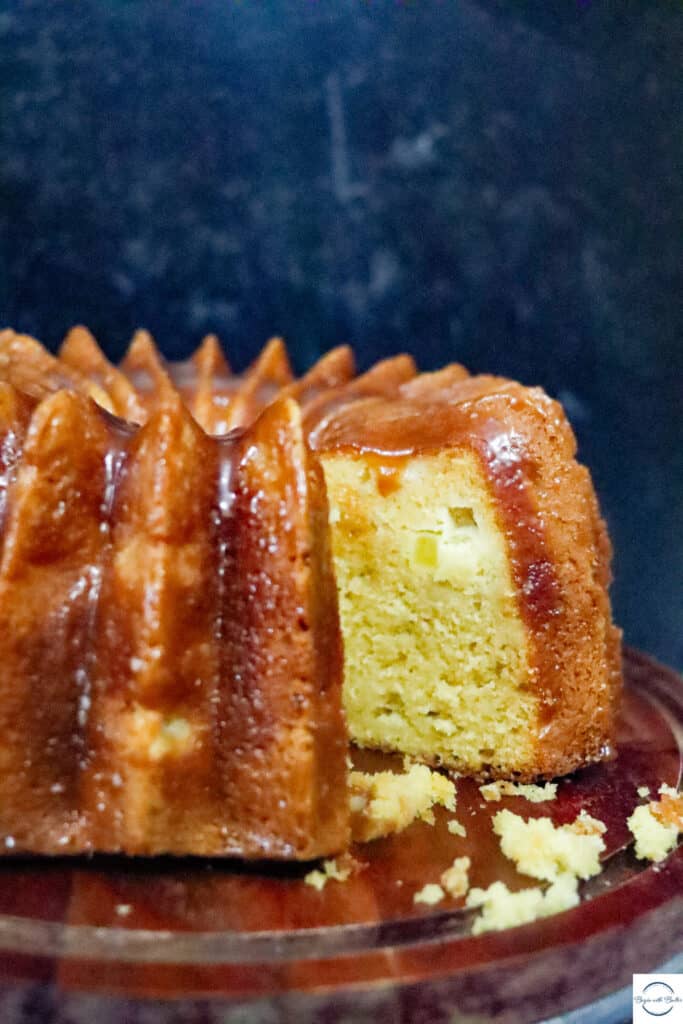
This is a photo of a Honey Apple Pound Cake.

‘Tis the season to indulge in the sweet symphony of holiday delights, and what better way to tantalize your taste buds than with a slice of honey-kissed perfection in the form of a Honey Apple Pound Cake? Picture this: a decadent dance of golden sweetness, where every crumb whispers tales of warm, festive cheer. As you sink your fork into the moist embrace of this heavenly creation, your senses are transported to a winter wonderland of flavors. The honey, a mischievous accomplice, lends its golden nectar to the velvety batter, creating a cake that’s not just dessert but a festive celebration in every bite. So, let the Christmas spirit infuse your palate with the magic of honeyed joy, as this incredible pound cake steals the show at your holiday table!

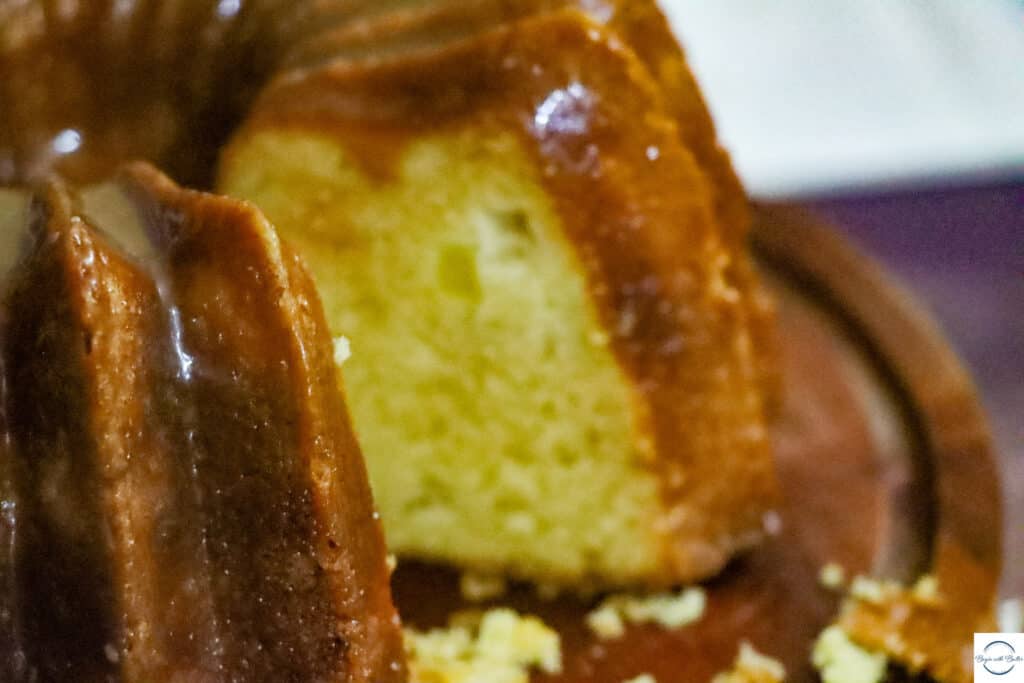
The honey gives this cake such a beautiful texture and flavor. The unmistakable scent. of honey wafts heavily and lazily in the air when you open this one, creating a delicious anticipation among your consumers. When you cut into this cake, the moist crumbs make the mouth water as your friends and family await their first bite. And when they see that brown sugar cinnamon caramel…the anticipation will hit fever pitch.

But make them wait. 😂 Because when they get the first look at the apples, Friends, they’re either going to really, really love you, or really, really love you and also be mad at you for making them wait for this cake.

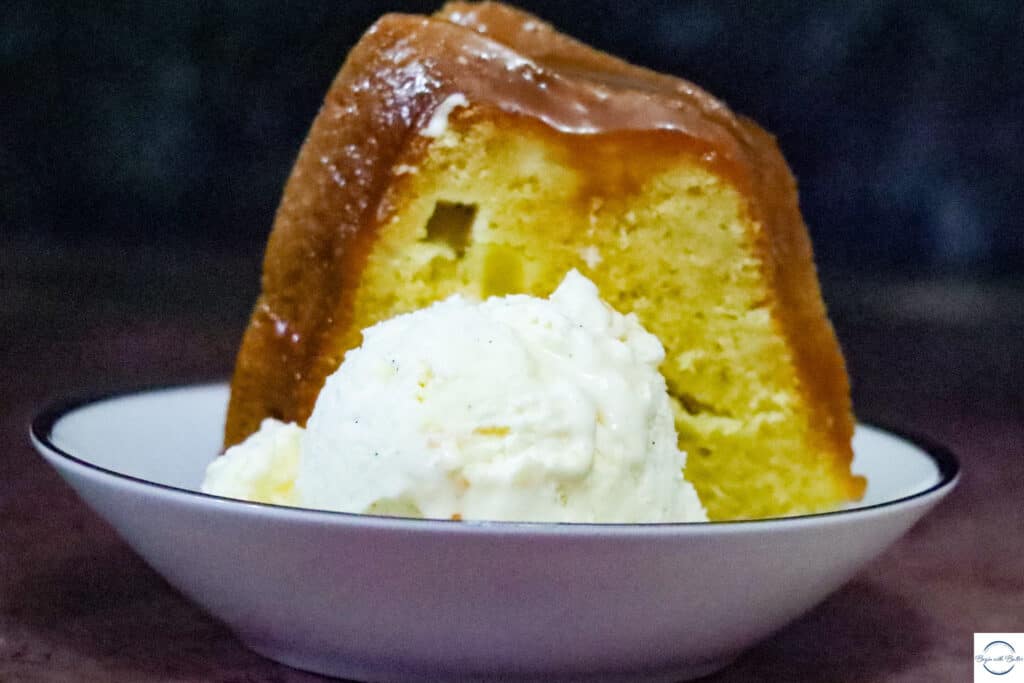
This is a photo of a slice of Honey Apple Pound Cake.

Ingredients in this Honey Apple Pound Cake

Let’s get into this one. Because the lusciousness of this cake would make it seem really difficult, when in actuality it’s actually quite easy!

All-Purpose Flour: All-purpose flour is the star of a pound cake, IMHO. The higher protein content helps create the incredible texture that reminds me so much of those pound cakes of my youth. Also, if you want a pound cake that conforms to these beautiful bundt pans and creates a stunning masterpiece, you’ll want all-purpose flour; cake flour doesn’t hold those gorgeous designs nearly as well.

Baking Soda: This cake uses buttermilk as the liquid. For this reason, baking soda is the appropriate leavening. Don’t substitute baking powder in this recipe; it’s not the right tool for the job.

Kosher Salt: Every baked good needs salt to counteract the sugar. A little goes a long way, so be careful when you’re measuring!

Unsalted Butter: Room temperature, unsalted butter is perfect for this cake. I love cultured butter, but what you use is entirely up to you! The butter helps create the perfect texture in this cake; the creaming process creates beautiful little air pockets that help the leavening work even better!

Vegetable Oil: Oil helps add additional richness to this ultra-decadent cake! My personal favorites for this cake are avocado oil and vegetable oil, but use whatever you like.

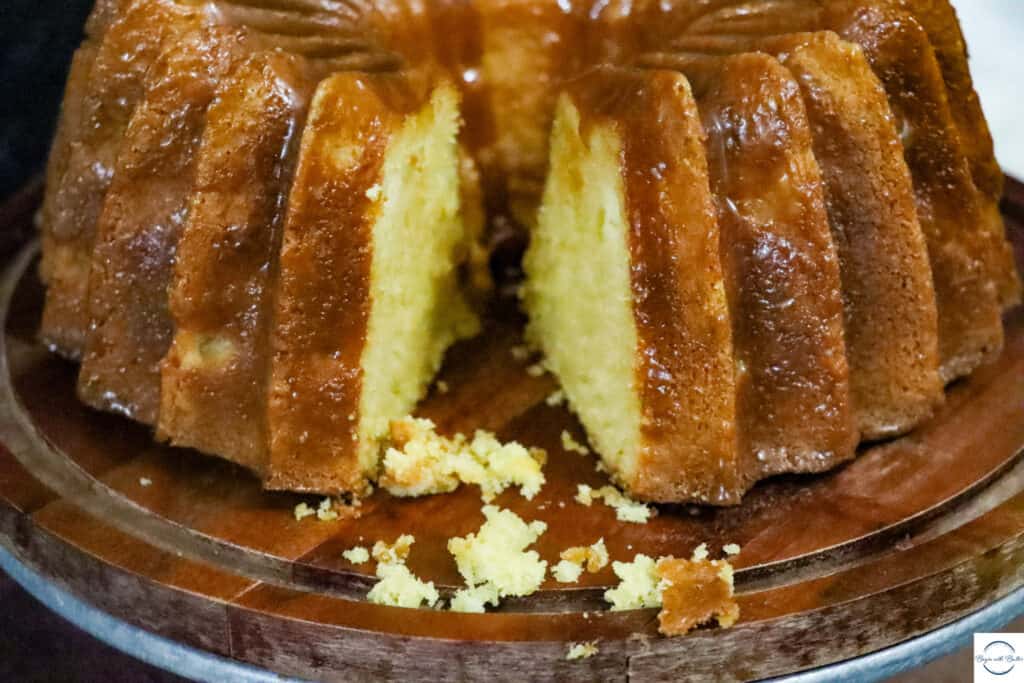
This is a photo of a Honey Apple Pound Cake.

Granulated Sugar: Sugar adds sweetness to our cake, but it also aids in caramelization! And with bundt cakes, that beautiful golden crust is largely due to the caramelization from the sugar!

Honey: Honey is the star of this show. Aside from lending that unmistakable honey taste, honey is also a humectant, which means that it adds moisture to your pound cake.

Eggs: The egg whites in this cake add structure to the cake, while the fatty yolks add flavor. Make sure to take your time whilst adding the eggs! Too much liquid at one time will cause your batter to separate.

Pure Vanilla Extract: I know I’ve been on a vanilla bean kick as of late (sorry-not-sorry), but this cake uses vanilla extract. It’s the perfect accompaniment for the richness of this cake. 😊

Buttermilk: You’ll want to use full-fat buttermilk for this recipe. Fat=flavor and you don’t want to skimp on flavor!

Apples: Use crisp apples for this recipe. No Gala or Red Delicious. You want an apple that stands up to the rigors of baking, like Honeycrisp or Fuji.

Beginners Start Here

If you’re new to baking, or if you want to learn how to do some of the more tricky baking techniques, here are a couple of super helpful articles from the BwB site (and also from the BwB Home Baking Academy!) that will help you get set up for success with this Honey Apple Pound Cake.

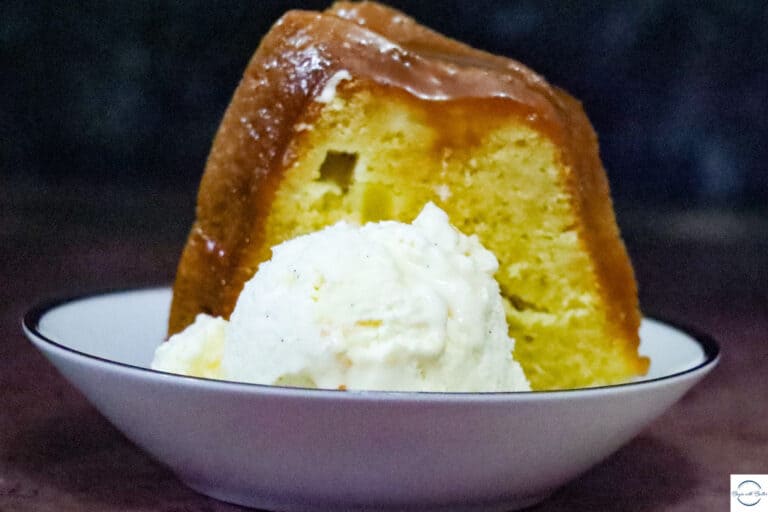
This is a photo of vanilla bean ice cream.

These resources are super helpful to help you build consistency and confidence on your baking journey. Happy Reading!

Important Tools Used in this Honey Apple Pound Cake

Below, you’ll find some tools that I used for this pound cake. These are the tools that I use all the time in my own kitchen.

**I get paid a small commission if you purchase directly from these links, but they are truly amazing products that you’ll find in my kitchen.**

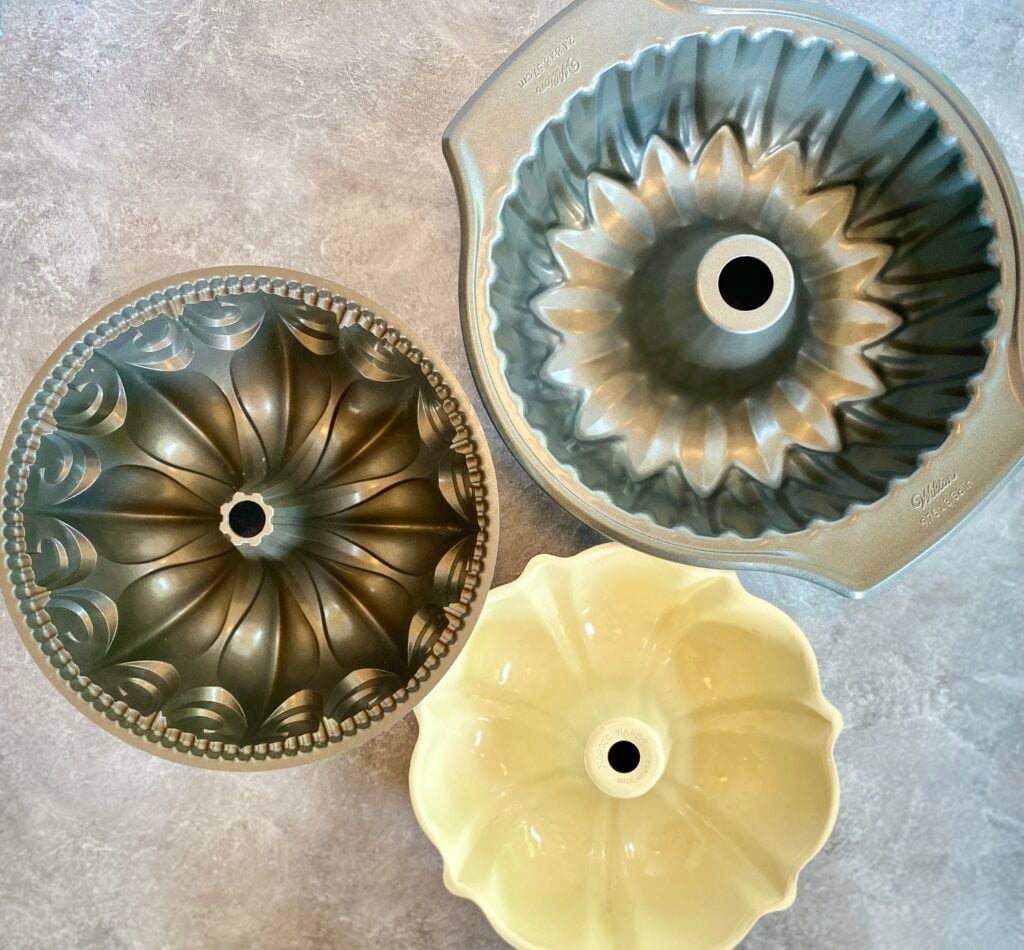
This is a photo of three bundt pans.

If you have them already, great! Think of this as a checklist to help you build the confidence that you’ll need to execute this recipe!

Friends, this marks the end of the Twelve Days of Pound Cake, and it’s a little bittersweet this year. From concept to implementation, this was my absolute favorite of the three years, and I’m more than a little sad that it’s done.

BUT

I hope you have an incredible time with these recipes around your holiday table, and I hope you and your family love them for years and years to come.

Happy Holidays, Friends!