Sunday Session #7: Techniques for The Best Cinnamon Rolls

0
Home » Featured Recipes » Page 37

When I say that I love all of the ooey, gooey calories from a good cinnamon roll? Y’all. It’s seriously not right that these things exist on earth with us.

It’s also not right that I now have the ability to make just about any cinnamon roll that my heart might desire. And that knowledge, Family, has made me quite a menace in the kitchen when it comes to breakfast pastries in general.

It’s all in the name of…ahem…science.

But cinnamon rolls? CINNAMON ROLLS?! They own me. I will never admit the insane number of cinnamon roll recipes I’ve tried over the years, but suffice it to say…there have been quite a few of them.

Cinnamon rolls almost always start with brioche dough. It’s the perfectly rich, buttery, eggy base for all of that cinnamon sugar, packed into a gorgeous rolled breakfast pasty.

Kinda like this:
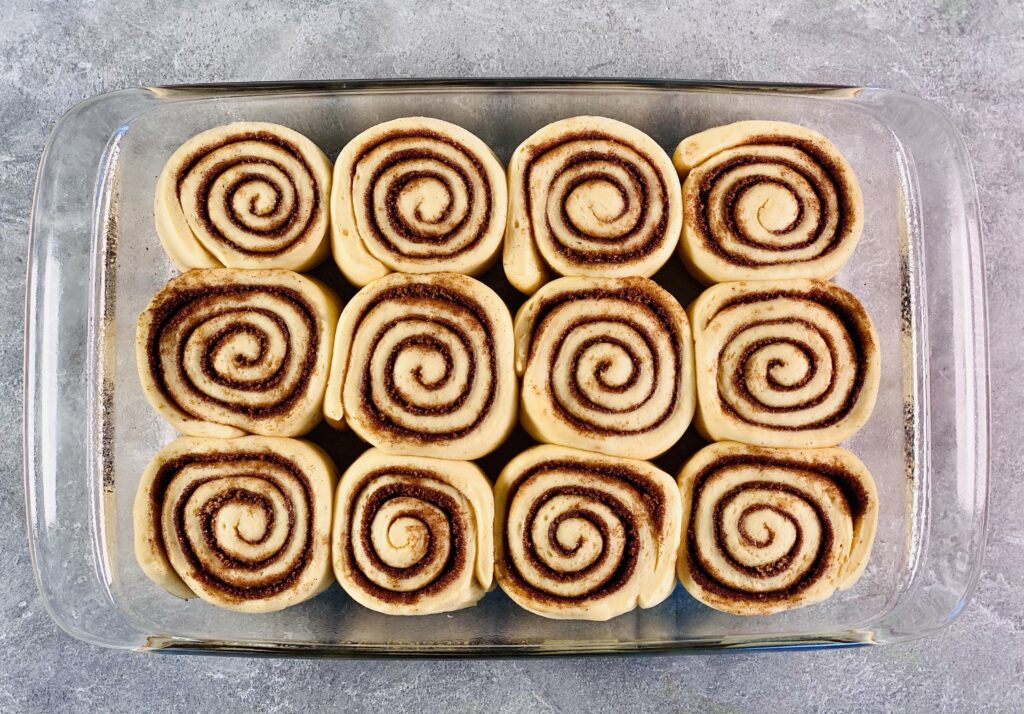
Swirls…..

Today, Friends, you’re coming on a cinnamon roll journey with me. Put on your stretchy pants and come with me to learn the techniques that I use to make perfect cinnamon rolls every time. I adapted this recipe from Ambitious Kitchen, but the techniques are universal and will work with your favorite recipe as well!

In this Post:

Looking for a specific tip or technique? Use the hyperlinks to easily navigate this article!

The Prep

If you’ve spent some time on this site, you know that I always, always, always encourage you to fully prep your ingredients beforehand. This technique, known as mise en place, will keep you from running around like a chicken with its head cut off and will generally make you feel more calm and confident while you bake.

That wisdom is especially true with this dough.

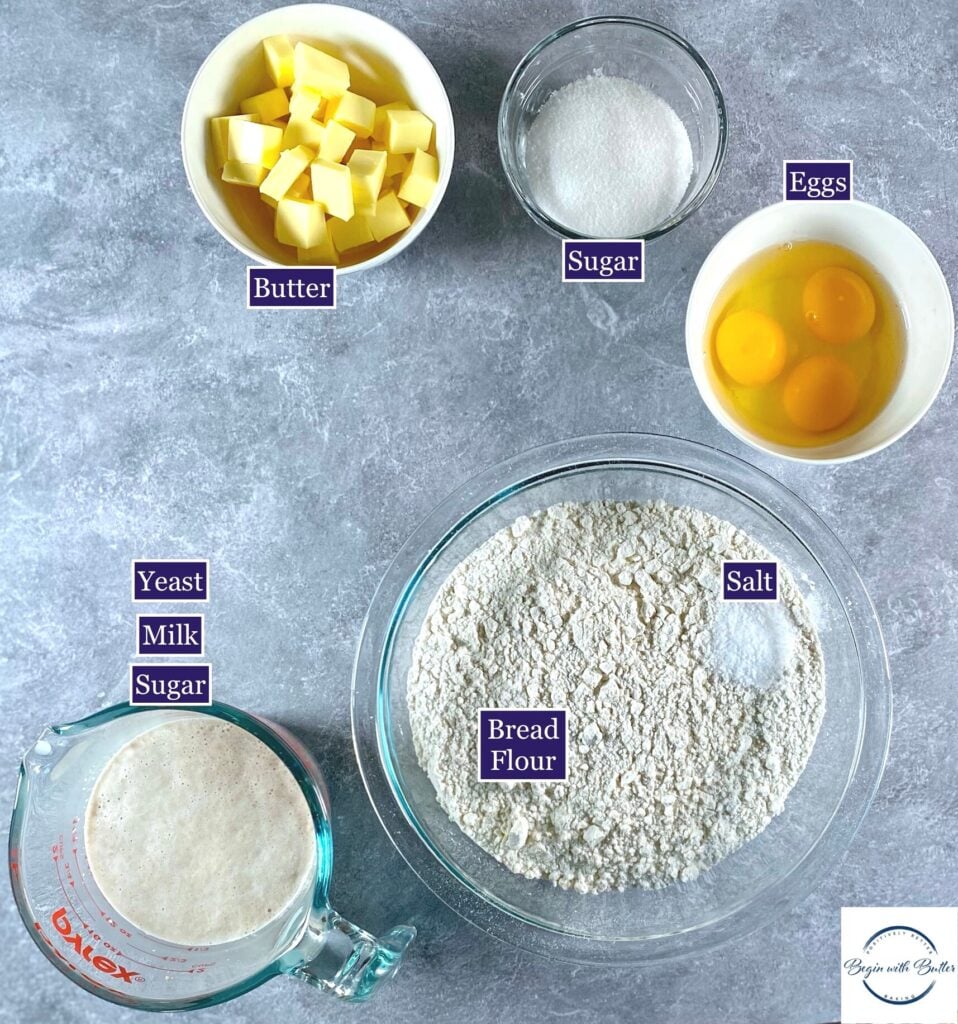
Here’s my mise!
The Yeast

If you read my recent post about the basics of yeast, you know that, no matter the yeast I’m using, I always proof (or prove or bloom) the yeast that I’m using. In this recipe, I proofed the yeast in a warm milk bath (I aim for 110?F-115?F) and a half teaspoon of natural sugar. Because the milk has natural sugar in it (lactose), I cut the amount of sugar that I added for the proofing process. Too much sugar will actually kill yeast.

Guess there is such thing as “too much of a good thing.” ???????????
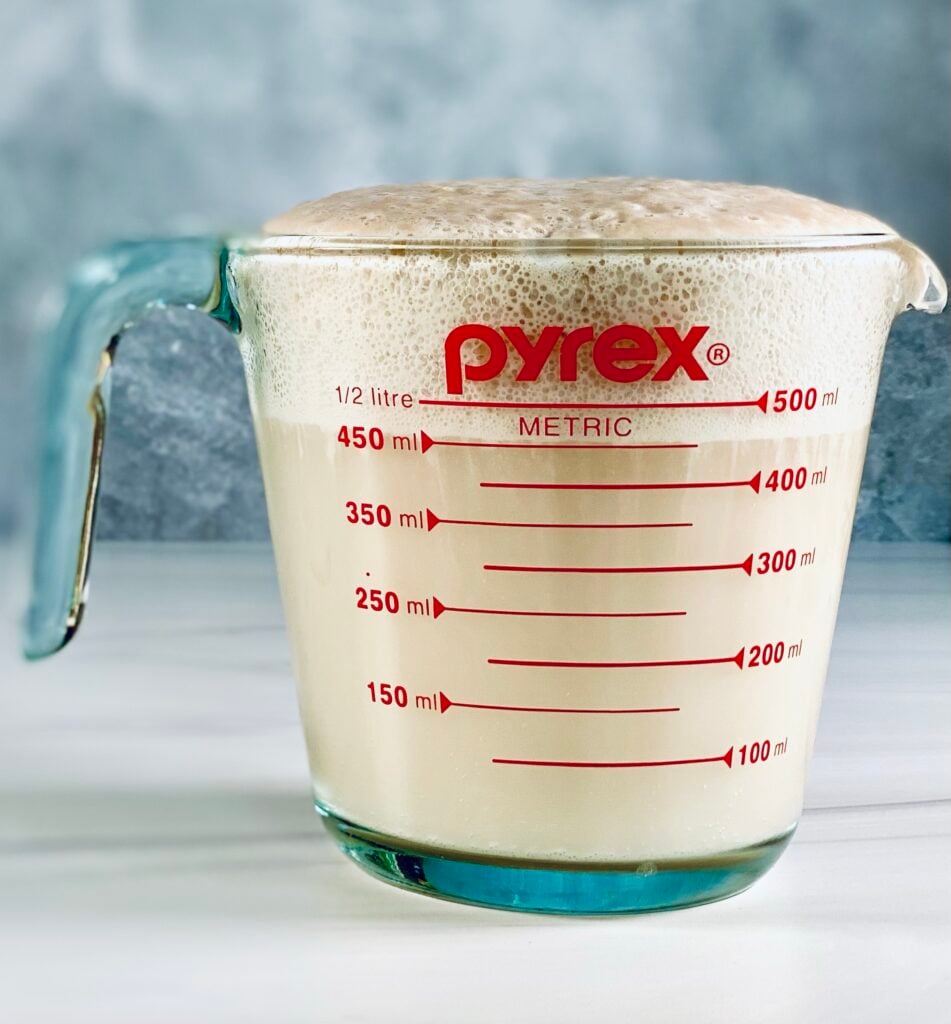
While it might not be this puffy, bloomed, live yeast will dome at the top of the liquid. If it’s flat or you don’t see bubbles, your yeast is either dead or over-proofed.

And it’s not even remotely the point to overfeed yeast!

When the yeast mixture was done, I added that mixture to the eggs and sugar in the bowl of my stand mixer. Brioche is a sticky dough, so it’s best for beginners to use a mixer if they have one available to avoid adding too much flour.

Making the Dough

Once all of those ingredients were in the mixer, I reserved (or removed) a half cup of the flour from my bowl with a dry measuring cup and set it aside. The rest of the flour (and all of the salt) got added to the mixing bowl for the initial mix.

Then I just…let it go. I turned my stand mixer to “stir” to get everything combined, then set it to setting “2” and let it work for about five minutes without adding any additional flour. It started off shaggy and rough, and eventually got to the smooth and sticky phase you see here:

This what brioche dough looks like when the gluten is really starting to form. It’s combined and smooth, but not quite finished kneading. Good thing I set aside some flour!

Why do I do this, you ask? Sometimes, variables like air temperature, humidity, or even the moisture level of your flour can impact the amount of flour that you need for your brioche recipe. I’ve found that if you immediately add the entire amount of flour that a brioche recipe calls for, you’ll usually end up with an over-floured brioche. And that’s not even remotely the point.

After about five minutes of kneading, I ended up adding more flour, one tablespoon at a time. I added each tablespoon, then let it fully incorporate and work for about a minute before adding the next. After the fifth addition, I just…let it go for about another four minutes.

It’s important to let each tablespoon of flour incorporate and work into the dough before adding more flour. You see, the physical motion of kneading is just as important as flour when it comes to gluten development. So you want to give the kneading process a chance to work before adding more flour.

Taking Shape

After letting the dough mix for those last four minutes, it was time to test the dough! I was looking for a tacky but smooth dough. Note: when a recipe says that a bread dough should “clear the sides” of the bowl, it doesn’t necessarily mean that the dough should clear the bottom of the bowl as well. Mine looked like this:
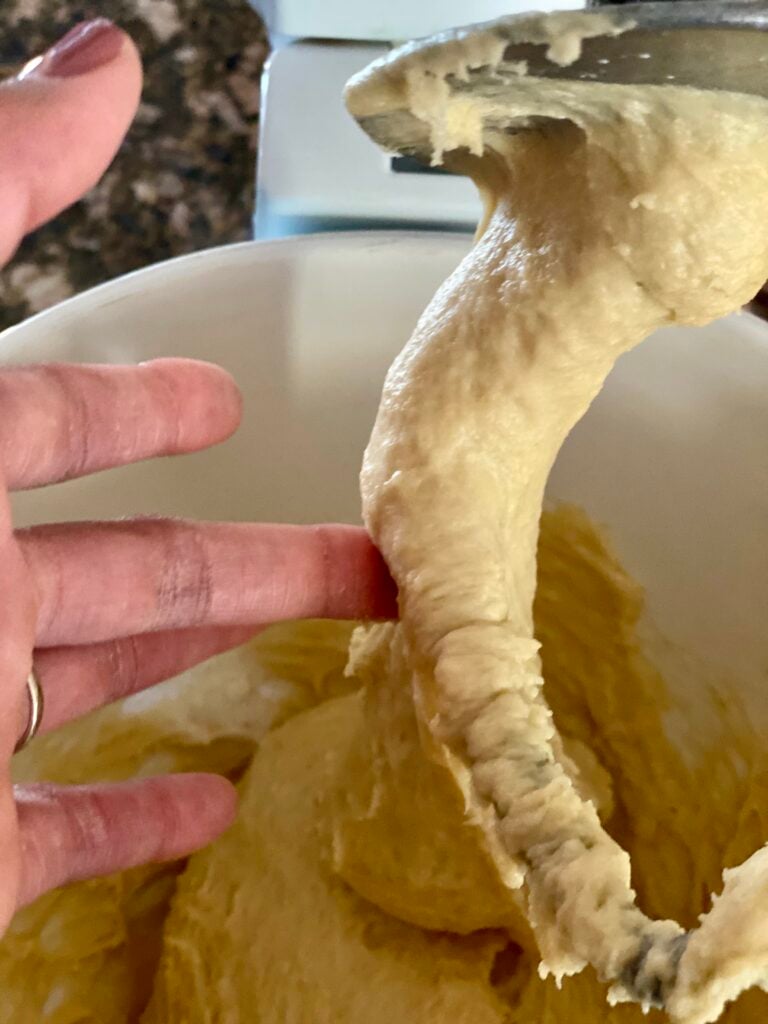
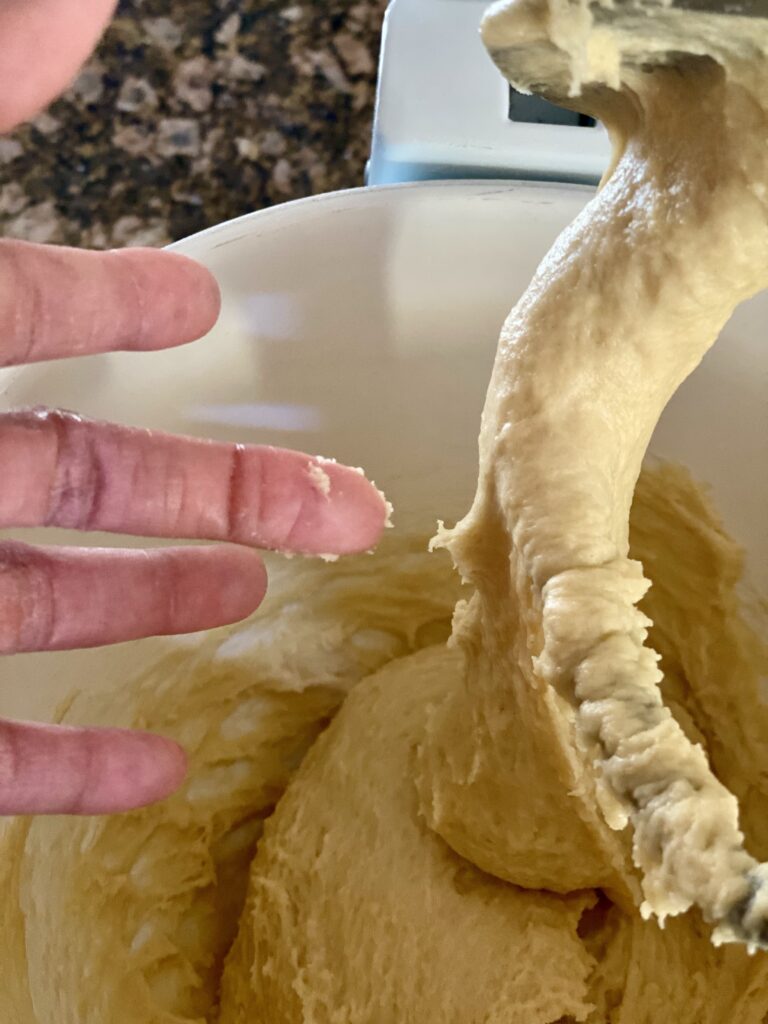
Enriched doughs can be super tricky Fam! By the time you add enough flour to have these doughs clear the bottom and sides of the bowl, it’s going to be over-floured and likely ruined. These doughs should be just a touch tacky on the outside when you finish, and they might be downright sticky on the dough hook when they’re done.

That’s perfect.

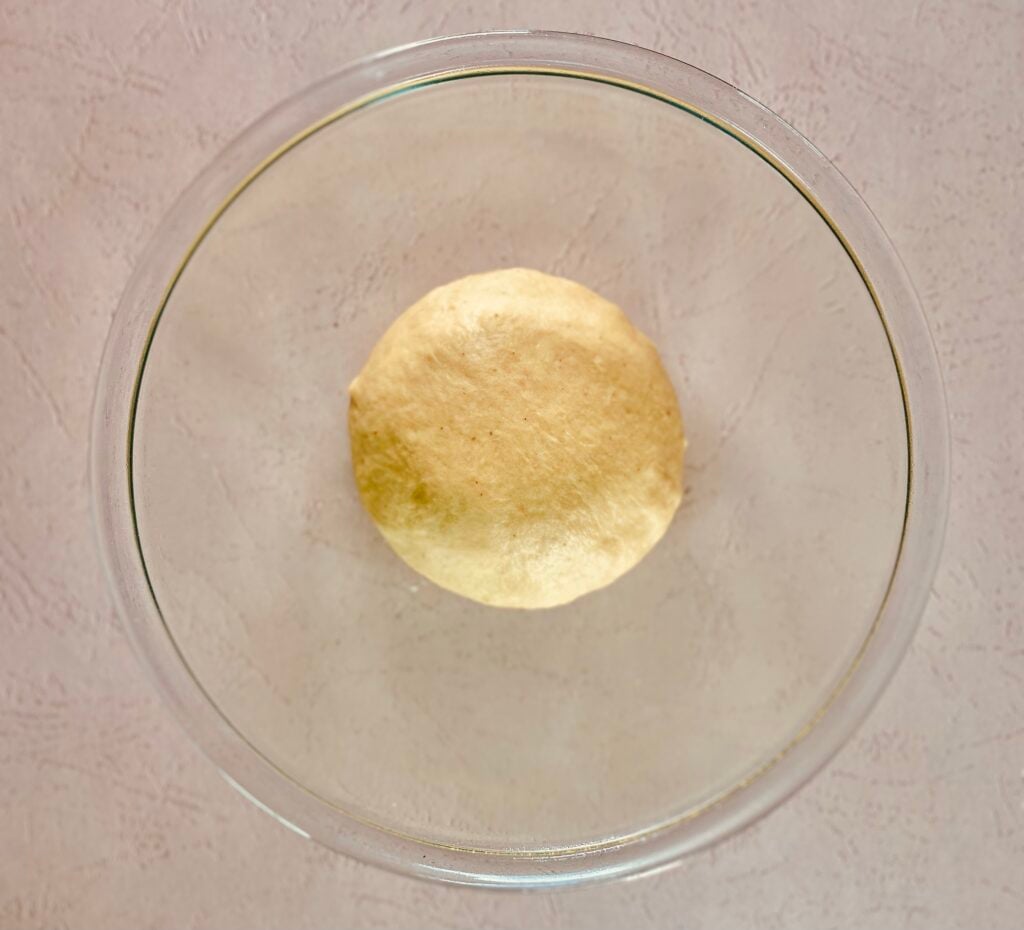
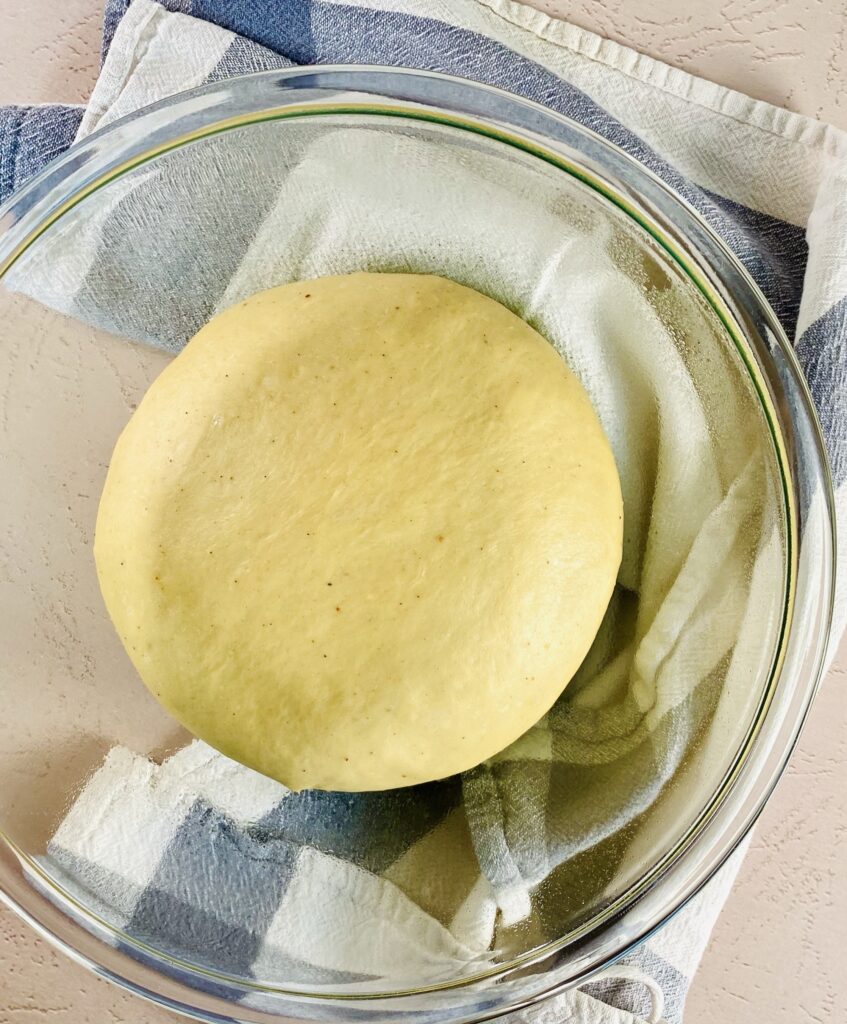
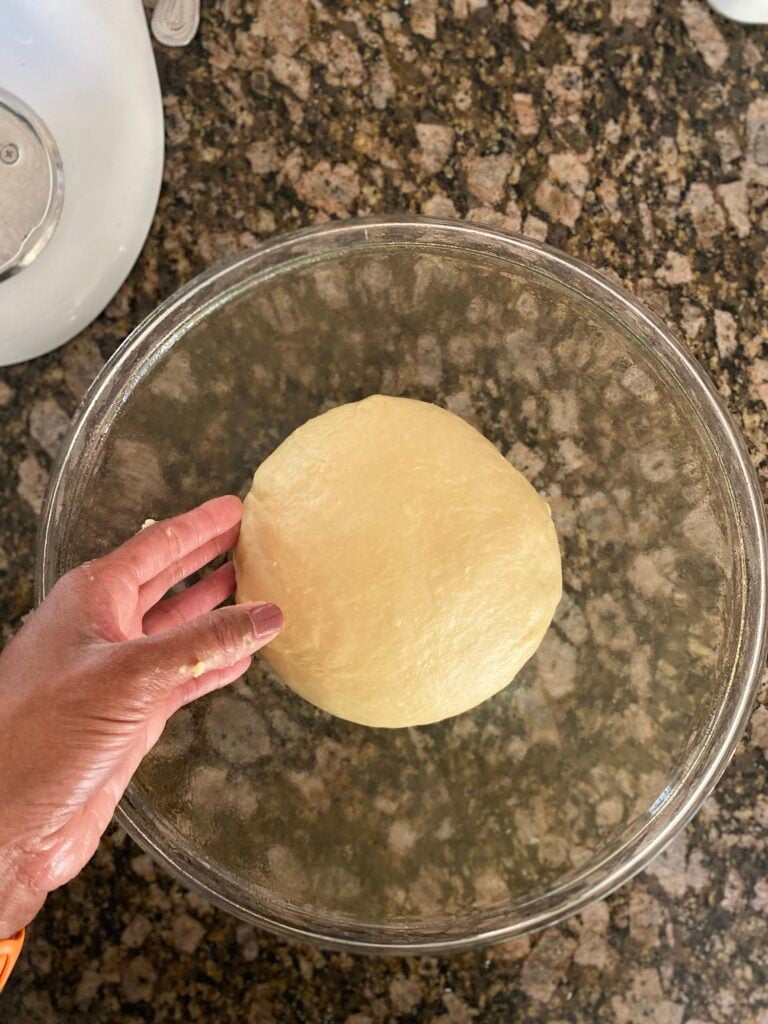
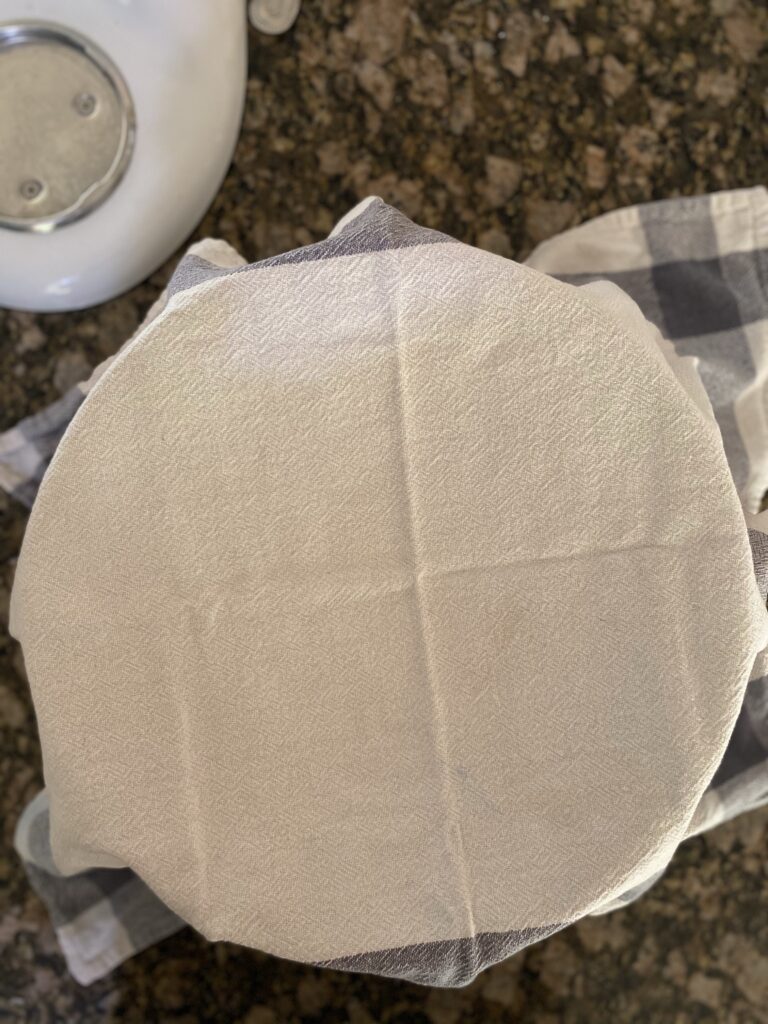
With this one, I sprayed my hands with cooking spray, removed the dough from the bowl and dough hook, and shaped it into a ball so that it could rise for an hour.
The Fun Part!

Onto the filling! While that perfect dough was nestled in its resting bowl, I prepped the filling.

Y’all. Cinnamon roll filling has a very potent smell. It’s…the cinnamon.
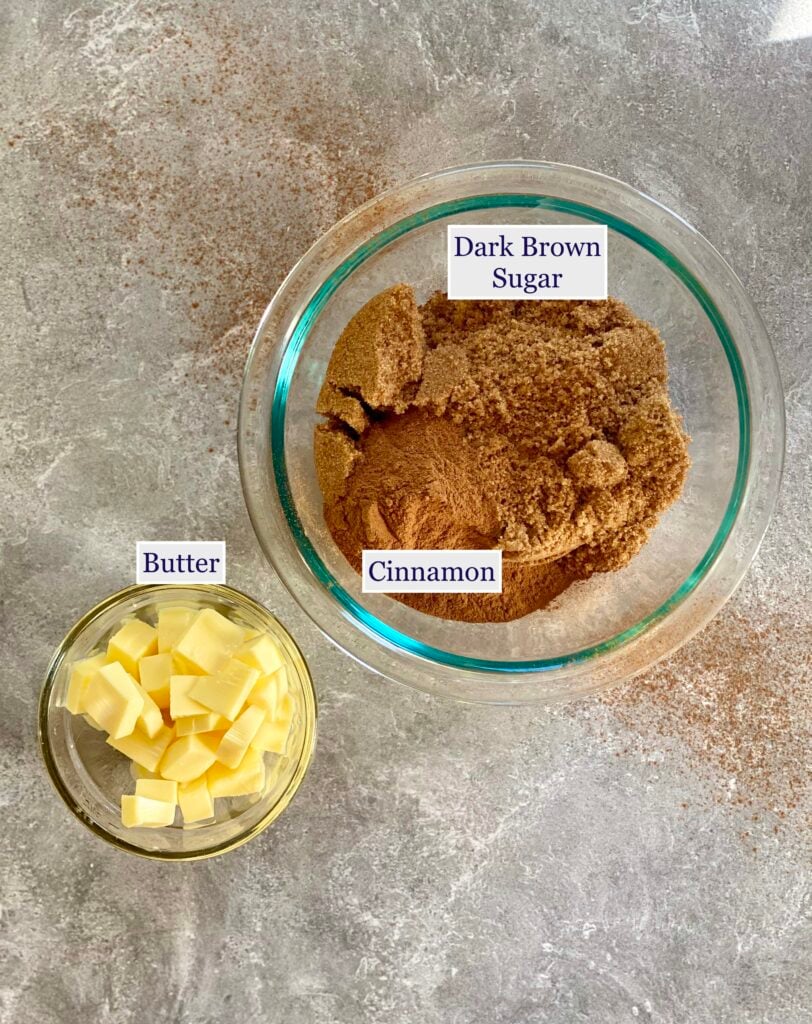
The recipe calls for light or dark brown sugar. As a rule, I prefer the extra scrumptiousness of dark brown sugar. It’s the extra molasses for me.

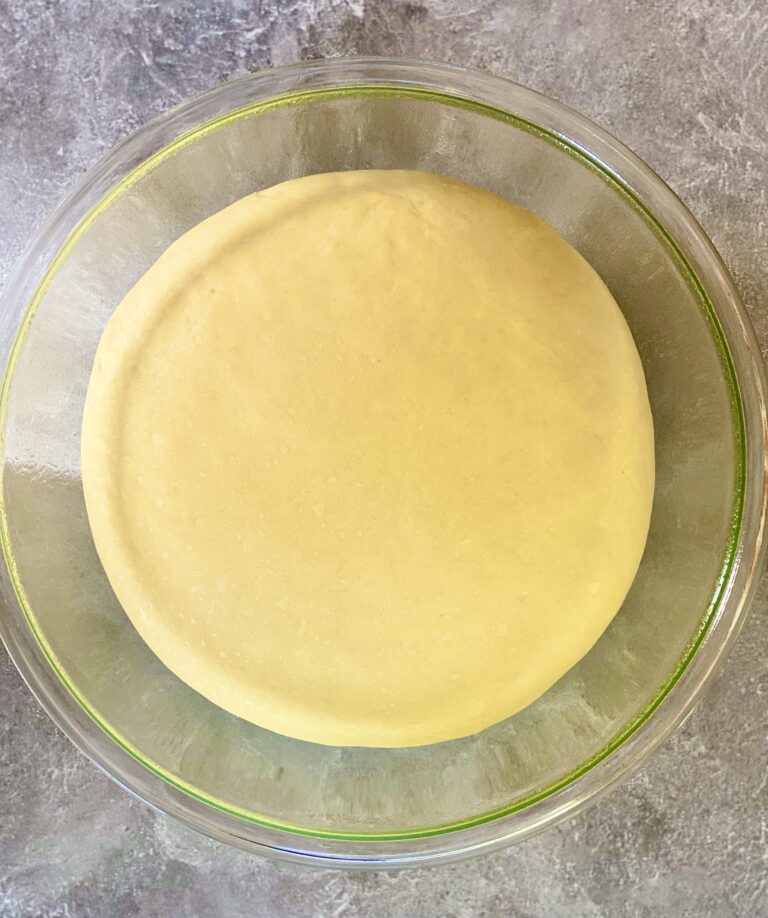
The dough finished right at the one hour mark, and what do you know, the stickiness was completely gone. It worked itself out during the resting time.
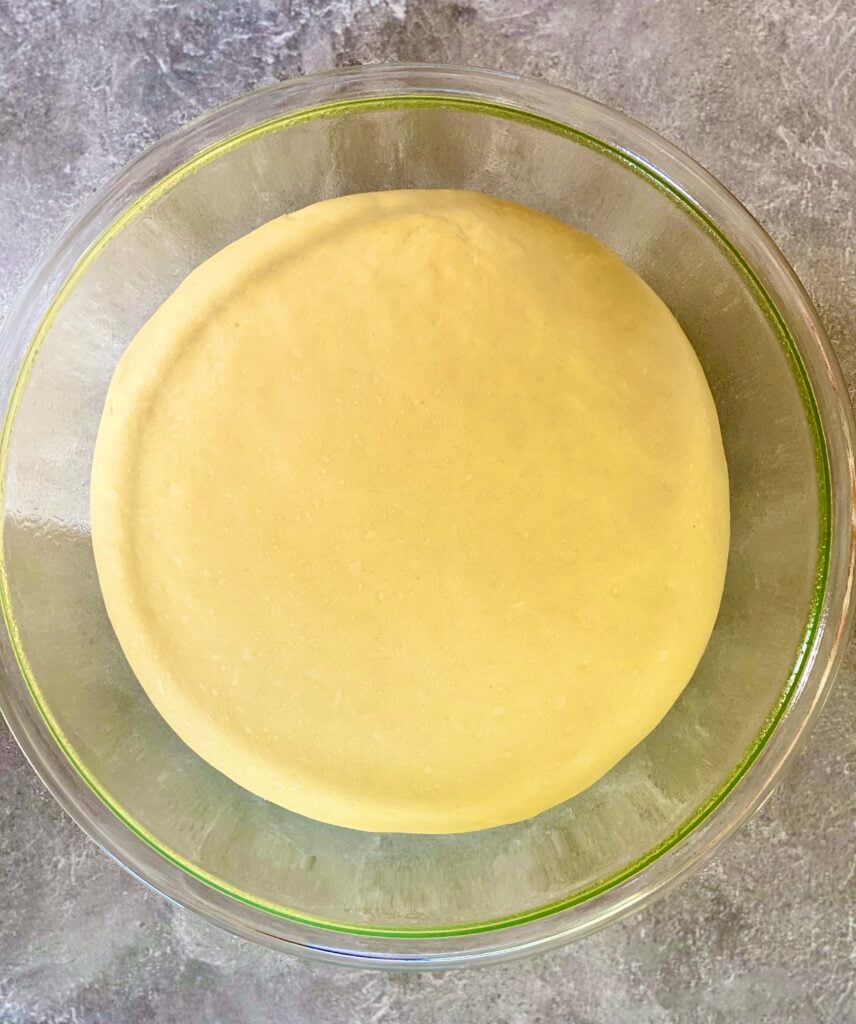
No stickiness detected.

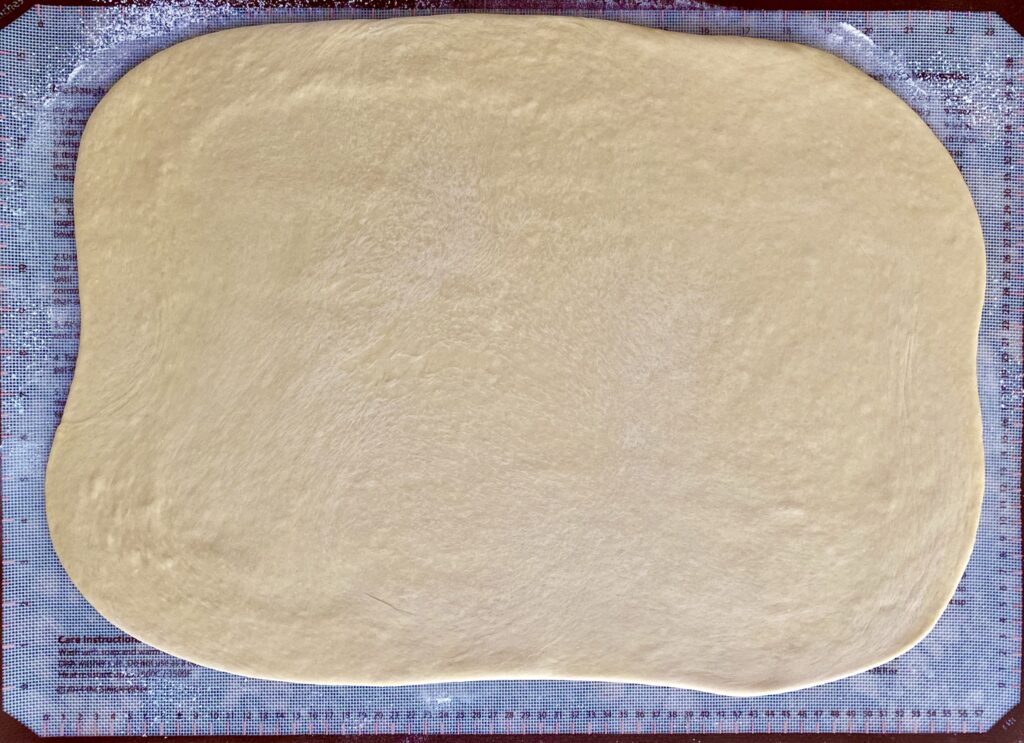
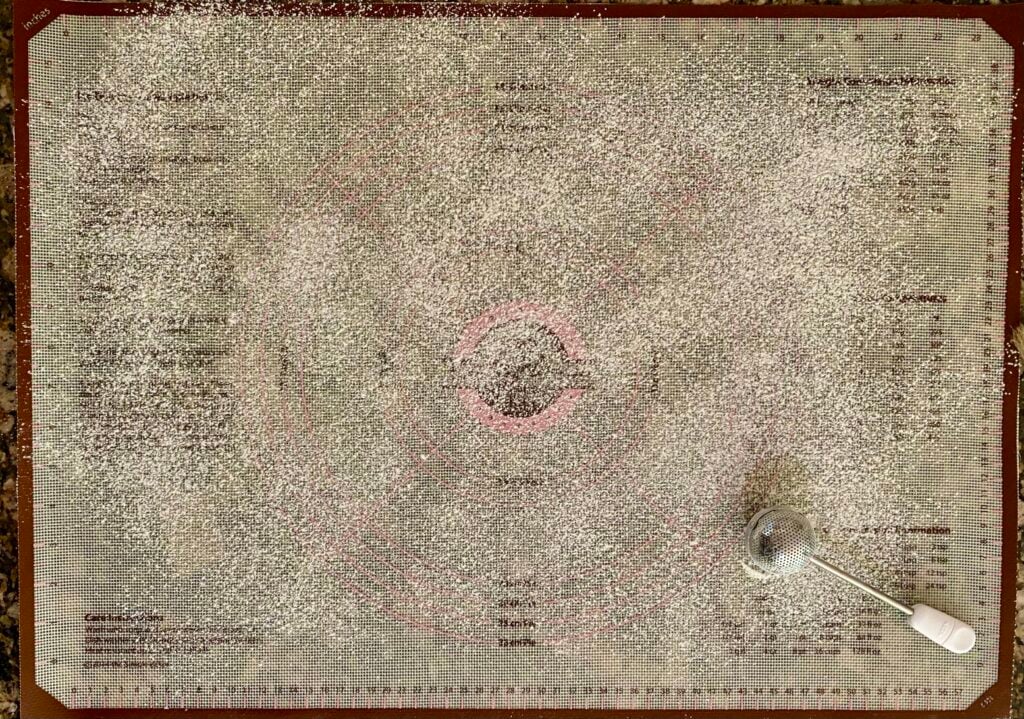
I unrolled my silicone pastry mat (this one, which I love but which I don’t get paid to advertise), prepped my surface with the tiniest bit of flour, and rolled the dough to just shy of 1/2 inch thickness.
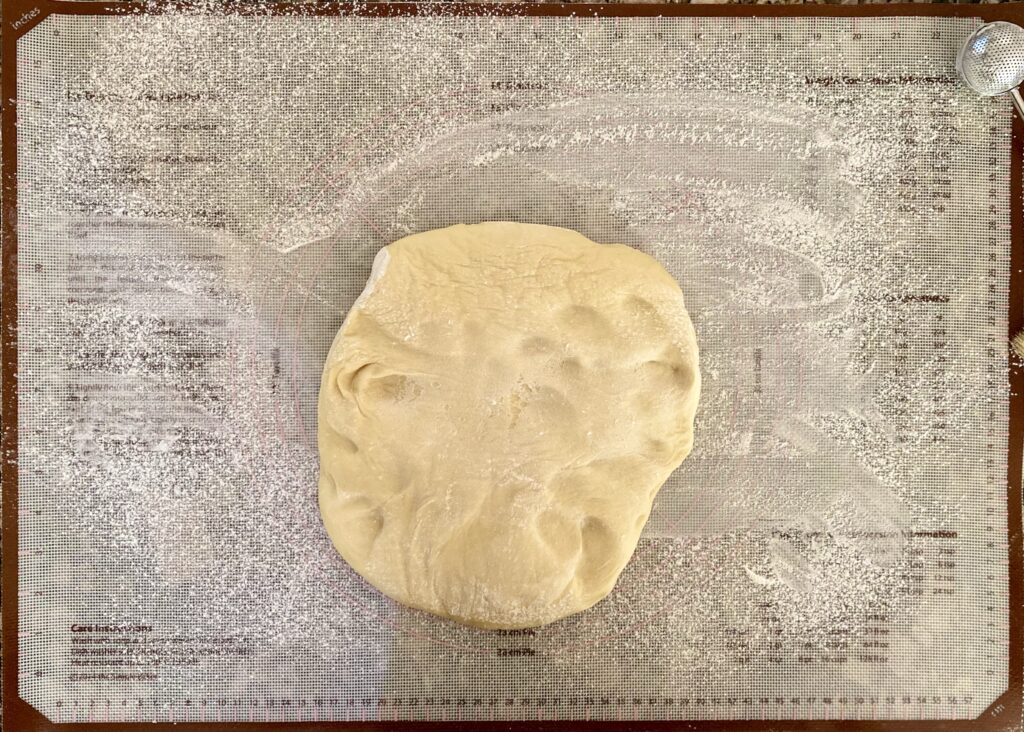
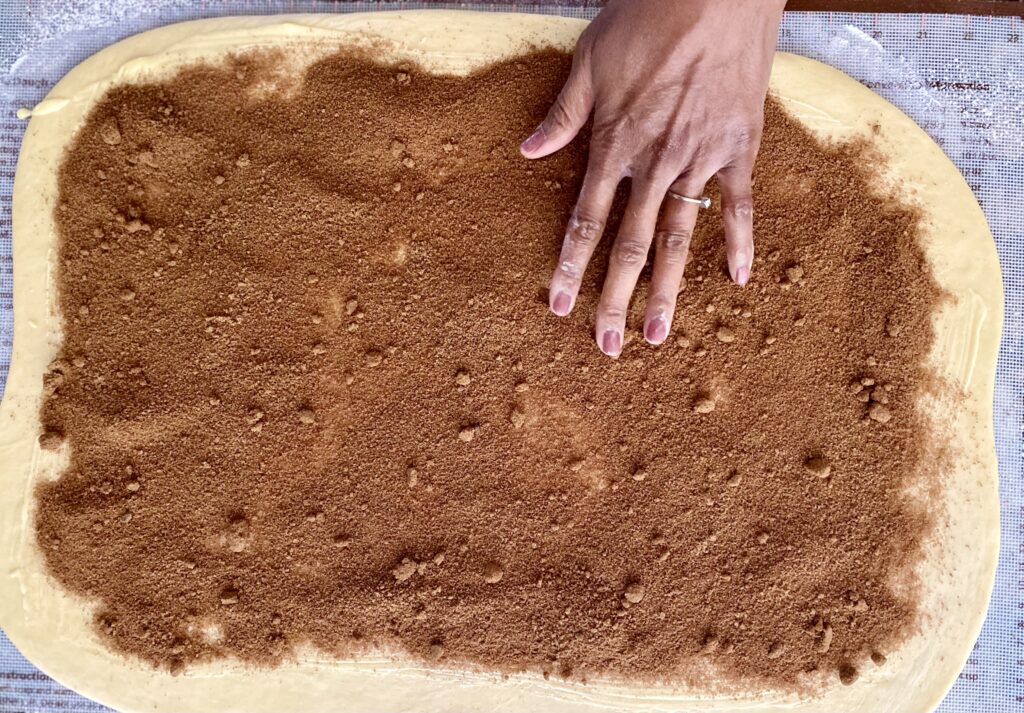
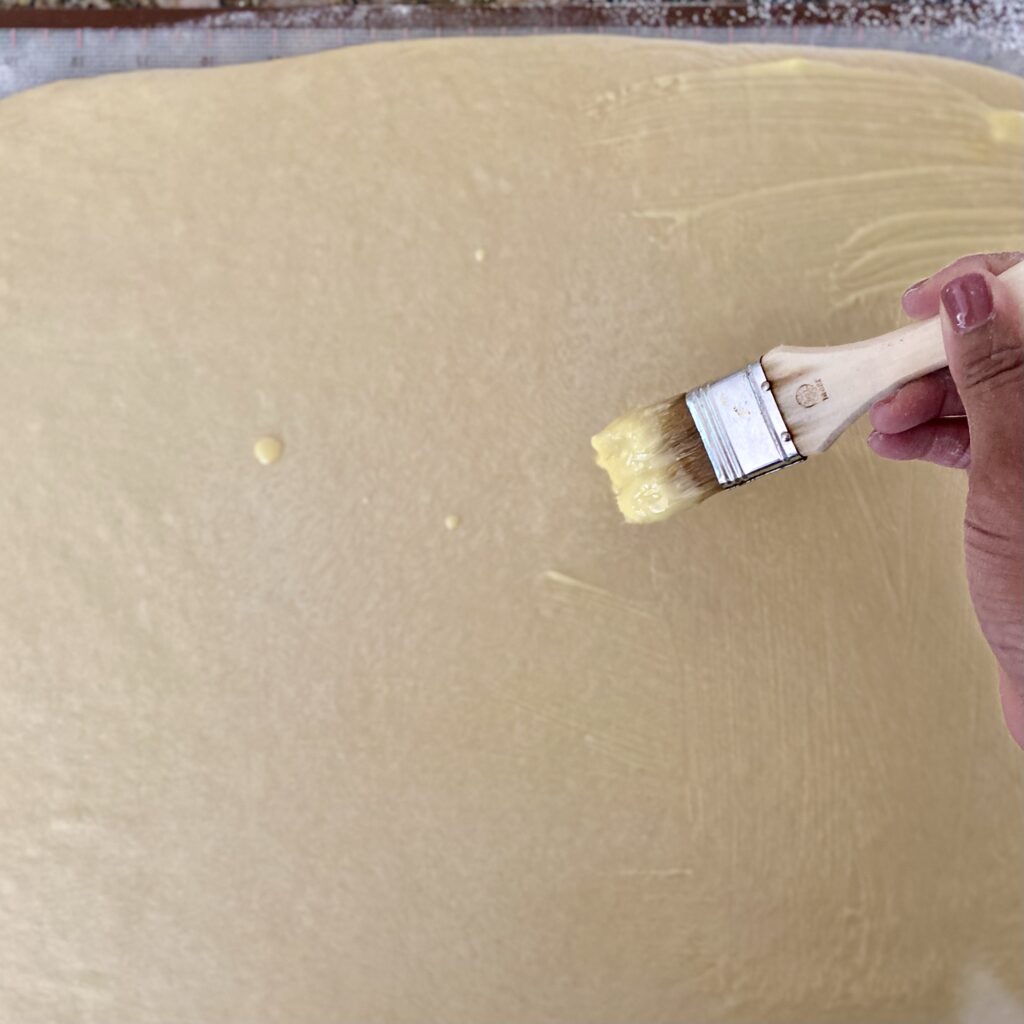
Next, I brushed on a layer of mostly melted butter…and then had a BALL with the cinnamon/brown sugar mixture. Pro tip: make sure to press the cinnamon sugar into the dough!
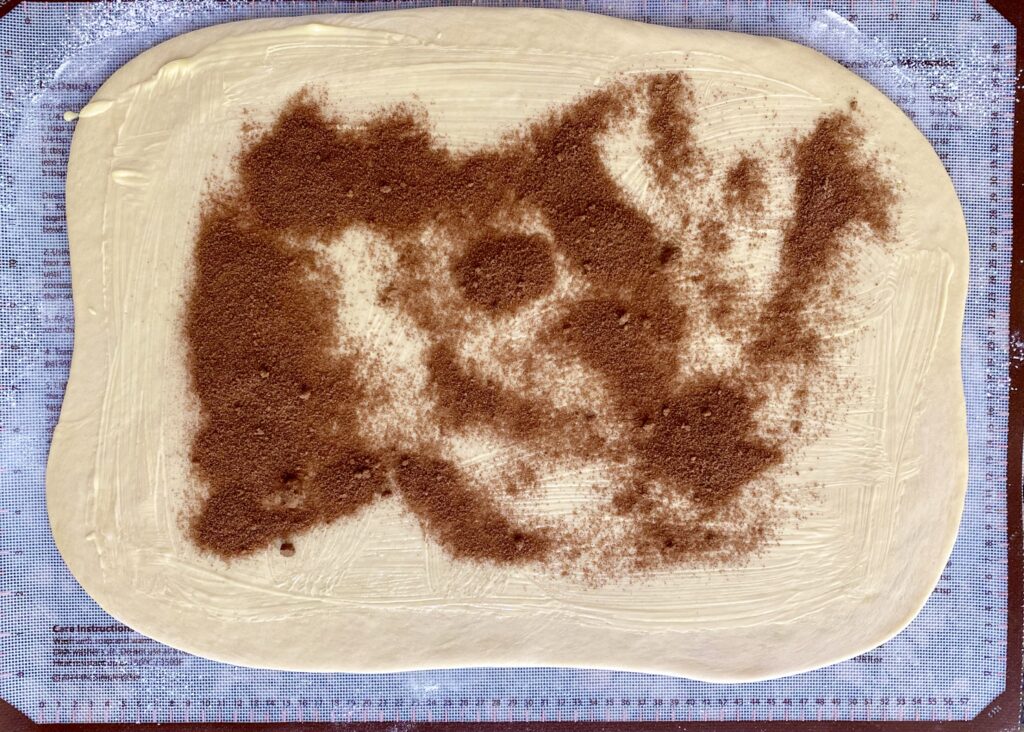
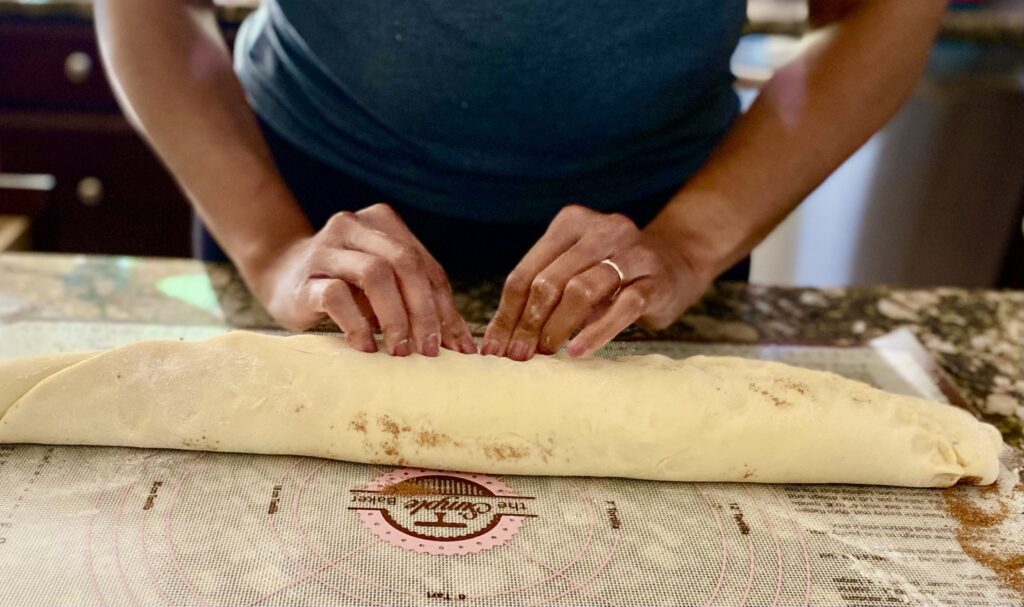
The absolute most satisfying moment of cinnamon roll production is the actual rolling of the cinnamon…roll. I adore that little *pinch* at the end to make sure that it’s sealed properly.
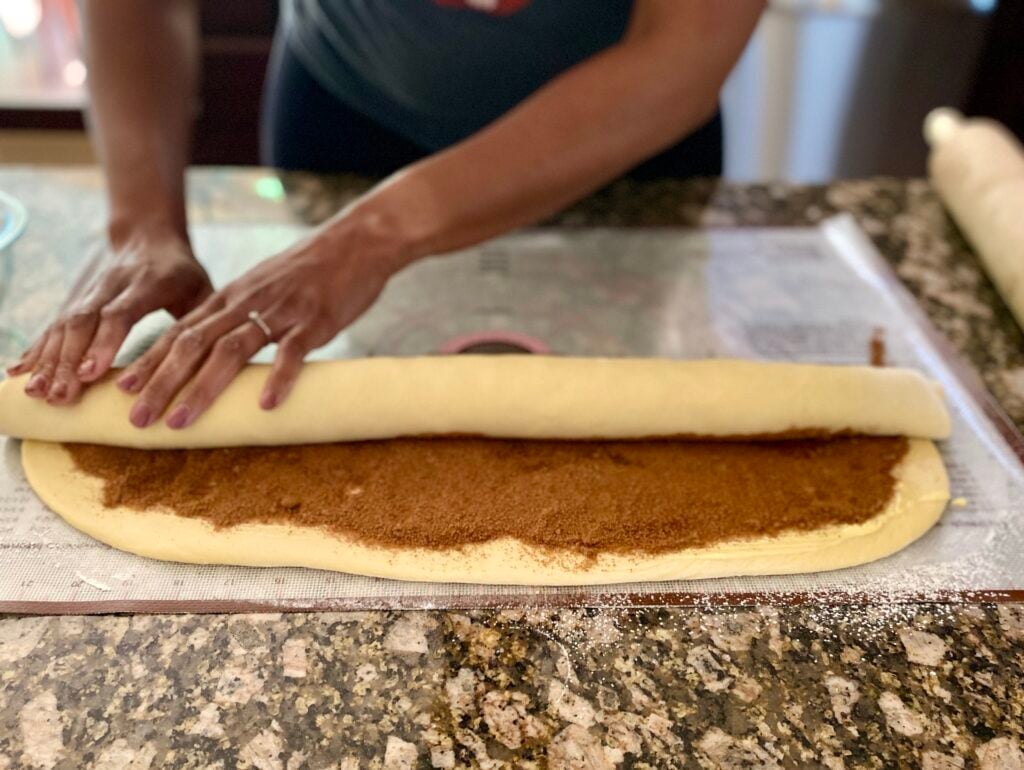
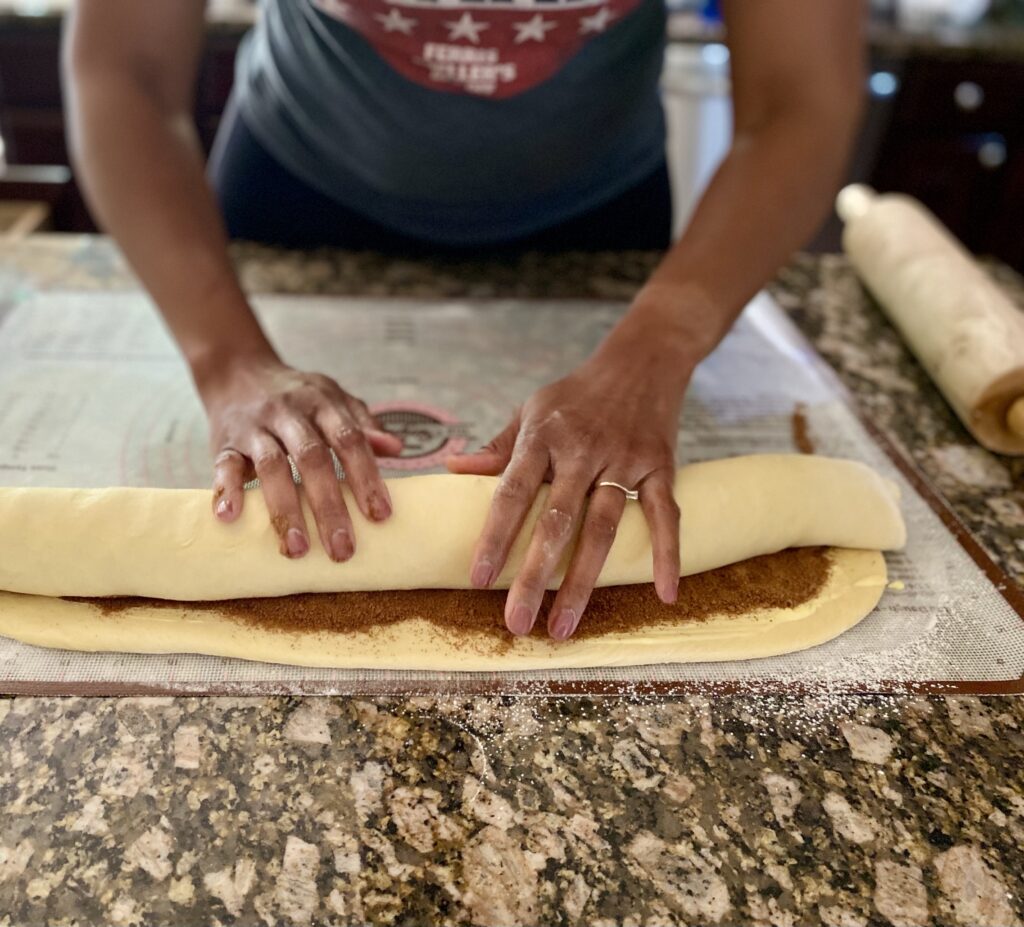
Remember to leave about an inch of space at the edges of the dough so that you can get the dough to stick to itself!

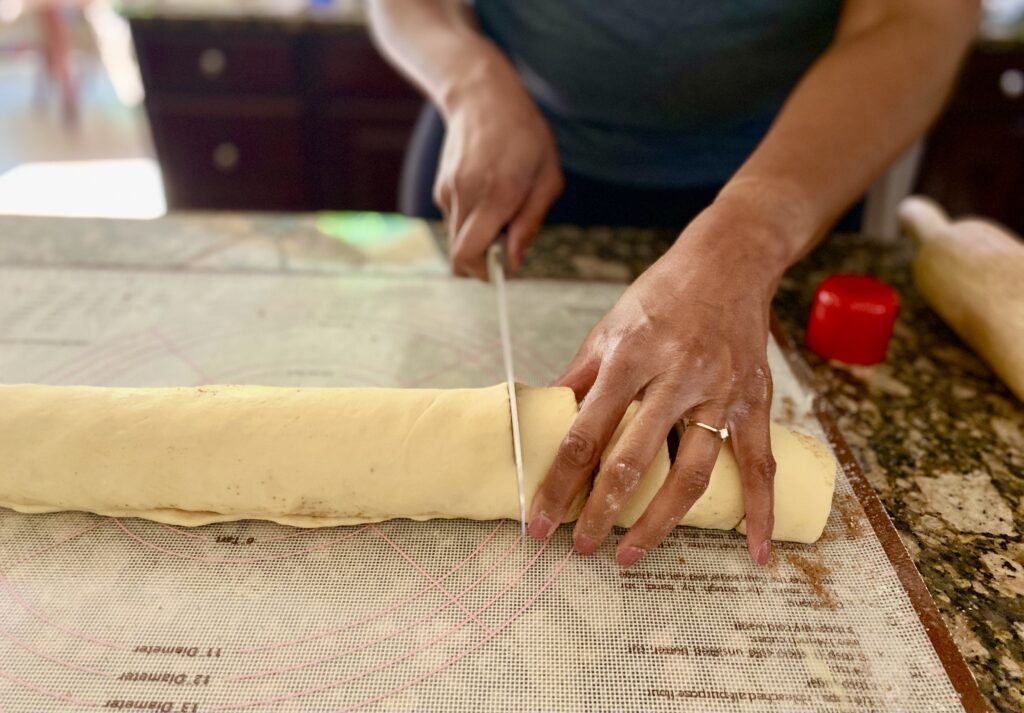
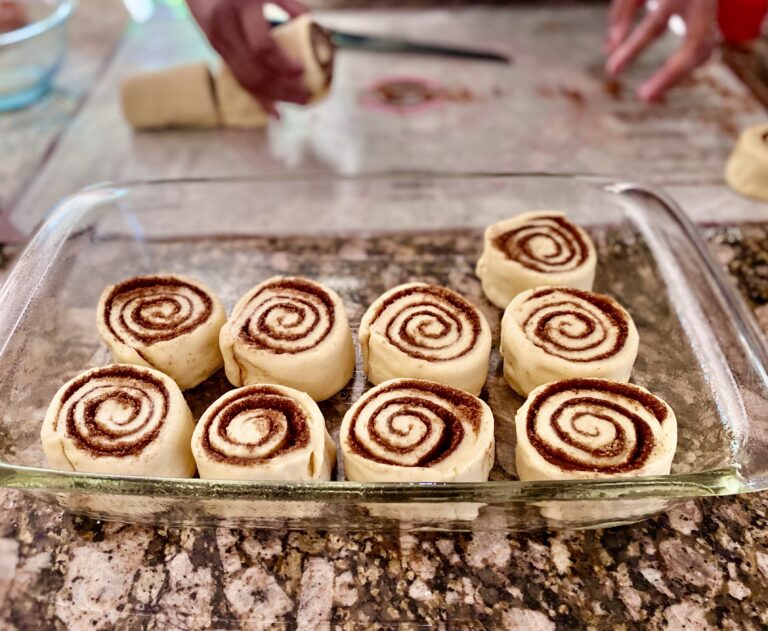
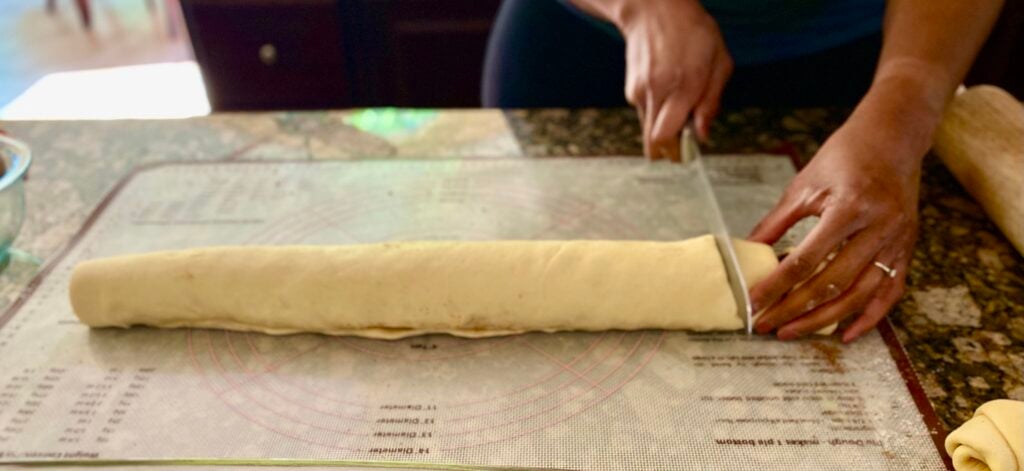
Next, came the cutting. I aimed for 1.5 inches per roll, to ensure that they baked evenly:
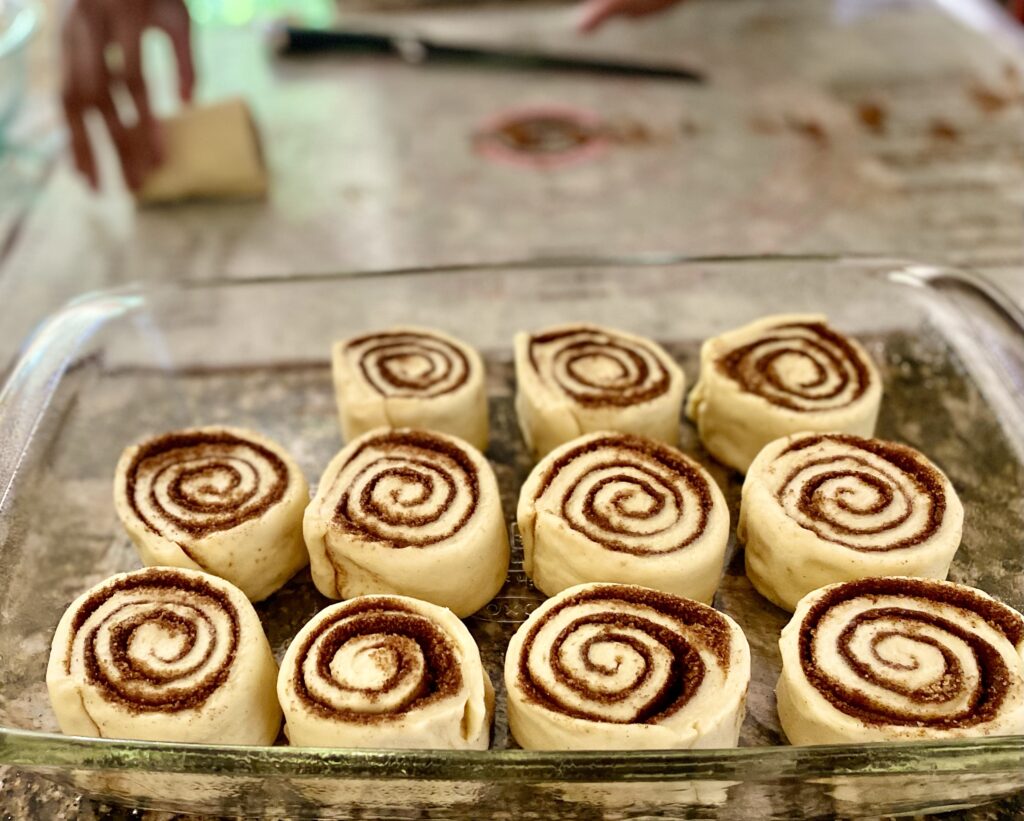
Then I placed them in my prepped pan, with enough room around them for their final rise (about 30 minutes):
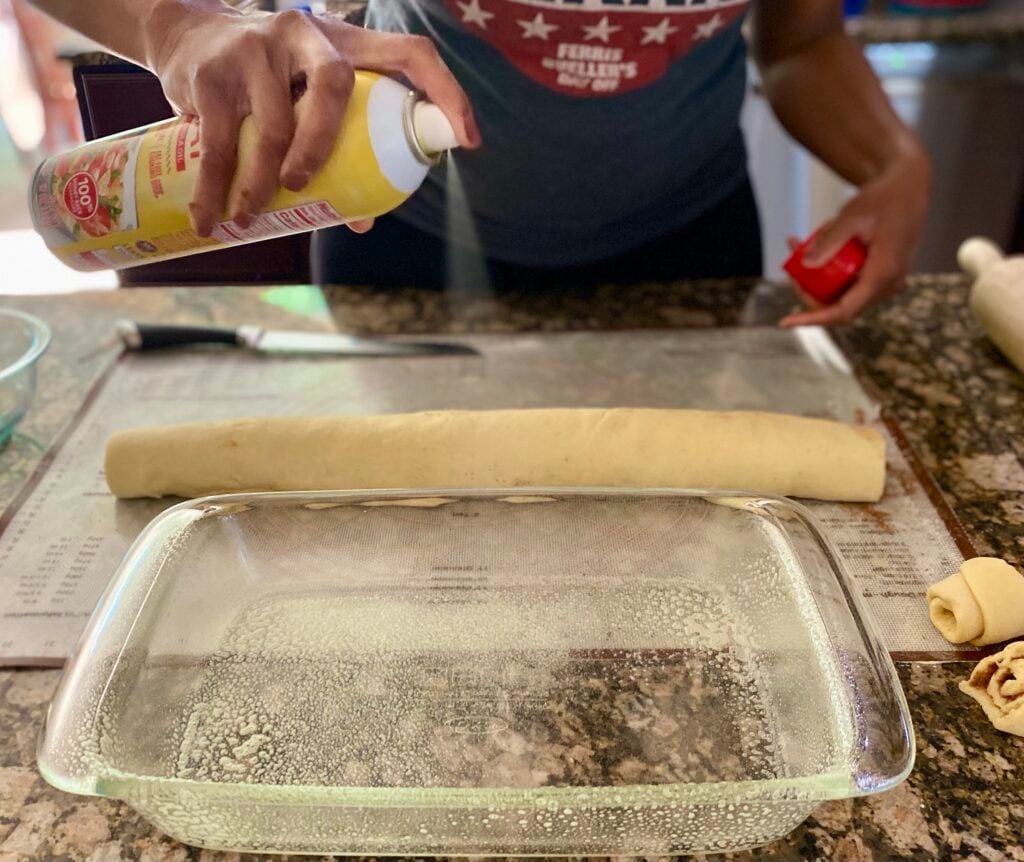
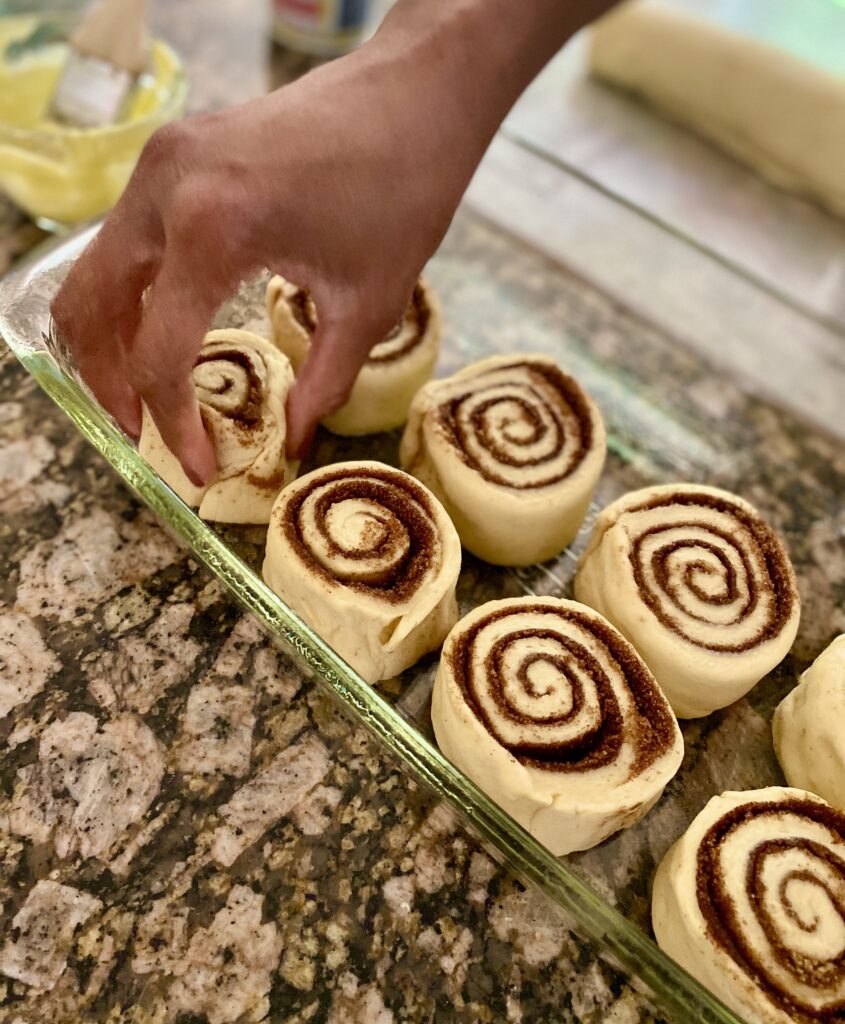
While they rested, I turned on my oven to 350?F. A few minutes before the cinnamon rolls were ready to go into the oven, I double-checked my cheapie oven thermometer to make sure that the oven was actually at the right temperature.

And oh did they rise! As you can see, the dough got nice and puffy during that thirty minute rest period.
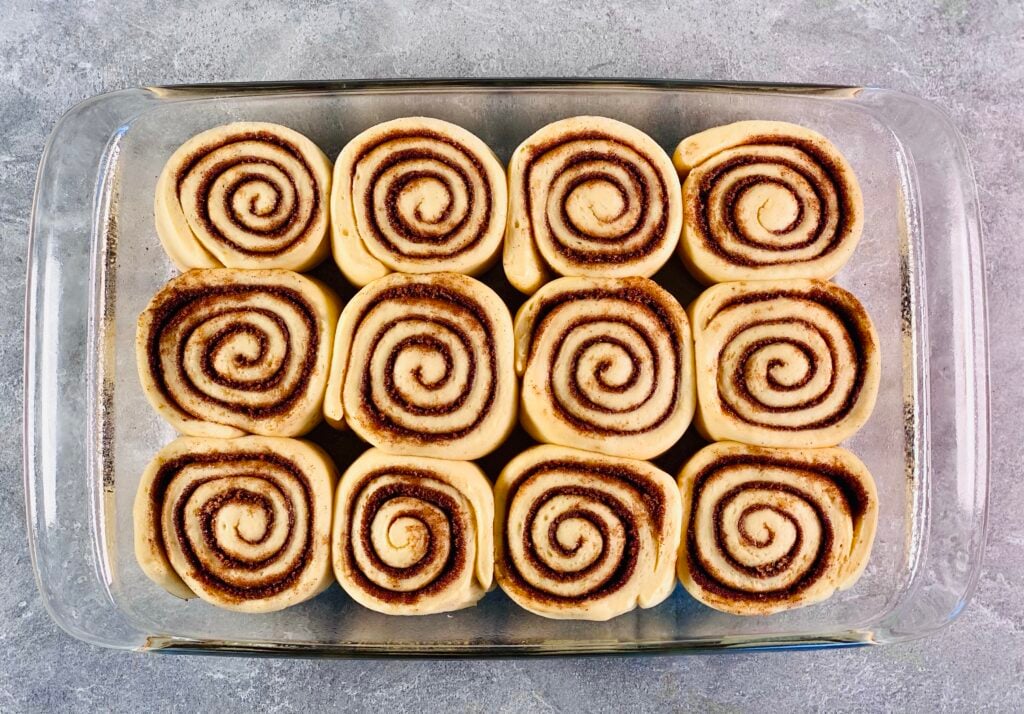
Onto the ovens!

The Bake

I may or may not have actually watched these bake for half of their baking time.
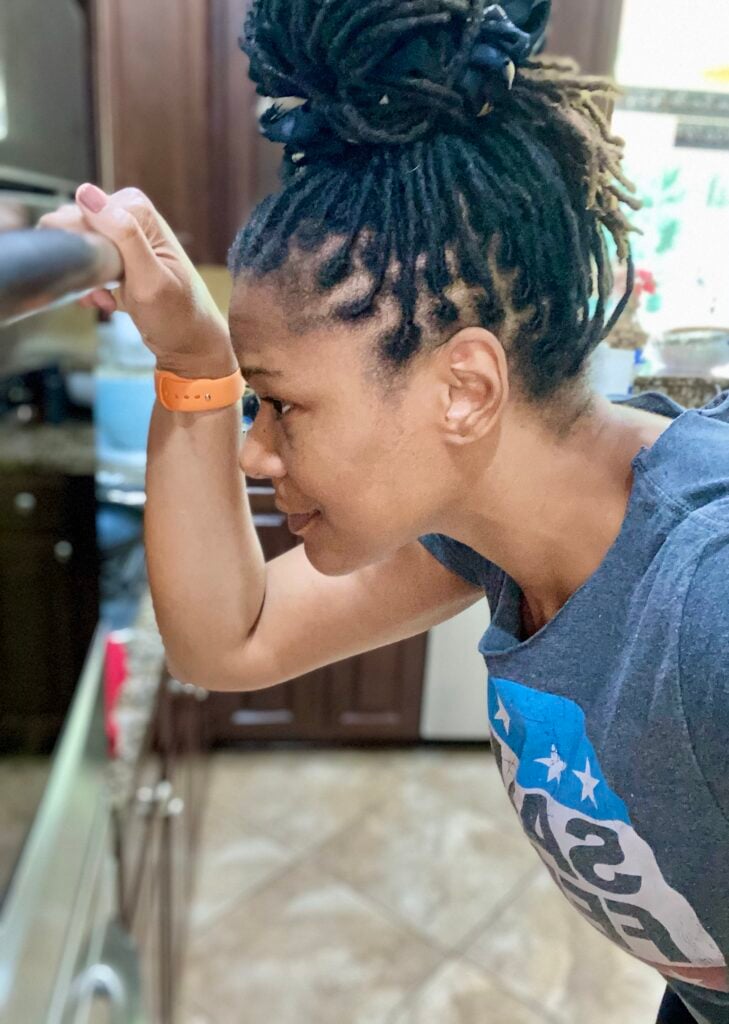
Okay. I totally did watch these cinnamon rolls for several minutes of their 22-minute baking time. But it was so satisfying.

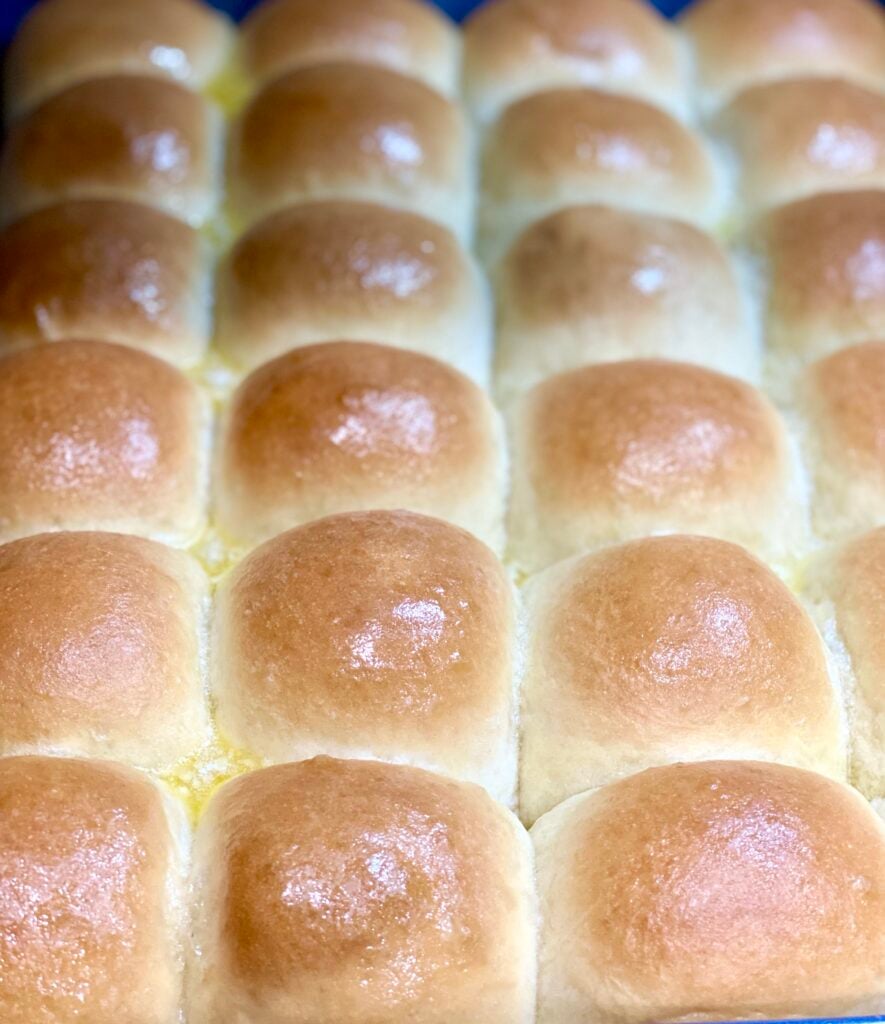
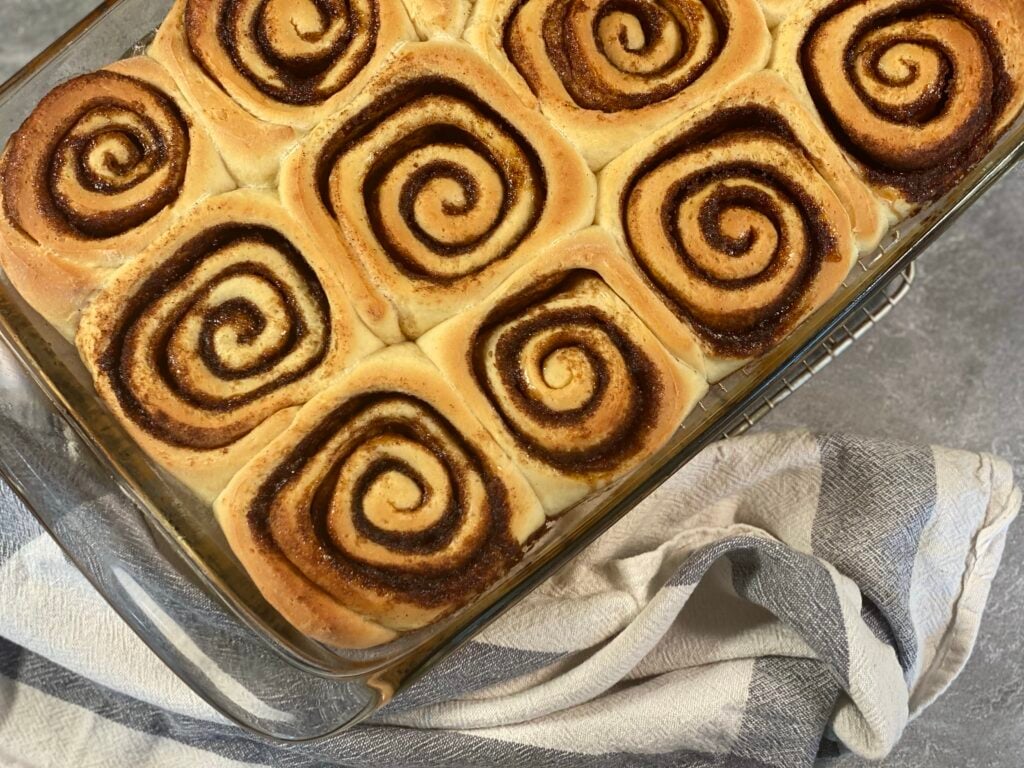
Once they came out, they looked…like…this…
The Big Finish

What is a cinnamon roll without cream cheese frosting?

Incomplete. It’s incomplete. While the cinnamon rolls were baking, I got started on the luscious goodness that is the frosting.
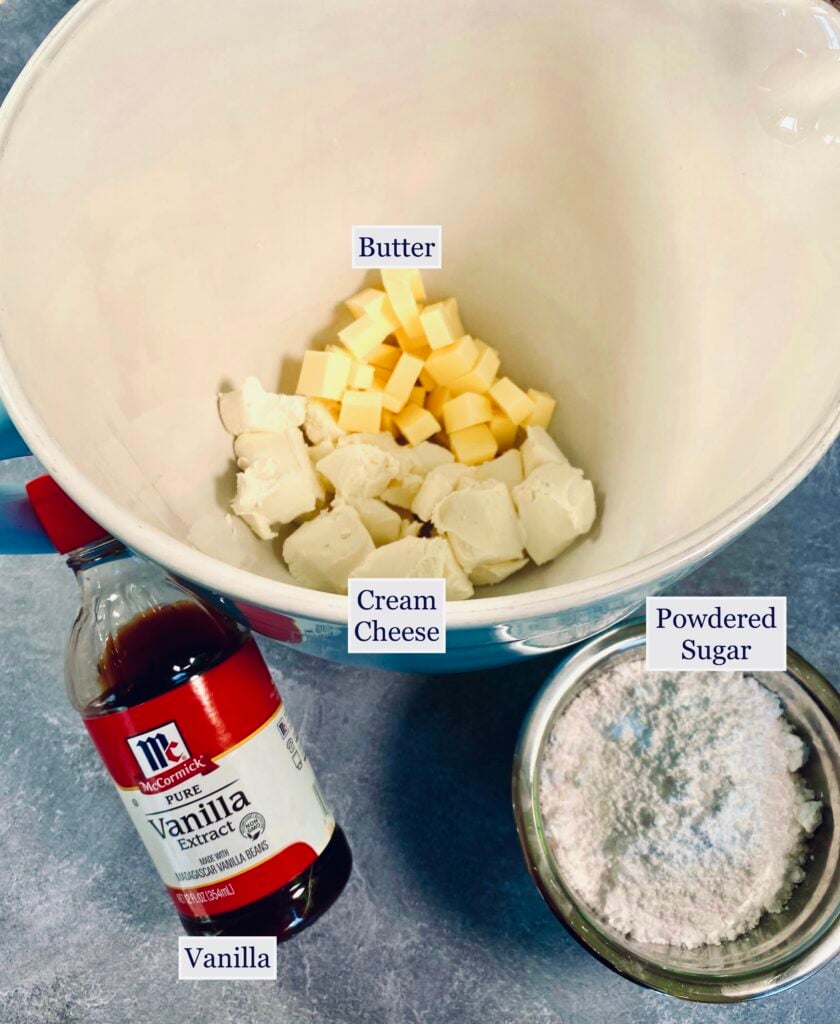
Pro tip: cold cream cheese + powdered sugar = LUMPS. You can completely avoid this by letting the cream cheese come to room temperature before starting your frosting.

I put the butter and cream cheese in the bowl of my stand mixer and blended them with the whisk attachment until they were completely smooth.

Once the butter and cream cheese were blended and smooth, I added half of the powdered sugar and the vanilla and mixed on low speed until the mixture was incorporated and smooth. Once it was incorporated, I added the second half of the powdered sugar and mixed for another minute or so on low/medium speed.

Then, I did this:
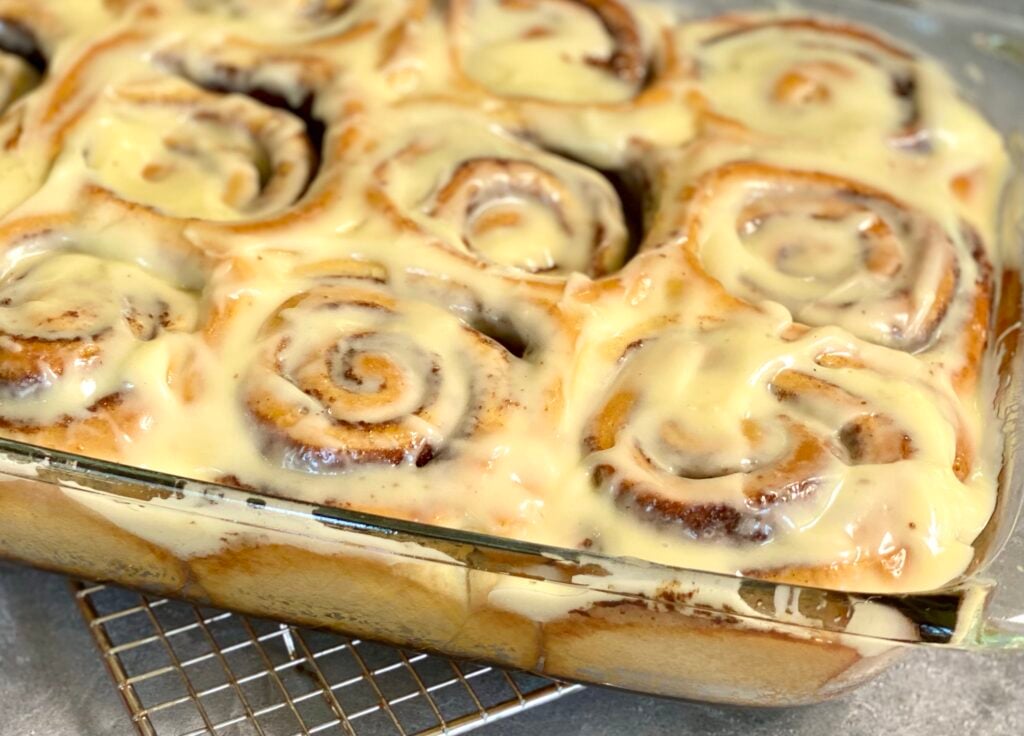
These were SO delicious. The dough was just dreamy, and the cinnamon sugar had the perfect balance. My family devoured most of these in one sitting, and when I left them unguarded on the counter, the rest of them disappeared.

Only the dirty baking dish remained.

This recipe was accessible and fun and it’s definitely one that I’ll keep in my repertoire for the future. Dare I say, this one is in strong contention to be selected for Christmas brunch!

I hope you enjoyed this post! Let me know how these techniques worked for you in the comments below!

Until next time! ??


Don’t forget to subscribe while you’re here so that you don’t miss a beat!
Join the List

Subscribe to get a free video lesson and our latest content by email!

    We won’t send you spam. Unsubscribe at any time.

    Take a Peek at My Favorite Baking Science Books!

    0

    I need sweet treats on demand. Before I could bake, this…was problematic. That’s why, when I was really dedicating myself to learning about baking science, I knew that I’d need something more than the internet. So, I jumped into baking science books and I have never, ever looked back.

    That all changed one fateful fall day in 2013, and I haven’t looked back. I made some splendidly mediocre sugar cookies over a feverish and sleepless night, and that was it, Friends. I was HOOKED on baking. HOOKED.

    At the beginning, I worked with simple, go-to recipes that never failed. Those recipes helped me build confidence during those early days.

    Alas, friends, I am a creative by nature. So, while it was fun to make someone else’s recipes, I yearned to create my own.

    I didn’t have money for pastry school, but I had an unquenchable desire to learn, so I bought the books and dedicated myself to study and practice. I’m happy today to share the books that I’ve found most useful as I’ve gone on my journey.

    I’ll link to the books on Amazon in case you’re interested. I make no money from these recommendations; I just find these resources helpful. Let me know if you do too!

    In this post:

    Let’s do this.

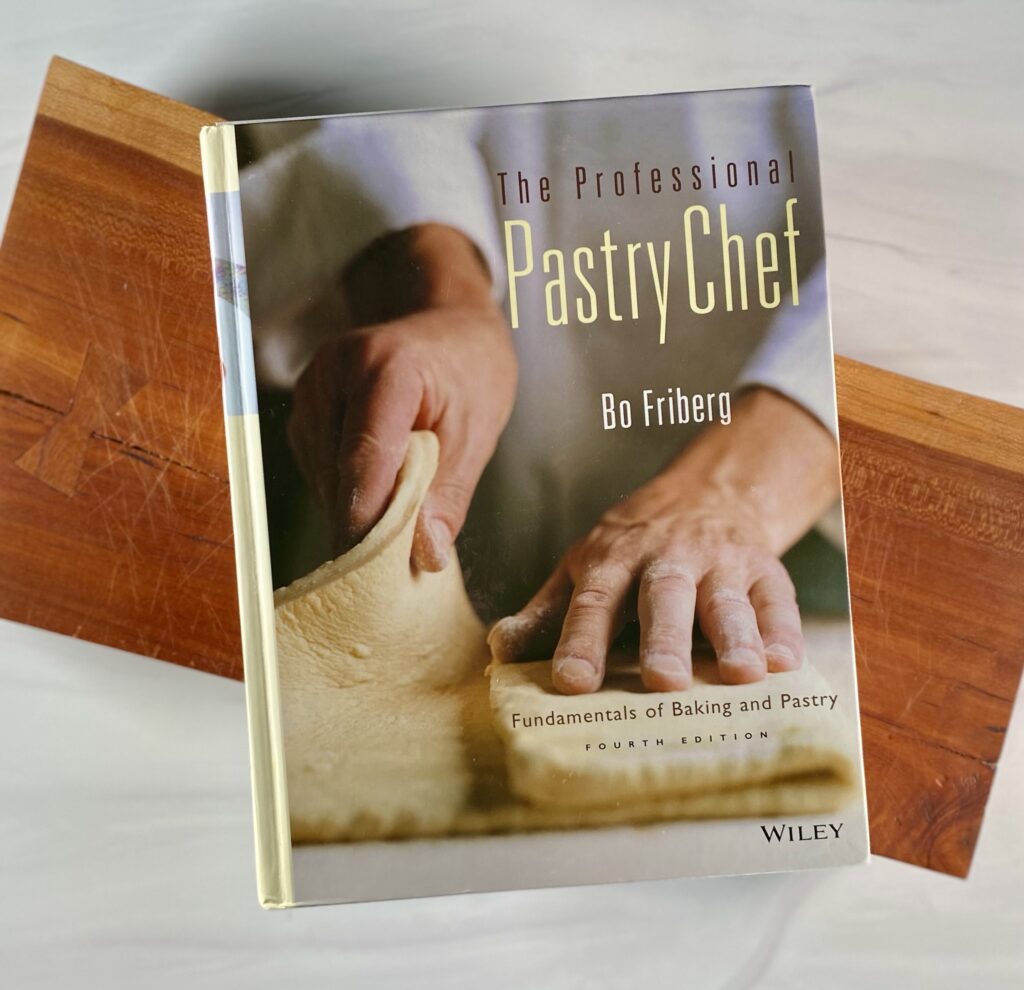
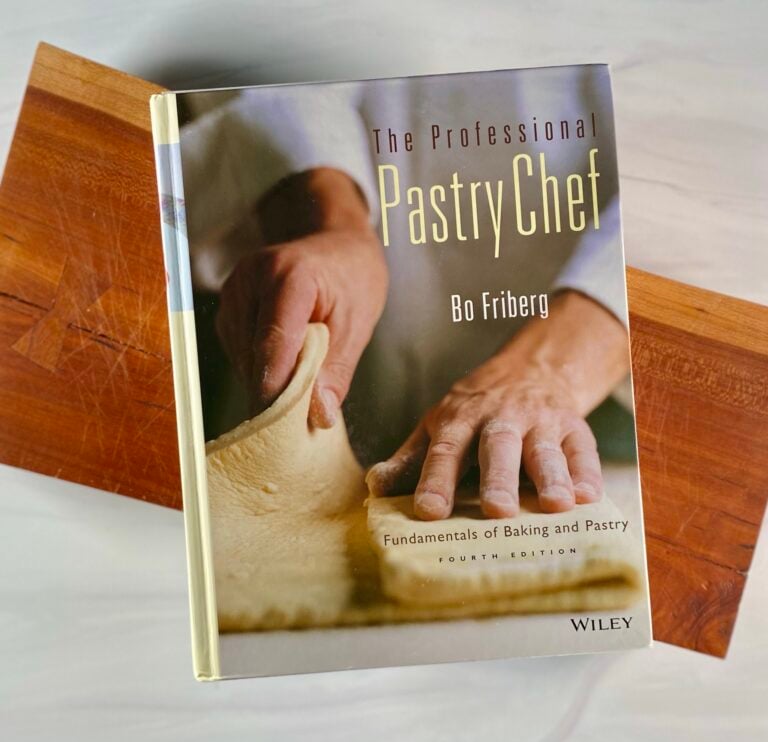
    The Professional Pastry Chef by Bo Friberg

    Photo Credit: Begin with Butter

    There are not enough lovely words to describe this book. It is a textbook, to be sure, but it is also literally the first baking resource I ever check when I’m looking for a definitive answer about something.

    As the name suggests, this book is written for pastry students, but it is an incredible, comprehensive resource for anyone looking to up their baking game. It contains concise, easy-to-follow baking science, conversion charts, baker’s percentages, and clear-cut explanations for so. many. pastries.

    Oh! And diagrams! I love diagrams and this book has them in spades. Diagrams teach you the method for working quickly and efficiently, while producing pastries worthy of a high-end pastry case. We love diagrams.

    This book is how intermediate bakers become advanced bakers. How those looking to truly understand baking science learn that knowledge.

    For the petty, this book is how those looking to dominate the dessert scene at Thanksgiving put the debate to bed forever and ever. Going forward, that will be [insert your name here]’s dessert table. Picture it.

    The recipes in this book use weight measurements, and the yields are for professional kitchens, but if you’re using weight measurements, it’s easy enough to scale these recipes down to suit your needs. And, of course, there are instructions in this book for how to do that without ruining the the integrity of whatever you’re making.

    The new edition of this book comes out in September, and while I’ve preordered it, this version has a very special place in my heart.

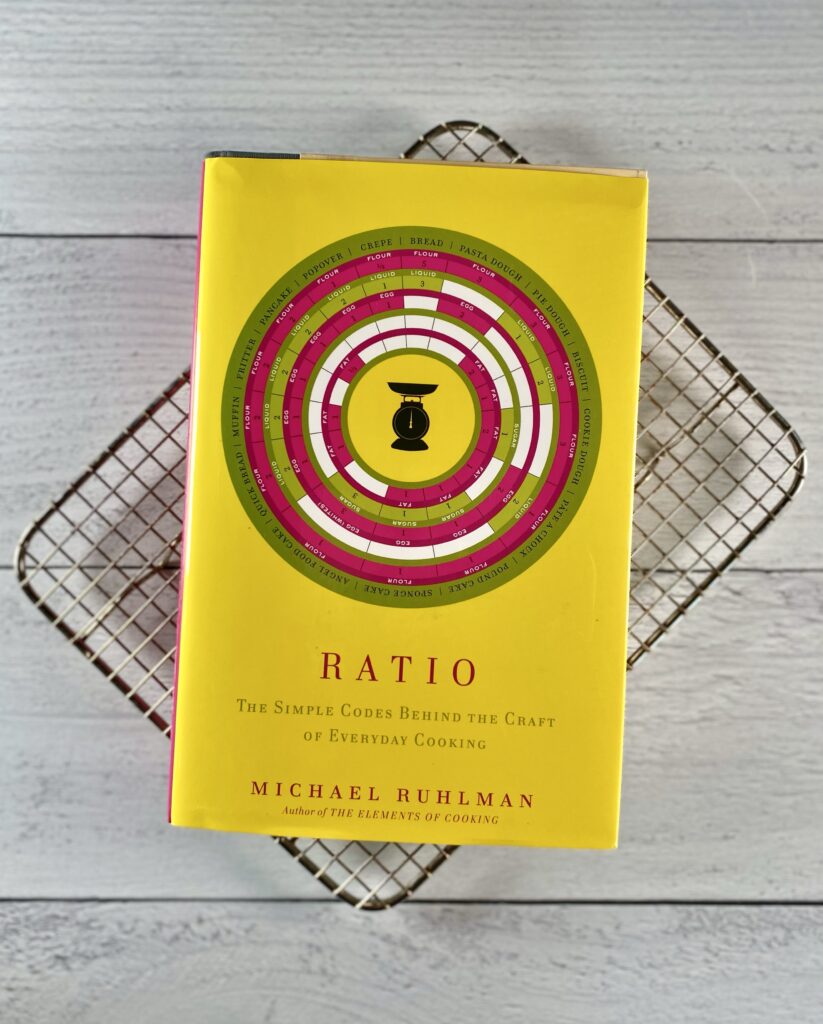
    Ratio: The Simple Codes Behind the Craft of Everyday Cooking by Michael Ruhlman

    Photo Credit: Begin with Butter

    Super fun fact: if you don’t know what you’re doing with basic baking ratios, it’s extremely difficult to create your own recipes without tons of food waste.

    You see, the baking recipes that you see in cookbooks and online are generally based on basic ratios (formulas). That means, for example, knowing that for every cup of flour, you need x amount of sugar, x amount of fat, x amount of leavening, et cetera, et cetera.

    These basic ratios are the foundation of baking recipes; they are time-tested to produce consistent texture, taste and color for your baked goods. Recipe development, then, depends mostly on knowing the ratios and making slight modifications to produce different variations. Once you know the ratios, you can let your creative flag fly!

    This book cracks the code about ratios. For intermediate/advanced bakers who are ready to flex their creative muscles, this book will teach you basic ratios for baking that you can use to start your creative journey. Bonus: this book is not just for bakers! It is actually mostly dedicated to savory, but the information about baking is invaluable. (psst….the savory stuff is well worth the read too).

    Not only will this book teach you about ratios, it will give you the industry-accepted ratios that pros use. If you’re ready to truly learn how to build baking recipes of your own, then this book is it. It’s a power-packed short read and a great resource.

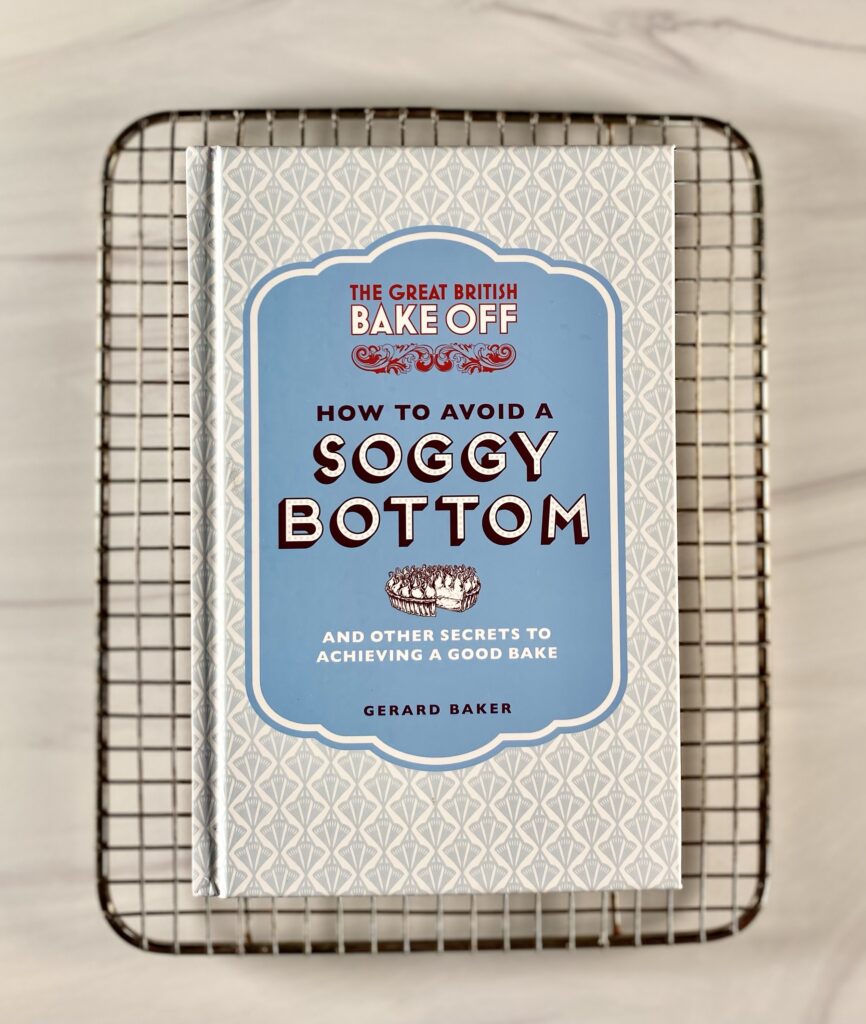
    The Great British Bake Off: How to Avoid a Soggy Bottom: And Other Secrets to Achieving a Good Bake by Gerard Baker

    Photo Credit: Begin with Butter

    This book-with-a-long-title is an amazing resource for quick answers about nagging baking questions. It’s broken into short, easy-to-find information.

    Family, this is the book you need when you want a quick answer…like when you’re in the middle of a baking project and something is about to go horribly wrong. When you need a plainly-written, effective answer to help you get back on track (hopefully). Or when something goes horribly wrong and you want a quick resource to troubleshoot how to avoid the mistake in the future. This book is that book.

    This book also has adorable history lessons (like about the history and use of baking powder and baking soda, and the cookie/biscuit distinction in American and British baking). Sometimes it’s fun to just get lost in this book for those cute history snips.

    Of course, the writing is fluid and fun and you can absolutely kick your feet up with a cup of tea and just read straight through as well. While the sections in this book are a quick read, it is an excellent resource for learning bite-sized baking science in a Q&A style.

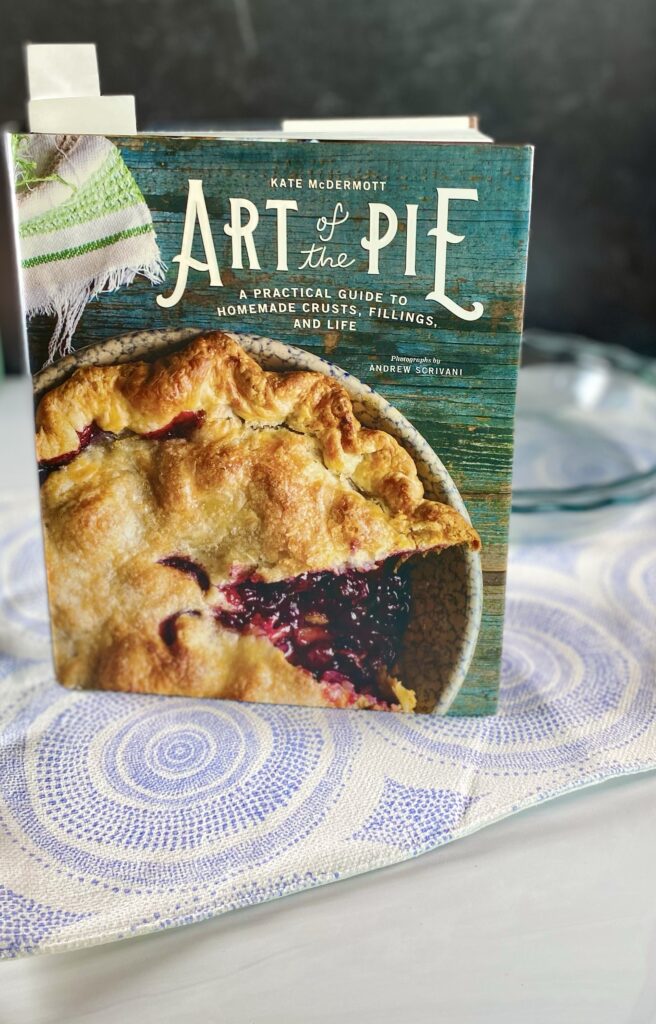
    The Art of the Pie: A Practical Guide to Homemade Crusts, Fillings, and Life by Kate McDermott

    Photo Credit: Begin with Butter

    Friends, when I say that I saved pie making for the very last thing I ever learned about baking because I was so intimidated about pie crust? Because the humble pie will HUMBLE YOU.

    Then this book came along and changed everything. Kate McDermott calmed my fears in the first five pages and made me realize that “it’s just pie.” Those words changed everything. I also felt quite silly because what was I freaking out about?

    Then I got overconfident and underbaked my first pie by a mile. But this book helped me realize that pie, like life, is about growth. So I just kept making more pie.

    Lucky for me, this book has easy-to-follow pie crust recipes and techniques that made me feel very accomplished very quickly. There are also a crazy number of filling recipes to choose from.

    After working with this book for a while, I tried several online pie crust recipes and I have yet to find one that I love better than the all-butter crust on these pages. And the fillings are always on point. Considering my book’s overall worn appearance, you know that it’s been well-loved over the years.

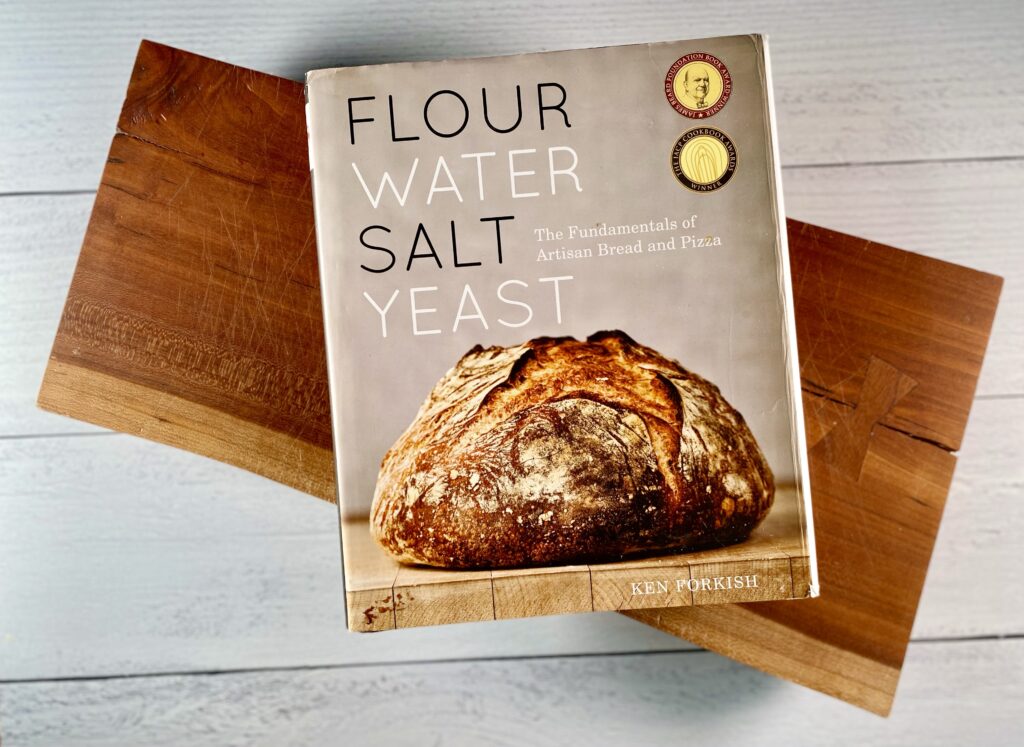
    Flour Water Salt Yeast: The Fundamentals of Artisan Bread and Pizza by Ken Forkish

    Photo Credit: Begin with Butter

    Let me apologize in advance for the overall beat up appearance of this book. At least the book jacket is still on it. I consider that more than a minor miracle.

    This, Friends, is the tome for advanced bread makers. This book is based on the premise that bread only needs four humble ingredients: flour, water, salt and yeast.

    Don’t be fooled though. This book shows that the secret to transforming those humble ingredients is in your technique. If you take the gentle hand this book extends and take a walk through the pages, you’ll see that those ingredients can be transformed in any number of ways.

    In addition to more common straight doughs (bread doughs that use yeast only), this book offers the advanced baker a primer on those types of sourdough “starters” (biga, levain and poolish) that add are used to create spectacular, bakery-quality loaves. This book primarily uses baker’s percentages in place of “recipes” that you might be used to seeing online, so it really appeals to my nerdy heart.

    This book also does a tremendous job of explaining, in simple terms, how external factors (like humidity and air temperature) impact your bread. It gives practical tips for addressing those external issues to help you get the best loaf possible. The loaves in these pages are a lot of work, but they are more than worth the effort.

    This is a tremendous, tremendous book.

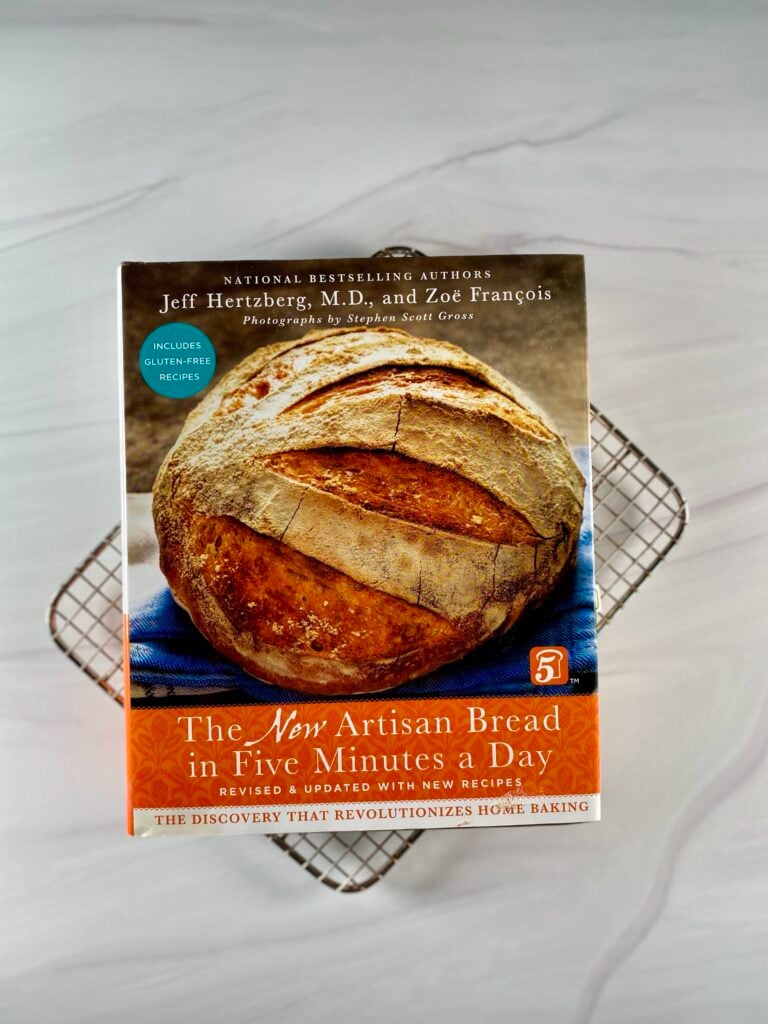
    The New Artisan Bread in Five Minutes a Day by Jeff Herzberg and Zoë François

    Photo Credit: Begin with Butter

    For beginning bread makers, and intermediate/advanced bread makers who don’t want to babysit loaves all day, this book has the answer. Bread dough in five minutes that lasts in the fridge for several days.

    These recipes are amazing because you can have fresh bread whenever you want it, with minimal effort. The recipes in this book are unfussy and can make anyone feel accomplished with just a few ingredients. The directions are clear-cut and easy to follow.

    This book promises bread dough in five minutes and it delivers in a big way. It’s extremely accessible for home bakers who have a million things going on but still want to make good loaves with whole ingredients. For those intimidated about working with yeast, this book is a way to gain quick confidence for more ambitious bread projects!

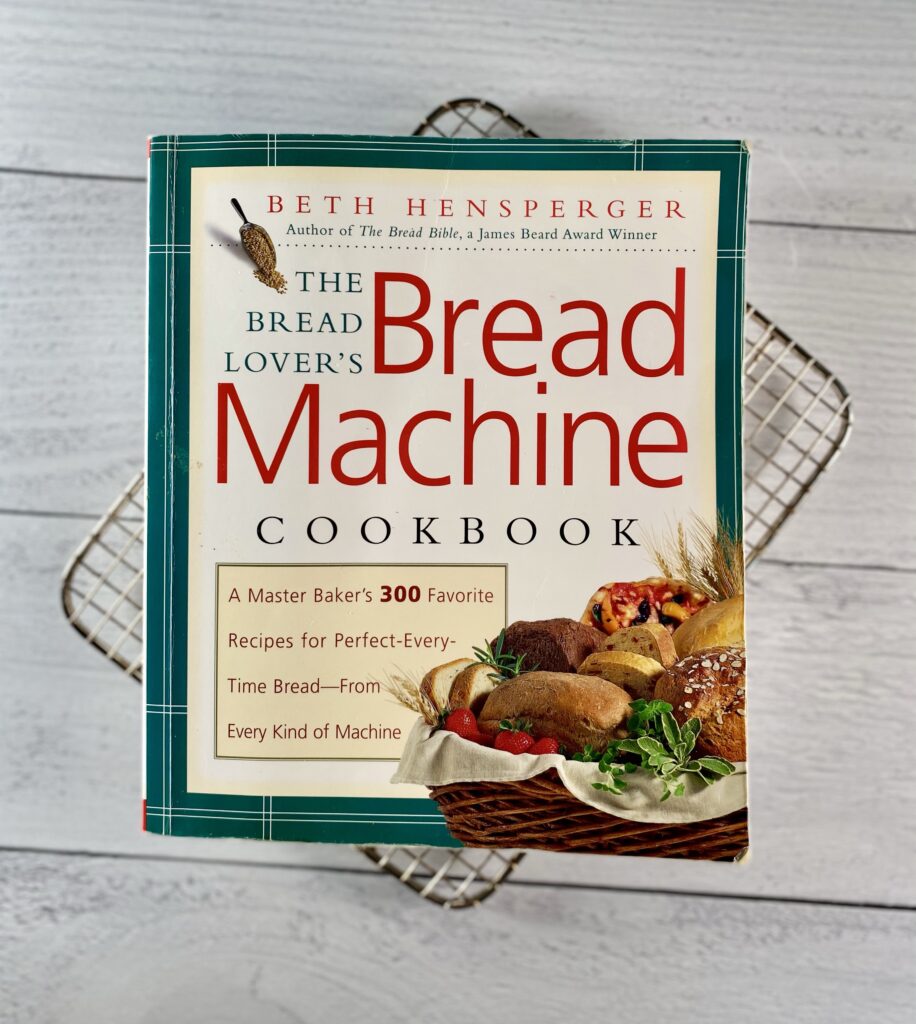
    The Bread Lover’s Bread Machine Cookbook by Beth Hensperger

    Photo Credit: Begin with Butter

    There some bakers who look down on bread machines because they feel that there’s too much sacrificing of quality for convenience.

    I honestly think that’s unfortunate and don’t subscribe to that kind of thinking at all. We celebrate all bakers here. #PositivelyBetterBaking

    There are a million reasons why someone might want to use a bread machine to make homemade bread. I, for one, truly appreciate any effort to make bread from scratch. And bread machine sandwich loaves > store bought sandwich loaves any day of the week.

    My point is that there is no one true way to make bread. And again, for busy people who don’t have the time to babysit sandwich loaves, I support you! Get yourself a bread machine and some ingredients and have the best time. Seriously!

    This book works for any baker with a bread machine. Whether you’re an advanced baker who wants a “throw and go” recipe that allows you to toss ingredients into a machine while you’re off to the market, or you’re brand new to working with yeast, there are tons of great recipes to experiment with and enjoy. I’m partial to the Cinnamon Raisin Oatmeal Walnut Whole Wheat bread recipe (sans nuts) myself.

    The point is that there are a ton of well thought-out, truly delicious recipes in this book that are supported by baking science. Go for it! Have fun! It’s an amazing time saver and you’ll get bread with whole ingredients. Win!

    Final Thoughts

    I like to think that I graduated summa cum laude from the Culinary School of Hard Knocks. Mine has been an exceptionally worthwhile education, but it can be lonely trying to learn all of this stuff on your own.

    I created this blog as a place to share what I’ve learned over the years. A place where you can find everything you need in one nice, neat baking blog package. For those of you who want to take supplement what you’re learning here with my favorite resources, feel free to check out one or all of these books and let me know how they worked out for you!

    Until next time!


    While you’re here, you should subscribe! It’s the best way to stay on top of the very latest with BwB!

    Yeast Basics for Beginning Bread Bakers

    One of my favorite things to do in the kitchen is to make bread. There’s something just so satisfying about taking flour, water, salt and yeast and making the most scrumptious artisan bread, or achieving the perfect, tacky-but-not-sticky texture for apple fritter dough.

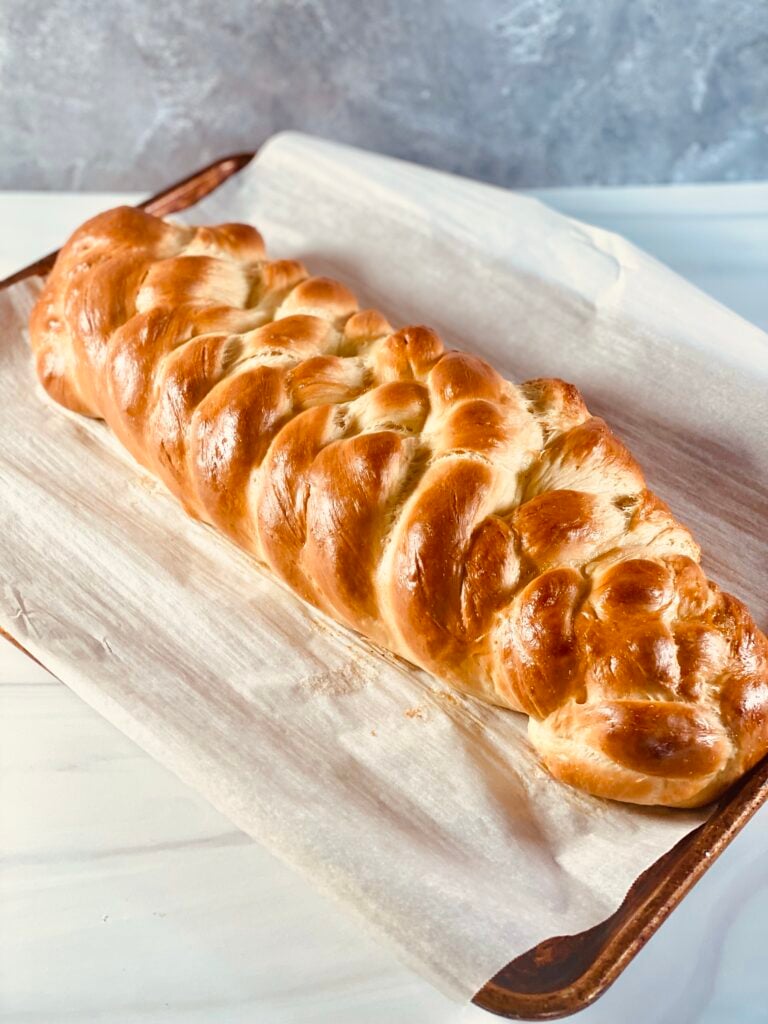
    …or challah

    In my home bakery, I’m most at peace than when my apron’s covered in flour and I’m kneading bread by hand. Something about the repetitiveness of the motion, the fresh, yeasty smell, the smooth firmness of a shaped boule before its final rise…just gets to me. I swear that time slows down when I’m working with bread.

    It was not always that way though. When I purchased my first (several) tiny packets of active dry yeast at the grocery store, I promptly ruined whatever I made with them. Promptly.

    For those of you who confided your fear of yeast to me over the years, this post is for YOU. Today, we conquer your fear of this wonderfully simply yet perfectly complex ingredient.

    Let’s go.

    In this post:

    What is Yeast?

    Like its cousins baking powder and baking soda, yeast is a leavening agent for baked goods. Unlike its chemical cousins, though, yeast is a living microorganism that needs warm liquid (but not too warm) and food (sugar) in order to activate.

    Once the yeast hits the warm water and sugar, it wakes up and begins to transform. This is what recipes refer to as the proofing or proving stage, and it looks like this:

    This process takes place over aout 8-10 minutes.

    In this time lapse video, the warm liquid gently wakes up the yeast, and the sugar encourages the yeast to transform into its final phase.

    As the yeast proofs, it creates byproducts of carbon dioxide and alcohol. Those byproducts cause the yeast to expand and create beautiful bubbles on top of the liquid.

    Once this yeast mixture (also known as activated yeast) is added to wheat flour, it expands the dough. For more about gluten networks, take a quick look at this section of my post about flour.

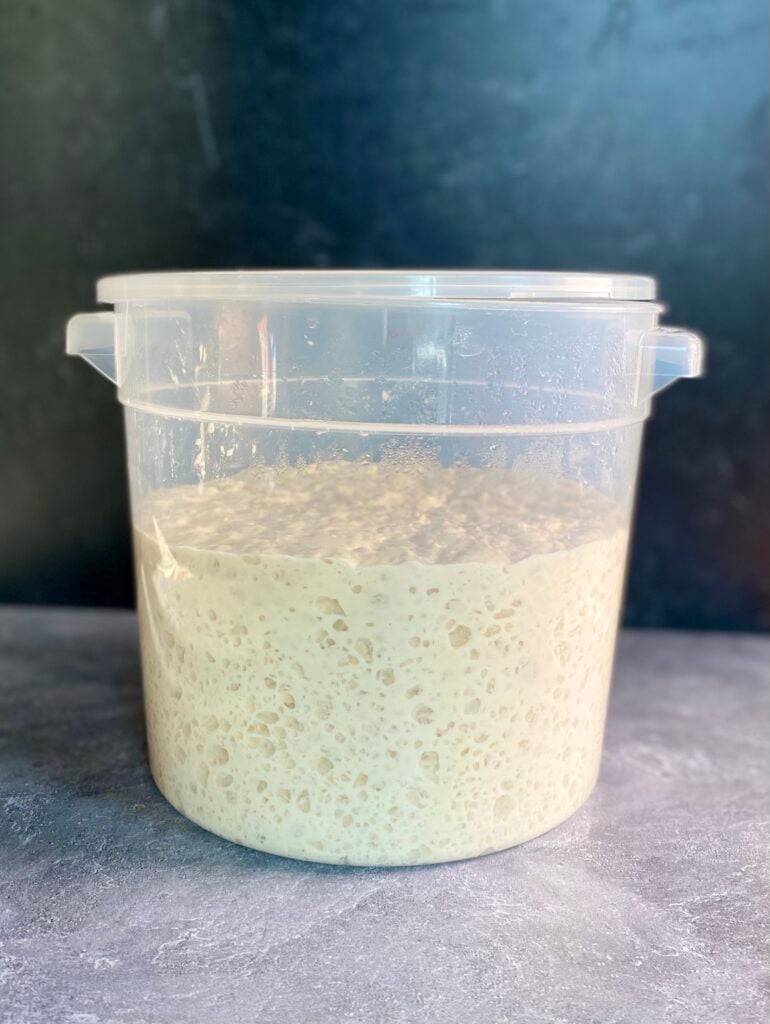
    The holes….??

    As a quick refresher, though, when flour and water mix, they create a honeycomb-like structure called the gluten network. The gluten network is like a bunch of flat, interconnected honeycombs that need gas to expand, or create “rise”, in your baked goods. The carbon dioxide byproduct from yeast is that gas!

    It looks like this!

    Different Types of Yeast

    There are three types of yeast most commonly used in baking: fresh yeast (cake yeast), active dry yeast, and instant yeast. There is also brewer’s yeast, but that’s…not for bread.

    As the name implies, brewer’s yeast is for beer and wine.

    Fresh Yeast (Cake Yeast)

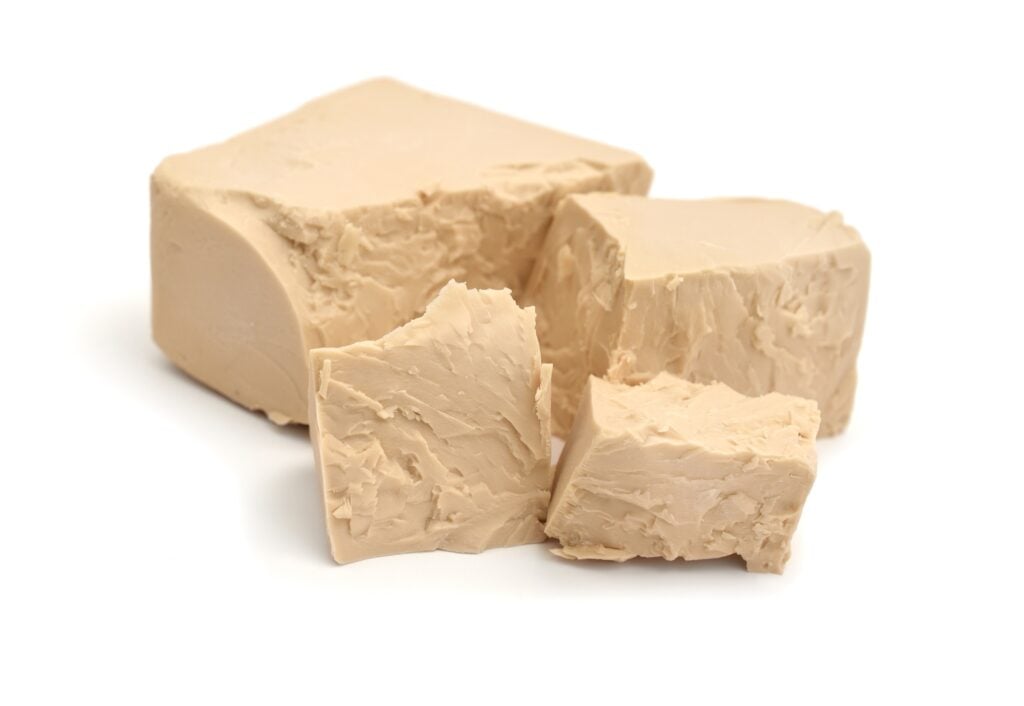
    Baking yeast in its purest form is fresh yeast. Also known as cake yeast, this is a highly perishable form of yeast that’s mostly used by advanced and commercial bakers. Fresh yeast can be difficult to find in regular grocery stores.

    A block of fresh yeast.

    Fresh yeast is sold in solid blocks. It should break cleanly, and then crumble into small pieces when broken from the block.

    Some professionals prefer fresh yeast because many professionals generally prefer to use the most unadulterated products available; some also claim that fresh yeast gives bread more of that trademark, yeasty aroma. There are also additives in dry yeast products that sometimes make them undesirable to some professionals. But those additives make baking yeast more shelf stable and less perishable, so it’s really a value judgement for the individual baker.

    Fresh yeast should have a neutral tan color, a crumbly texture and should break cleanly when you use it. If it stinks or is brown, it’s past its prime. This is not an ingredient to play with. If it’s clearly gone off, throw it out.

    Fresh yeast can last about two weeks in your refrigerator, but it can go bad before that. Best to check it every time you bake so that you know if it’s viable or not.

    If you’re substituting fresh yeast in a recipe that calls for dry yeast, use double the amount of fresh yeast.

    Active Dry Yeast

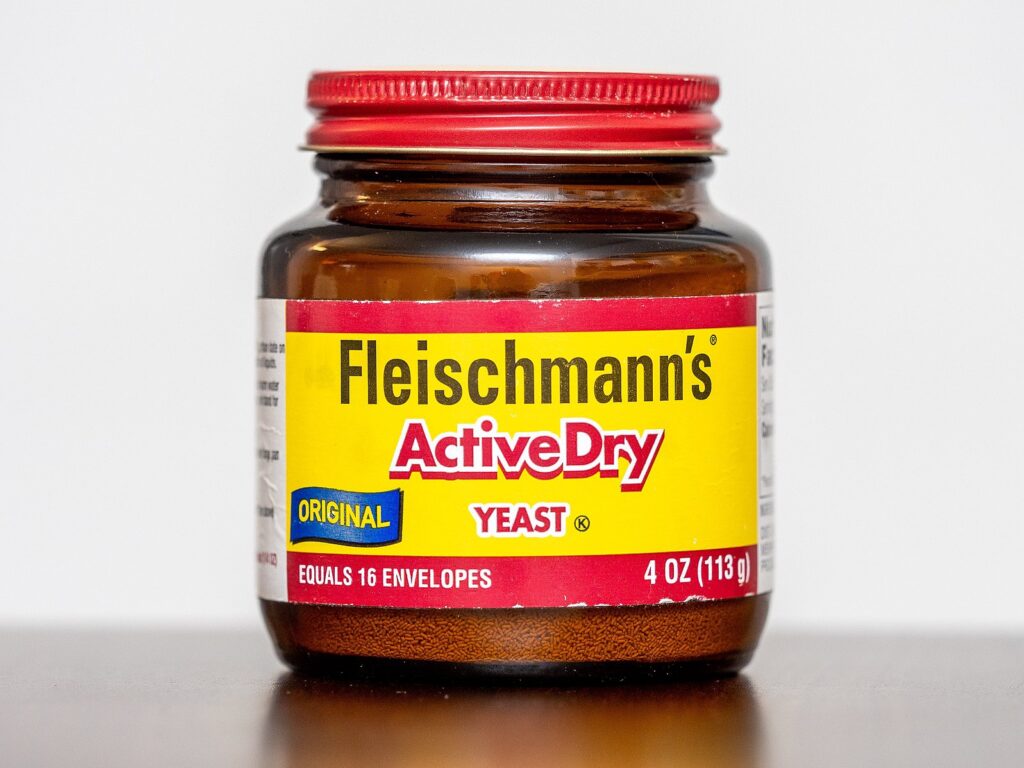
    If you’ve purchased “yeast” at your local market, you’ve probably purchased three tiny packets of active dry yeast for an exorbitant amount of money.

    Seriously. It’s criminal how much they charge for those three little packets of yeast. But I digress.

    Active dry yeast is still live yeast! It’s been dehydrated from its fresh state, which gives it a texture that’s more like dried grits.

    Great. Now I want grits. Without sugar please.

    Active dry yeast has to be proofed before using, and any bread made with active dry yeast needs a longer rise time than bread made with instant yeast. Some say that the longer rise time helps flavor develop in your bread more, but that’s honestly a matter of personal preference.

    Instant Yeast

    Like active dry yeast, instant yeast is still live yeast that’s been dehydrated from its fresh state. The texture of instant yeast is even finer than active dry yeast, though, which means that you *can* add it directly to your dough without proofing.

    I NEVER EVER do this. Instant yeast can be dead too. Plus, the proofing process is so short that it honestly doesn’t make sense to me to skip this step. Why not figure out if your yeast is alive?

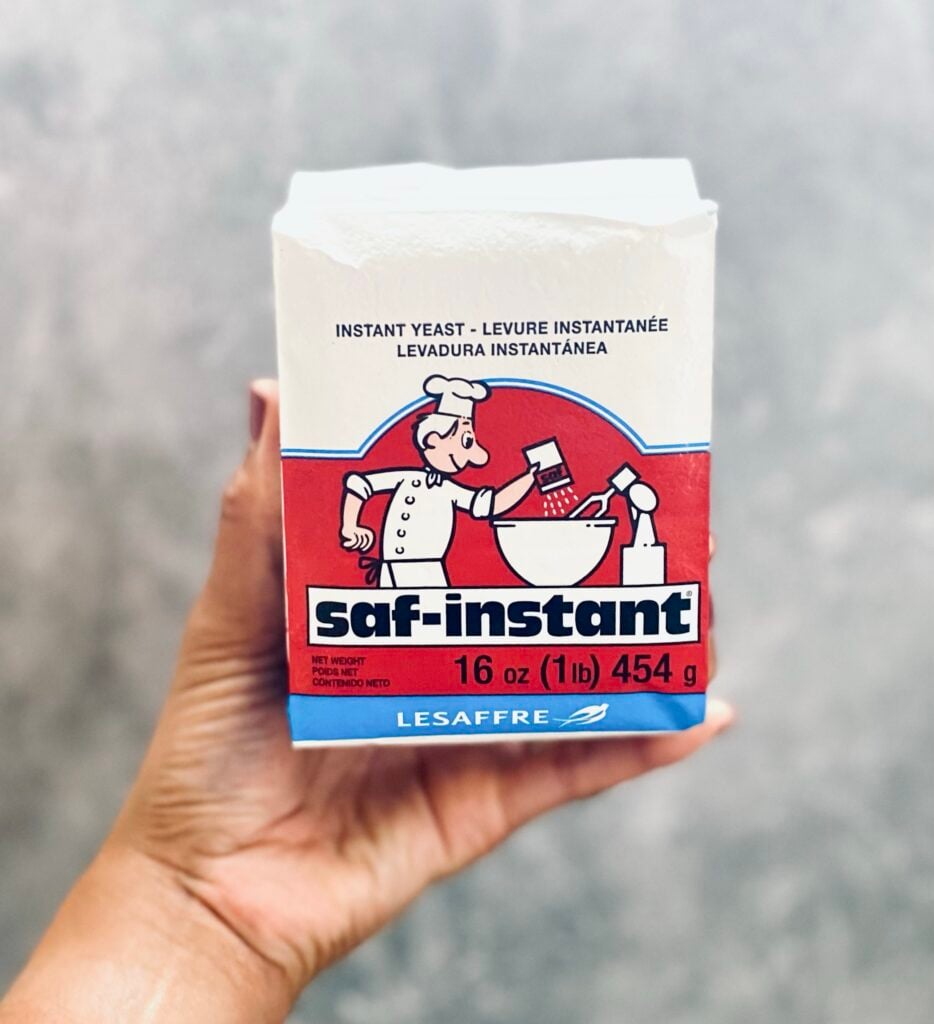
    I actually use SAF instant yeast more often than any other type of yeast. And the only time that I don’t proof yeast to put into a recipe is when I’m making this five minute artisan bread. To be completely transparent, though, I do separately proof just a *tiny bit* of yeast (1/2 tsp of yeast in 1/2 cup/125g of 110°F/43°C water) for 5-10 minutes before making five-minute artisan bread. I just don’t add that proofed yeast to my dough.

    My personal favorite.

    Making bread dough that actually rises will make you a much more confident kitchen boss. Proofing yeast before you start is one small tip that will increase your confidence exponentially when you’re making bread. As you practice with yeast more and more, you’ll develop your favorite type and brand of yeast too!

    How to Proof Yeast

    There are two main reasons for proofing/proving yeast before you begin baking. First, this is the best way to figure out early in your baking session whether your yeast is alive or dead. Second, for fresh and active dry yeast, the yeast cannot begin to do its leavening job until it’s been awakened from its dormant state.

    This step is actually quite easy. To proof, you just need warm liquid (usually water or milk) and a touch of sugar.

    I begin by warming the liquid to somewhere between 110°F/43°C and 115°F/46°C in a container that’s twice the size of what I need. Because yeast expands, and we want to catch all of it in our recipe. Not clean it off our countertops.

    I add all of the yeast into the warm liquid, along with anywhere from 1/4 tsp to 1 tsp of natural sugar (depending on the amount of yeast in the recipe). The yeast doesn’t need a lot of sugar to activate, and too much sugar will actually kill the yeast, so it’s important not to go crazy with the sugar at this step.

    Once the yeast and sugar are in the liquid, I give them a vigorous whisk in the container to combine, making sure to capture the yeast that always creeps up the side of the bowl. Crusty yeast on the side of the container would be useless in your recipe, so I recommend incorporating ALL of the good stuff in the liquid so that you can get the biggest bang for your buck from this ingredient!

    Next, wait 5-10 minutes for the magical transformation. When ready, live yeast should be a bubbly, foamy dome in your container. If this doesn’t happen right at the five minute mark, it’s okay. Sometimes, especially with milk, it takes a few more minutes to really get going.

    The bubbles are carbon dioxide and alcohol.

    If your yeast hasn’t done anything at the 7-8 minute mark, it’s safe to say that it’s not going to do anything. Better to start over at this point than to add this batch to your dough.

    When Your Yeast Doesn’t Bubble, or When Your Yeast Overproofs

    If your yeast doesn’t bubble during proofing, it doesn’t always mean that started with dead yeast! Other things can kill your yeast as well. These things include water that’s too hot (above 115°F/46°C is pressing your luck, but above 130° and you can pretty much expect to kill it), adding too much sugar to the yeast, or adding salt directly to the yeast.

    If there’s even a faint possibility that one of those things happened, I’d recommend trying again with the same yeast and seeing if you get a different result.

    I KNOW that this is the very definition of insanity, Family. But I hate food waste so I still recommending double checking to make sure that the yeast is actually dead before throwing it out. You might surprise yourself!

    The flip side of yeast that doesn’t proof is yeast that overproofs. Overproofed yeast is yeast that sits too long and then loses its leavening power. You’ll know that your yeast is overproofed yeast if the yeast foams into a perfect dome, then deflates and goes flat. With overproofed yeast, you’ll need to start again.

    Storing Yeast

    All yeast is eventually perishable. Fresh yeast, like the name implies, is the most perishable of the bunch. It can safely be stored in a refrigerator for about two weeks at a temperature south of 45°F/7°C. It’s prohibitively expensive for the occasional baker, so some people like to freeze it.

    To freeze fresh yeast, separate it into individual serving sizes (because you can only thaw each piece once!), wrap it in one layer of freezer paper, one layer of foil, and another layer of freezer paper. Place it in a freezer bag and remove all of the air from the freezer bag. Put the freezer-ready yeast in a part of your freezer that’s not constantly being disturbed (so, away from the frozen waffles that you’re using every morning).

    To use, figure out how much of your yeast you need for a recipe, then thaw exactly that amount in your refrigerator overnight. This ingredient is extremely fickle, so thawing it too quickly on the countertop could lead it to spoil and ruin all of your hard work.

    Don’t forget to proof your fresh yeast before using!

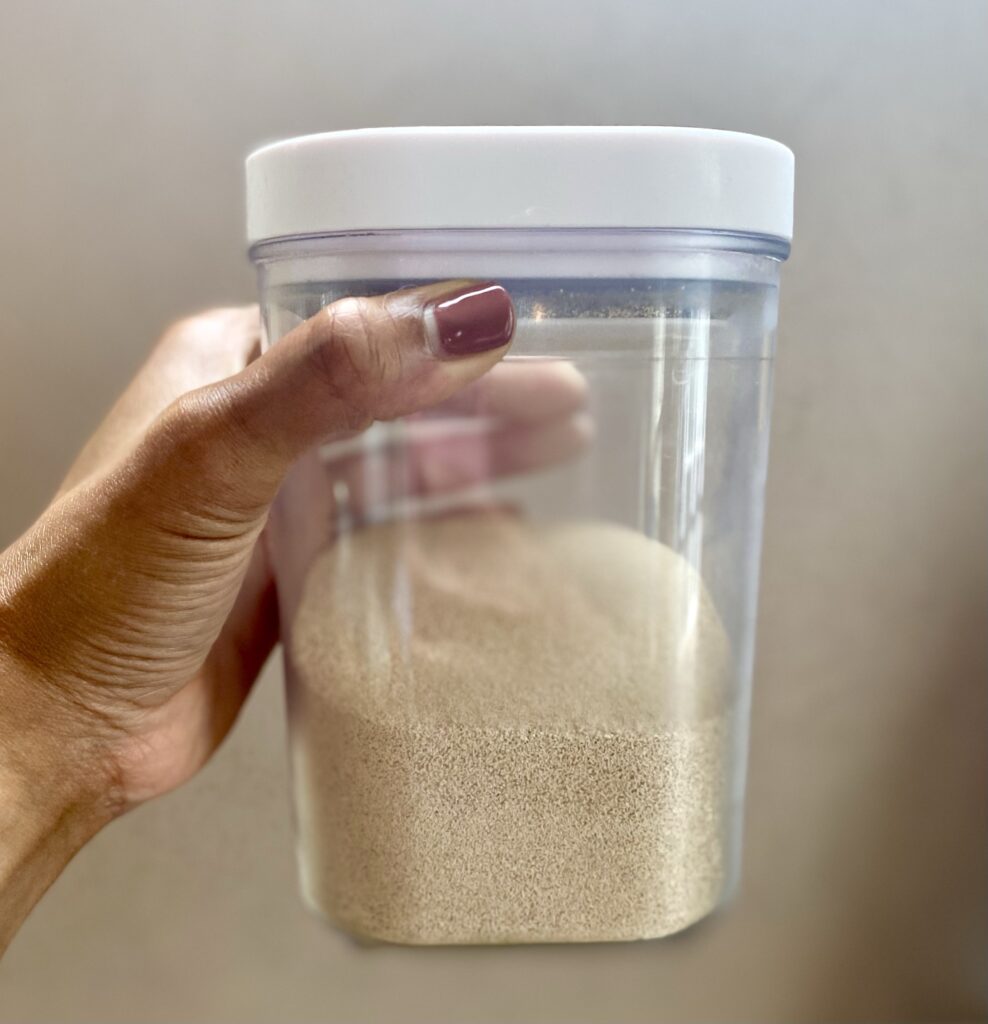
    Both active dry and instant yeast can be stored in either the refrigerator or freezer. With refrigerating and freezing, unless you’re working with single-serve packets, I recommend putting your yeast in an airtight container. I use this container to store my yeast in a freezer, since I buy it in large quantities and I don’t want it to go bad.

    For me, freezing instant yeast has been the best solution. Dry yeast can be stored for a very long time in a freezer without losing potency, and you don’t have to stress yourself out going to the store for one ingredient if you wake up with a sudden desire to make bread.

    I don’t thaw instant yeast once I take it out of the freezer. Unless, by “thawing”, you mean that I scoop the yeast that I need directly from the airtight container to its warm spa bath with its sugar snack.

    Conclusion

    Yeast has a truly bum rap as a difficult ingredient, but that isn’tthe case! With these few tips, you can work confidently, competently, and consistenly with yeast from here on out.

    Feeling better about bread? Don’t forget to tag @beginwithbutter on Instagram and show me your amazing creations!

    Until next time!


    Don’t forget to subscribe to our weekly newsletter so that you can be the first to get exciting Begin with Butter news!

    Join the List

    Subscribe to get a free video lesson and our latest content by email!

      We won’t send you spam. Unsubscribe at any time.

      Sunday Session #5: My Fave All-In-One Vanilla Cupcakes!

      Home » Featured Recipes » Page 37

      Sometimes you just want a good, quick vanilla cupcake.

      Welcome to this week’s installment of BwB Sunday Sessions! Since our science-y lesson this week was about bowls, I wanted to showcase a basic, all-in-one cupcake that new bakers could use to help build their kitchen confidence!

      I…was also short on time. #MomLife

      The recipe that I used is the Moist Vanilla Cupcakes recipe from one of my favorite baking blogs, Life Love and Sugar. This recipe comes together incredibly quickly and feeds a crowd (it yields 24-26 cupcakes). I highly recommend it for anyone learning to bake. It’s a true confidence builder!

      In this post:

      The Prep

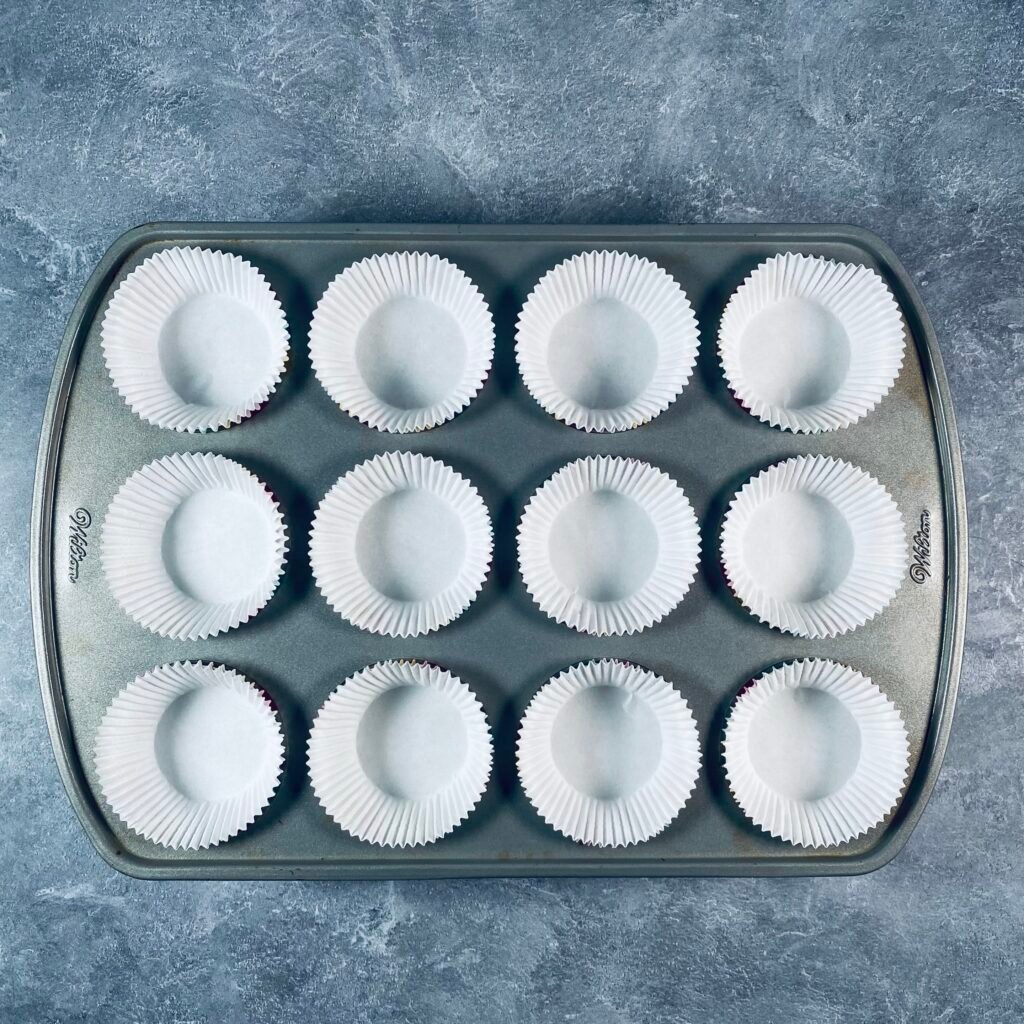
      Before I even started pulling ingredients, I set my oven for 350° and made sure that my oven thermometer was nice and cozy on the baking rack. Turning on my oven first meant that I wouldn’t have to wait for my oven to heat once my cupcakes were ready to bake. I also lined a cupcake pan with cupcake liners.

      Photo Credit: Begin with Butter

      Onto the ingredients!

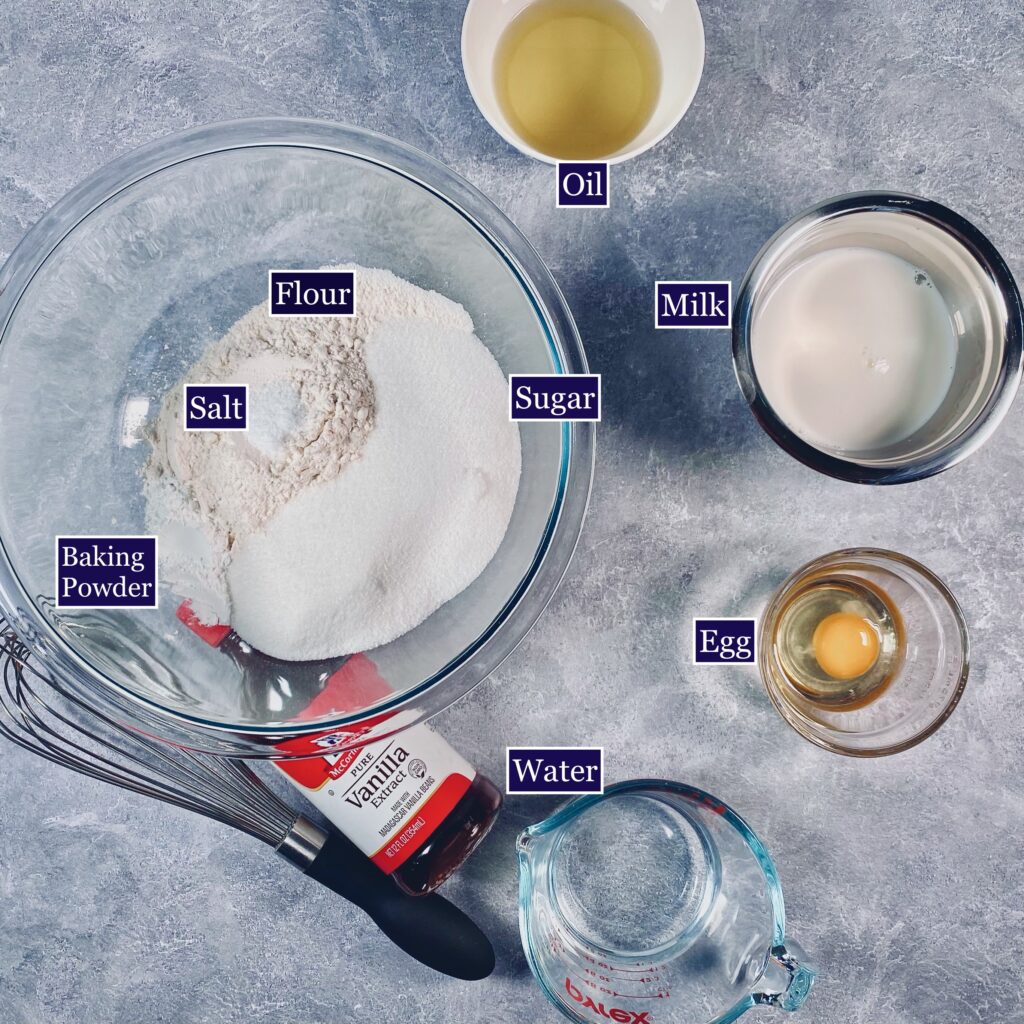
      The ingredients in this recipe are really easy, and are probably something that you have at home. As usual, I always recommend prepping your ingredients beforehand. That way, you’ll be ready to add ingredients at the appropriate time:

      Photo Credit: Begin with Butter

      The good news is that a well-stocked savory kitchen will have most, if not all of these ingredients.

      The Technique

      This batter uses an all-in-one technique, which simply means that the wet ingredients and dry ingredients are mixed together.

      No mixer needed.

      While you can use your mixer (and the original recipe actually calls for you to use your mixer), for those of you without a mixer, you can confidently make this recipe without one, and nobody will ever know the difference.

      For those of you with a mixer who are just feeling plumb lazy that day, this technique works too.

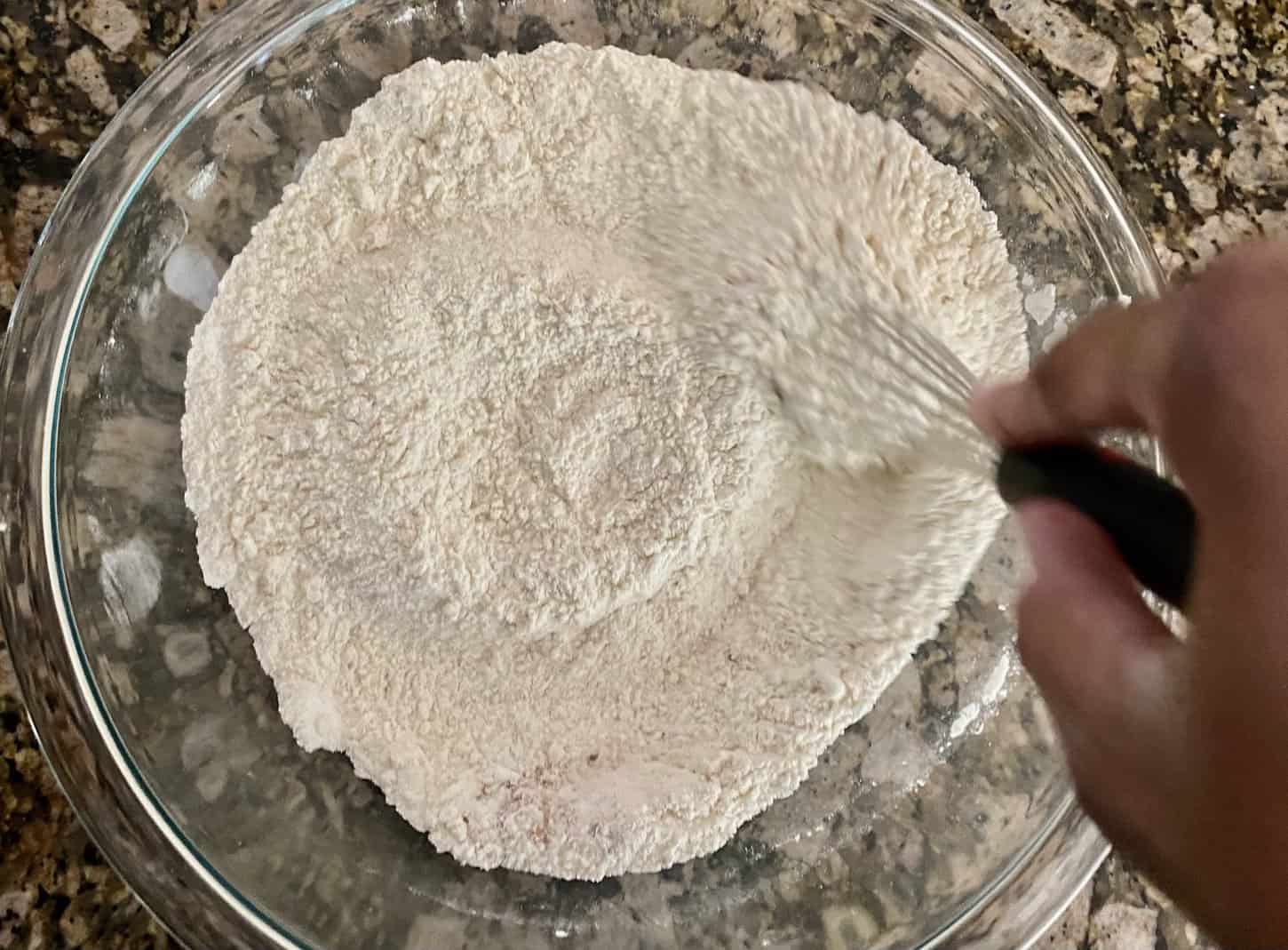
      As you can see in the photo above, the flour, salt, baking powder, and sugar are already together in one large bowl. I just gave them a quick stir with my whisk to combine them and set them aside.

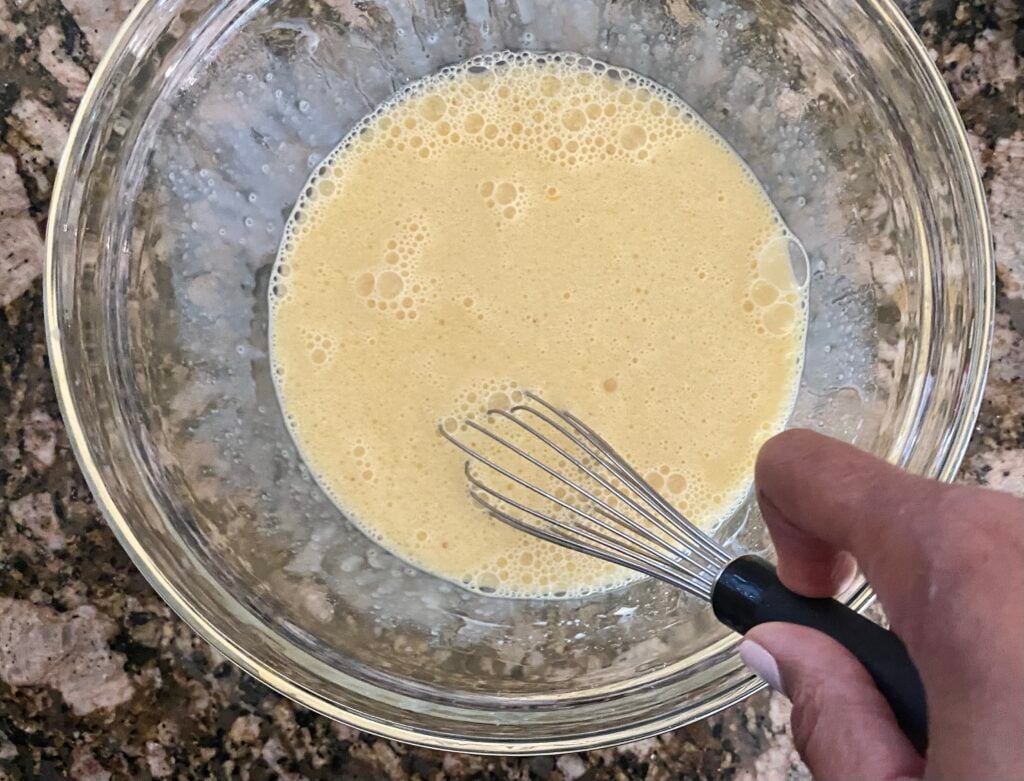
      Next, I simply put the egg, oil, milk and vanilla (the water comes later) in a medium bowl and mixed with a whisk until all four were fully combined.

      Once the wet ingredients and dry ingredients were separately combined, I added the wet ingredients to the dry ingredients and mixed until smooth. My whisk did a great job with this.

      Finally, I added the water in three different pours, combining the water completely between each addition. The batter was very watery when I finished, but that’s how it’s supposed to be!

      Seriously. This recipe rocks.

      The Bake

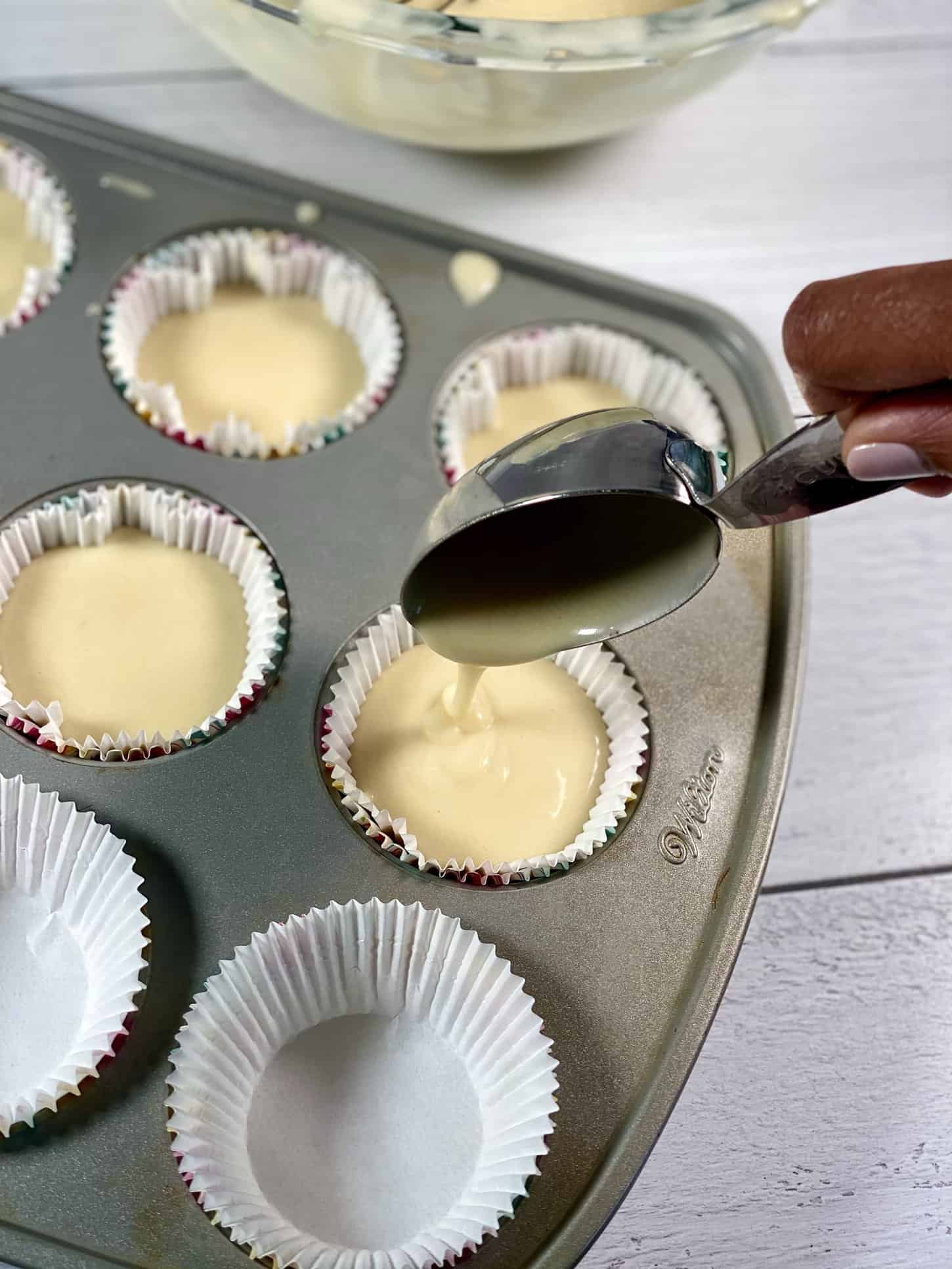
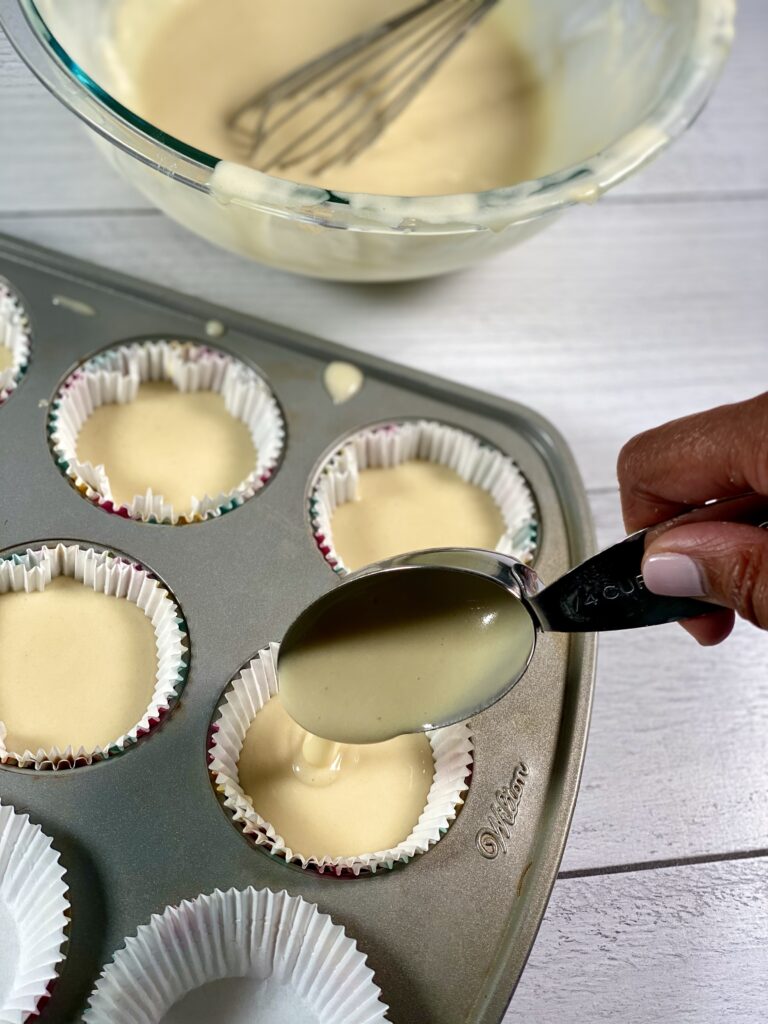
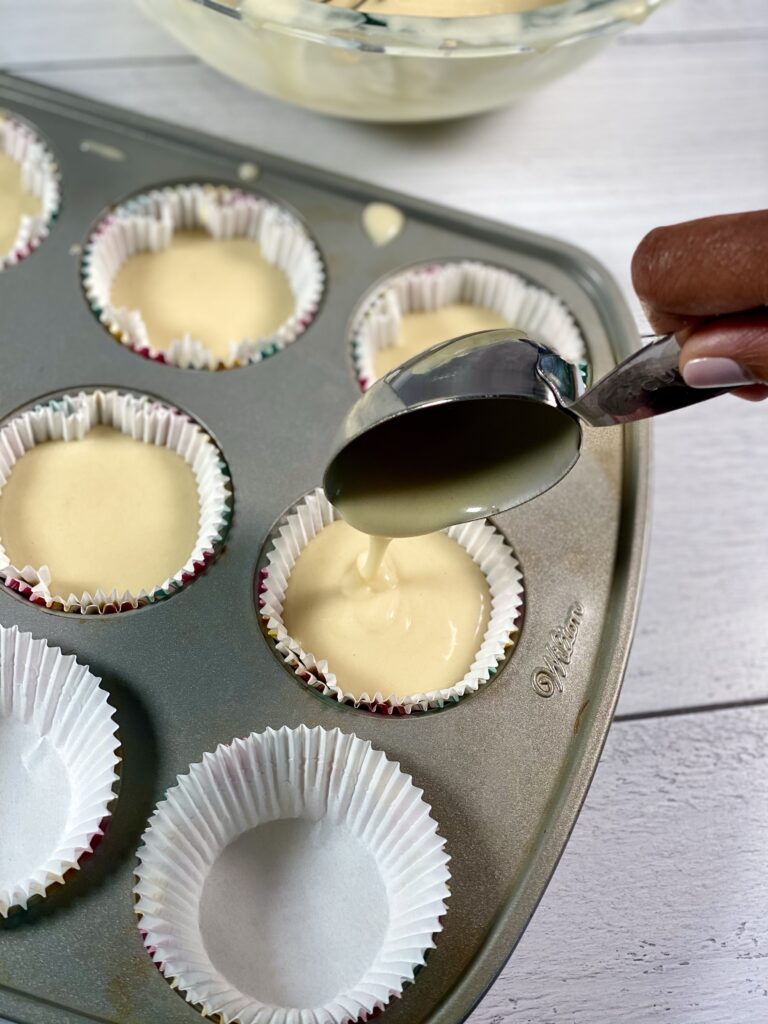
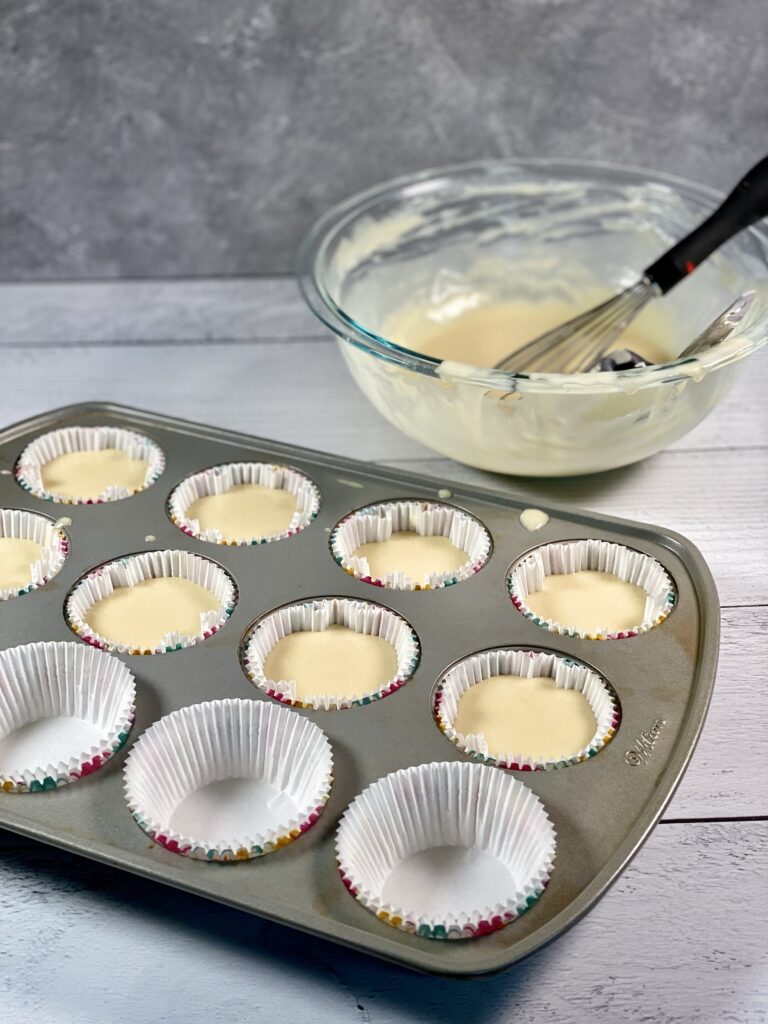
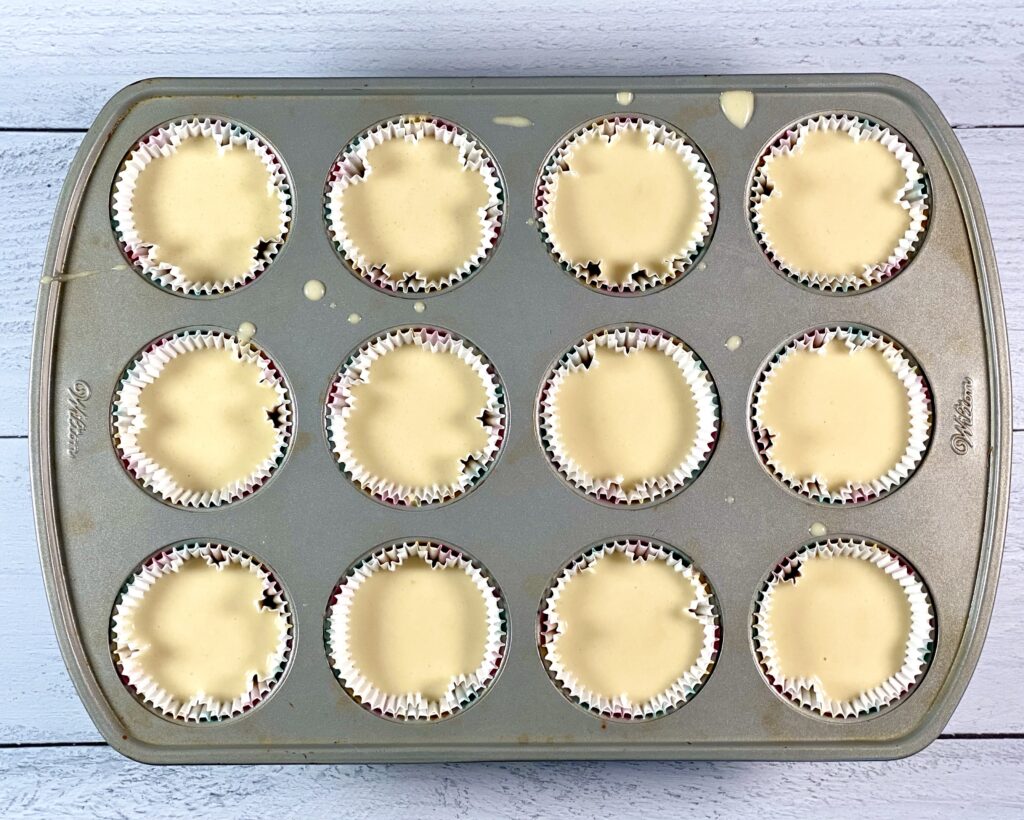
      Before I put the batter into the cupcake liners, I checked my oven again to make sure that the temperature was correct. Once that’s done, I got busy filling cupcake liners! I filled them to about the halfway mark, trying to stay as consistent as possible so that they would bake evenly.

      These cupcakes baked for about 22 minutes in a 350° oven. I removed the cupcakes from the oven and let them cool on a cooling rack for five minutes, then removed the cupcakes from the cupcake pan and put them directly onto the cooling rack to cool completely.

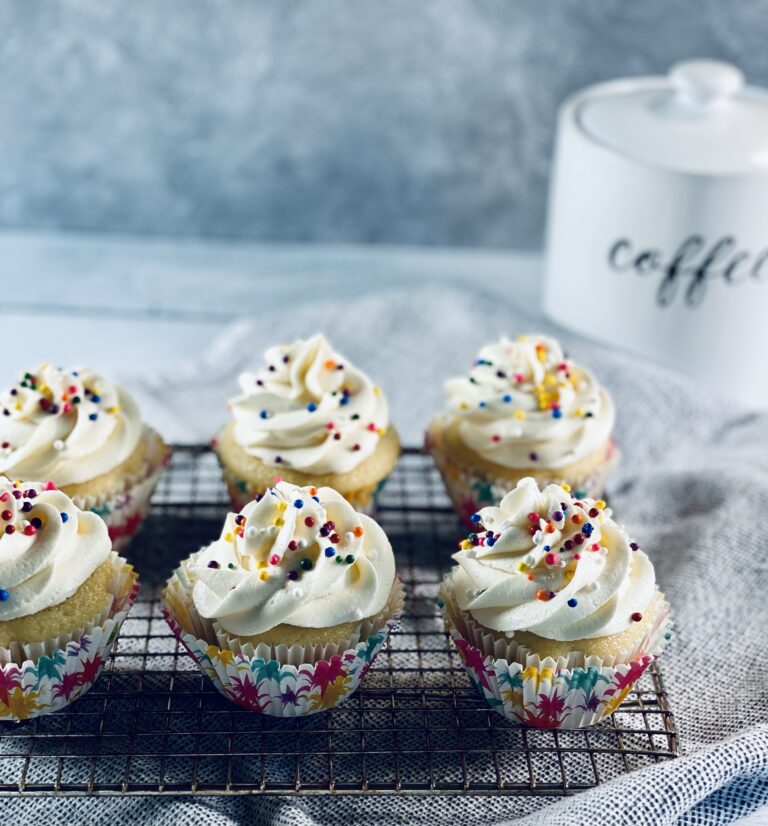
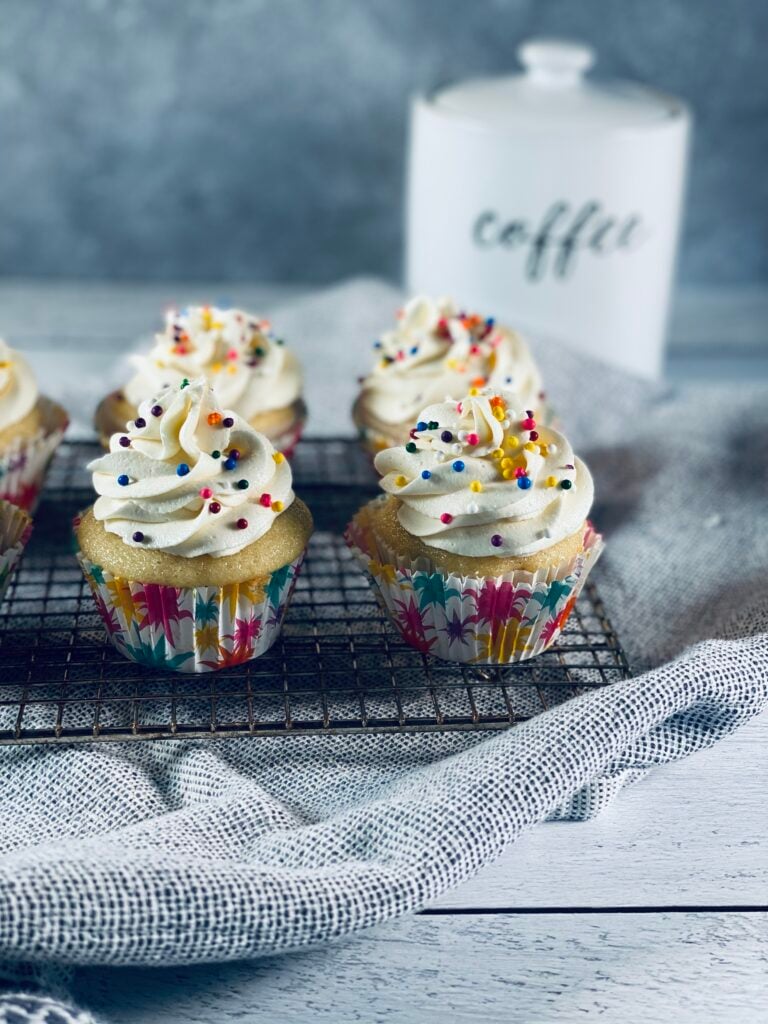
      I made my tried and true vanilla buttercream and went crazy with sprinkles, but you can frost the cupcakes with buttercream or your favorite whipped cream topping. The sky is the limit for this great cupcake!

      The Finish

      These cupcakes come together in two bowls. One with wet ingredients and one with dry ingredients. This is the cupcake I make when my kids need cupcakes for a school event and they tell me the morning of the event. This recipe makes plenty of cupcakes and they can be done in an hour.

      But I should really talk to my kids about telling me about stuff at the last minute…

      Anyway, here they are!

      I hope you enjoyed this Sunday Session! If you loved reading this as much as I loved writing it, be sure to subscribe so that you can get the weekly update so that you can be the first to know everything BwB!

      Until next time!

      Join the List

      Subscribe to get a free video lesson and our latest content by email!

        We won’t send you spam. Unsubscribe at any time.

        The Best Bowls for A Home Baker’s Kitchen

        0
        Home » Featured Recipes » Page 37

        When you’re first starting to bake, it’s difficult to know what you want vs. what you need. And it can be really, really tempting to just GO OUT AND BUY IT ALL.

        These beautiful kitchenware designers and manufacturers don’t help. I mean, Chrissy Teigen’s Cravings line? Just come on and take my money. All of it!

        But the truth, Friends, is that you really don’t need a whole lot of stuff to start baking. One thing you absolutely do need, though, is some reliable bowls.

        Because you can’t make much of anything without a bowl.

        Photo Credit: Begin with Butter

        In today’s post, we’re talking about the bowls that I use in my kitchen, and some pros and cons that I’ve found in each type. If you’re new to baking and you need equipment, I hope the information in this post will help you pick the perfect set of bowls to get started on your baking journey.

        In this post:

        Introduction

        Bowls come in many, many different types of material. Because this is a baking techniques blog, and not a warehouse club, I’m going to focus on the types of bowls that I find most useful for baking specifically.

        Put your grandmother’s antique ceramic and porcelain bowls away, Friends. Y’all know that those bowls are just for finished macaroni salad and potato salad. But it must be said that those bowls are NOT for baking. They’re much too delicate for mixing dough and batter.

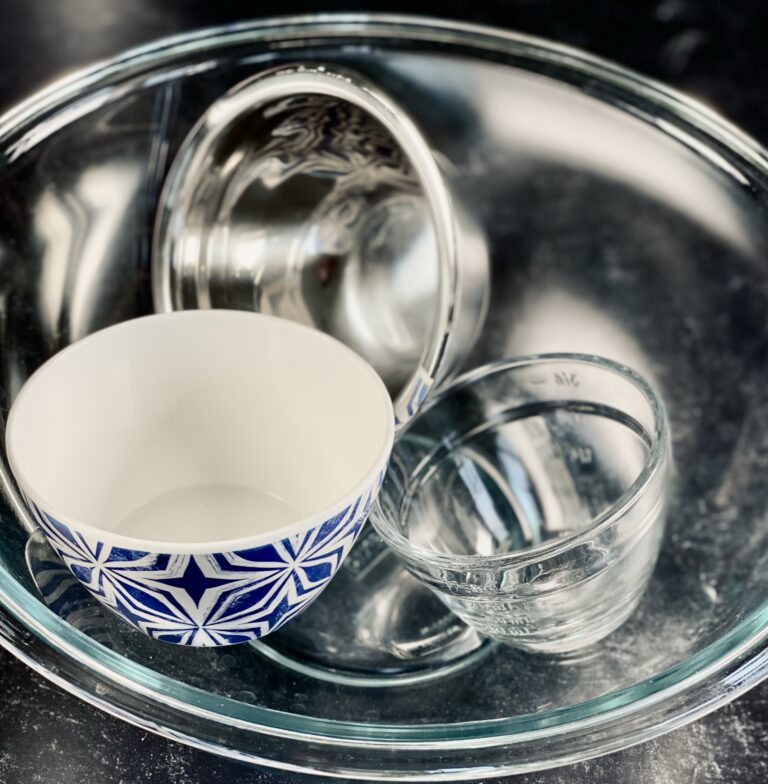
        I have too many types of bowls in my kitchen, but only three that I use for baking: stainless steel, glass, and plastic.

        Stainless Steel

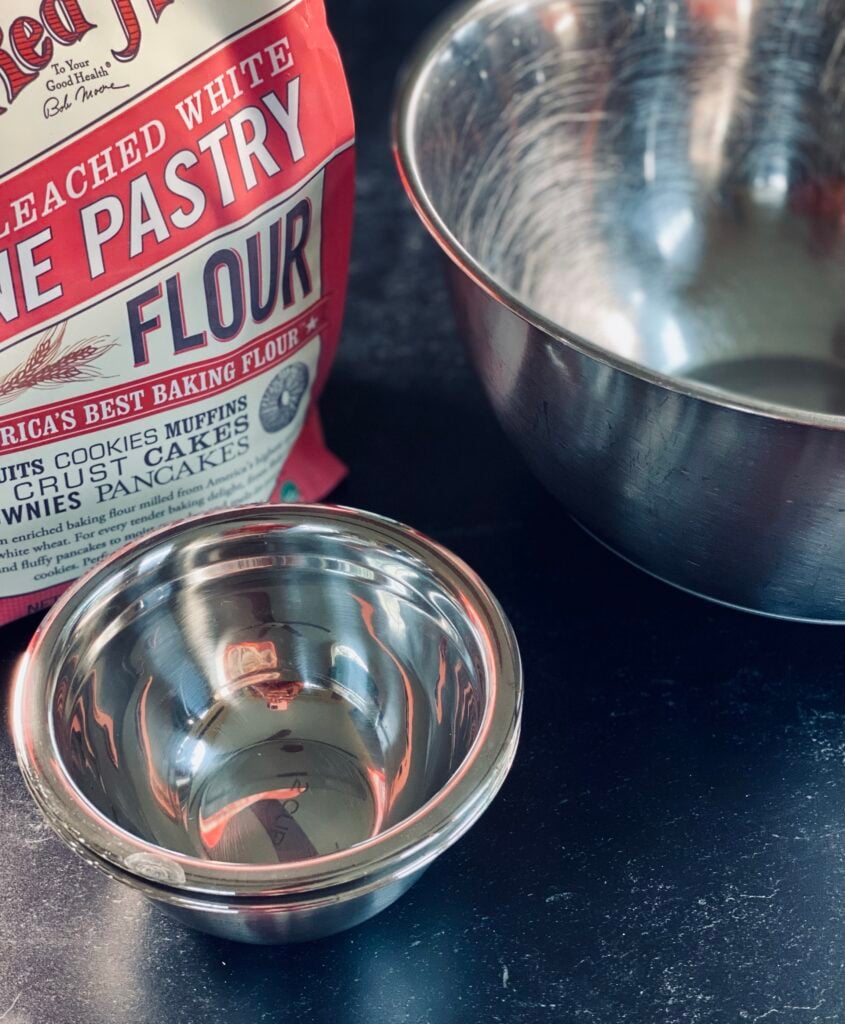
        Stainless steel bowls are the undisputed Queen (as in, reigning monarch kind of Queen) of the kitchen bowl. They’re a universal favorite among savory and pastry chefs because they don’t break (in a busy commercial kitchen, this is key) and they don’t absorb food odors.

        The Queen. Photo Credit: Begin with Butter

        Stainless steel bowls are amazing for baking because they are extremely durable and lightweight. They come in multiple sizes, from spice jar to triple-batch bread proofing, and they are non-reactive.

        Non-reactive just means that the metal of the bowl will not chemically react with the food in it. You don’t want this because it could lead to a metallic taste.

        While stainless steel bowls are the undisputed Queen of the kitchen bowl, they are also the undisputed Queen of conducting heat. These will get as HOT as a stainless steel pot on your stove if you use them for a double boiler, so just be careful!

        Some people don’t love the look of stainless steel bowls, because they are…industrial, but if you’re not concerned about design, they’re a great place to start. They’re a great kid-friendly option too, because did I mention that they don’t break?

        Last thing: stainless steel and aluminum are NOT the same thing. Aluminum bowls are reactive, which means that you could end up with a metallic taste or discoloration in your food. The labels should clearly state whether they’re aluminum or stainless steel, though, so this shouldn’t be a huge deal.

        Glass

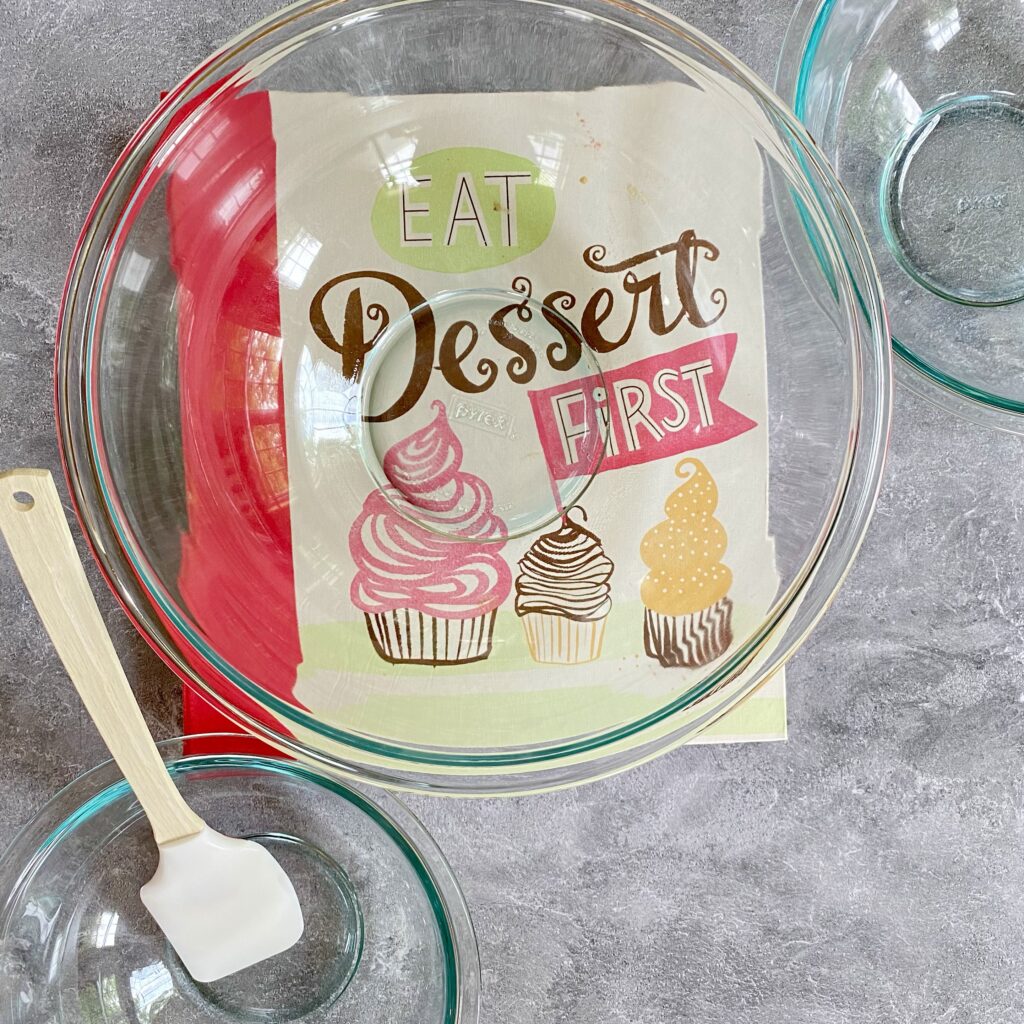
        Glass bowls are sleek, beautiful, and non-reactive. They also come in many sizes (as many as stainless steel) and they can help you see how well your batters and doughs are actually mixed. This is key for beginning bakers.

        Glass is my personal favorite of mine, but there are some drawbacks. Photo Credit: Begin with Butter

        Weight-wise, they tend to be heavier than stainless steel. And, in my experience, a little more slippery when wet. This leads me to my next point:

        They can break into roughly a billion flying pieces. And the inconvenience of this cannot be overstated. I’m guessing this is probably the reason that every author of every baking textbook I own (don’t judge) despises the thought of a glass bowl in the kitchen.

        But I dunno for sure.

        To reduce the possibility of sharp glass shards in your kitchen, it’s important to look for tempered glass when you’re buying glass bowls. Tempered glass is simply glass that’s been heat-treated to do two things: 1) break into small, pebble-looking pieces if it does break, and 2) resist extreme temperature changes (like from freezer to oven, which, honestly Fam, I would never recommend anyone do).

        All that said, I prefer glass bowls for day-to-day small-batch mixing in my kitchen. If I’m doing really large quantities of an item, though, I’ll default to stainless steel, because large quantities means mixing more aggressively, and more aggressive mixing increases the likelihood of a bowl slipping and moving around the countertop.

        Plastic

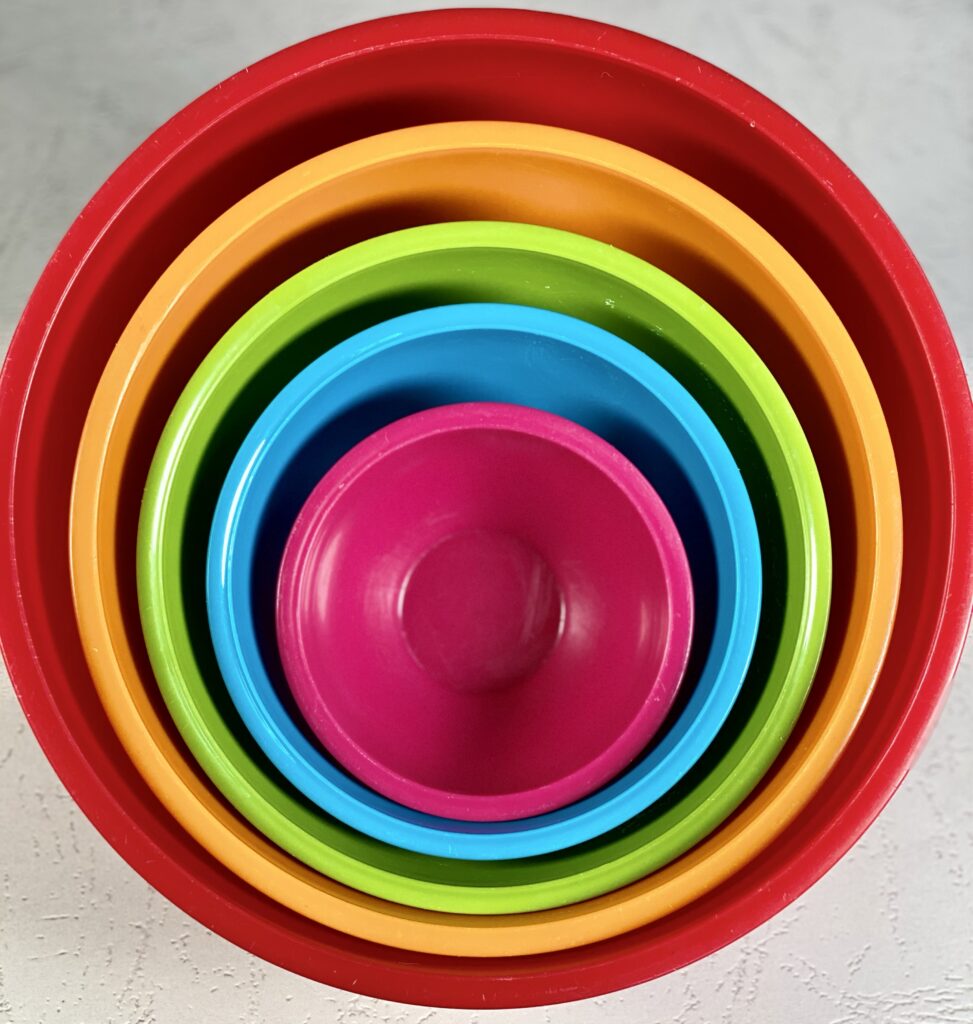
        Several years ago, when my family went to Williamsburg, Virginia for a trip with extended family, my husband decided to make healthy cookies. So he went to the local grocer and bought all of the ingredients, as well as a set of plastic bowls. I keep those bowls because they remind me of my family and that amazingly fun trip.

        I use these very rarely, even though they are BPA-free. Photo Credit: Begin with Butter

        When my children were really small, they learned to crack eggs into the big red plastic bowl. Now, though, they use stainless steel bowls when they’re in the kitchen with me.

        I tend to avoid plastic for baking because of BPA (bisphenol A). We’ve all heard of those treacherous three letters, and how heating plastic (either in a microwave or in a dishwasher) can cause the plastic to degrade, and cause the BPA to leach into foods. There’s an amazing Mayo Clinic article here that teaches about BPA in plastic. Suffice it to say, I try to avoid plastics as much as possible for cooking and baking.

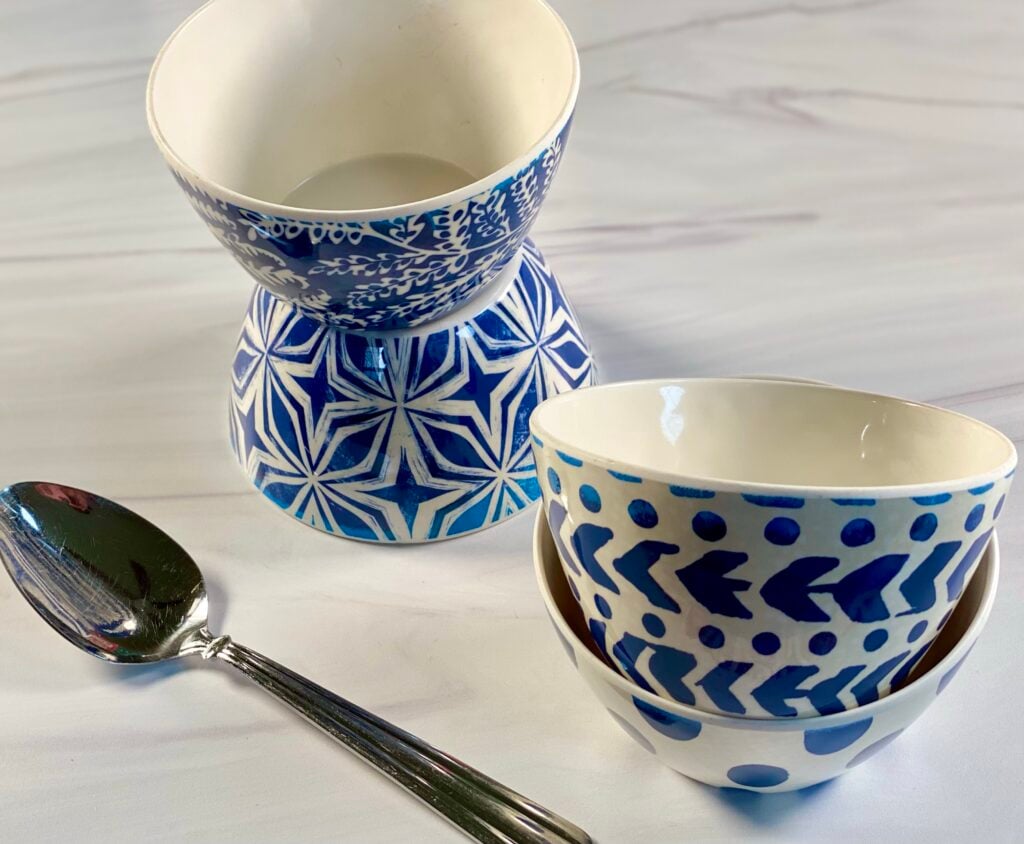
        The only exception to this rule in my kitchen is my absolute favorite set of spice/butter bowls, which are made of non-BPA melamine. Because sometimes I just want a touch of prettiness while I work. I don’t heat these bowls though. They’re strictly for mise en place (cold ingredients only).

        These melamine bowls are for cold prep only. Photo Credit: Begin with Butter

        As much as I try, I’m sure that there’s some sneaky BPA somewhere in my kitchen/house/life. What I do know, though, is that it’s not leeching into my food from my plastic bowls.

        Buying Suggestions

        I hope this quick breakdown was helpful for you as you stock your kitchen with alllllllll of the bowls. I wanted to finish today with a couple of general rules that I do follow when I am looking for new kitchen bowls:

        I’m never, ever going to buy an expensive kitchen bowl. There are too many well-made bowls with high quality materials to be fooled into purchasing something that is unnecessarily expensive. Bowls are vessels for ingredients and dough. They are not appliances, so they shouldn’t cost as much as one. And I always buy bowls in a set!

        If I was going to buy more plastic bowls, I would definitely require them to be BPA-free (and labeled as such). I’m more likely to buy more stainless steel bowls, though.

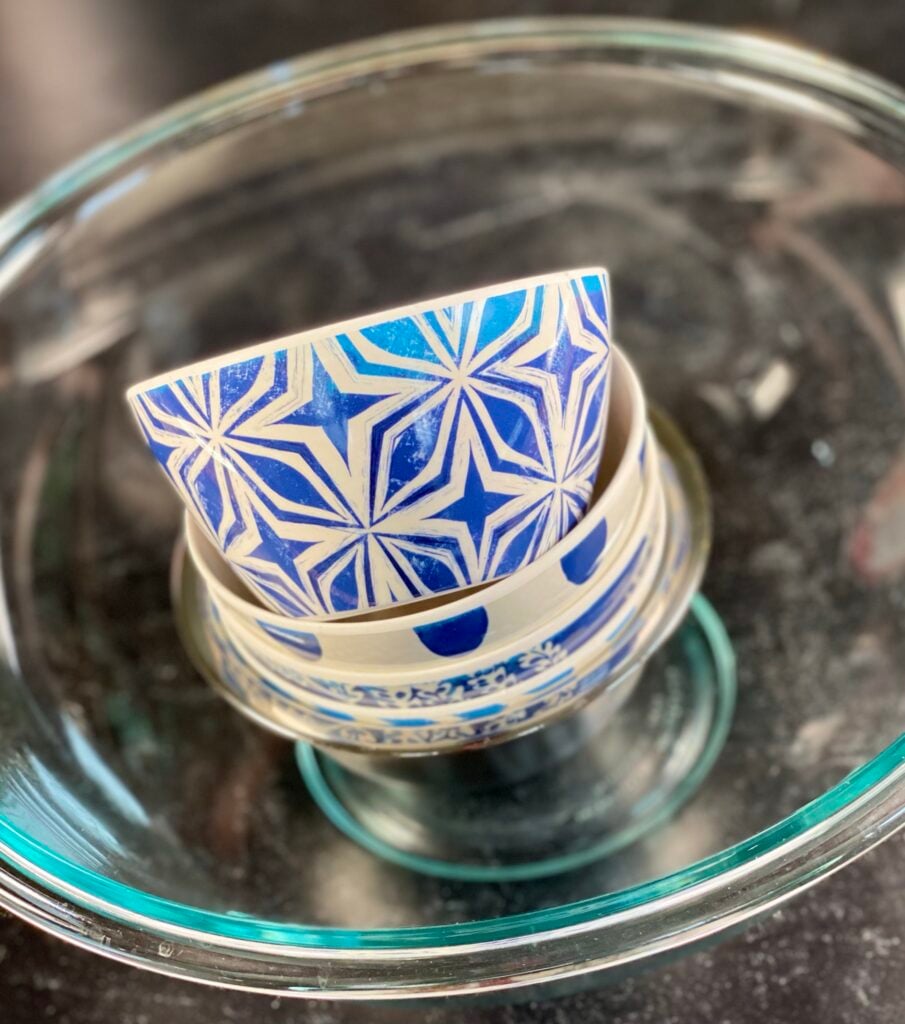
        All of the bowls in my kitchen have a very flat bottom. This makes them more steady on the work surface and gives me peace of mind that they won’t go flying when I’m making yummy pancakes.

        Photo Credit: Begin with Butter

        What’s your favorite bowl for cooking and baking? Feel free to let me know in the comments, below!

        And while you’re here, don’t forget to subscribe for weekly updates!

        Join the List

        Subscribe to get a free video lesson and our latest content by email!

          We won’t send you spam. Unsubscribe at any time.