Do I Need a Stand Mixer to Start Baking?

0

Beloveds, the answer to that question is NO.

Want to know which tools you really need to start baking? Click here my FREE new ebook, the Buying Guide for Beginning Bakers!

In this Post:

About Stand Mixers

Friends, a stand mixer is a powerful machine that bakers use to thoroughly and evenly mix ingredients for pastries and bread. It’s a pretty heavy countertop appliance that can be the centerpiece of a kitchen. However, it can also come with a hefty price tag that makes it out of reach for many new bakers. This is especially true for those new bakers who aren’t sure if they want to continue baking!
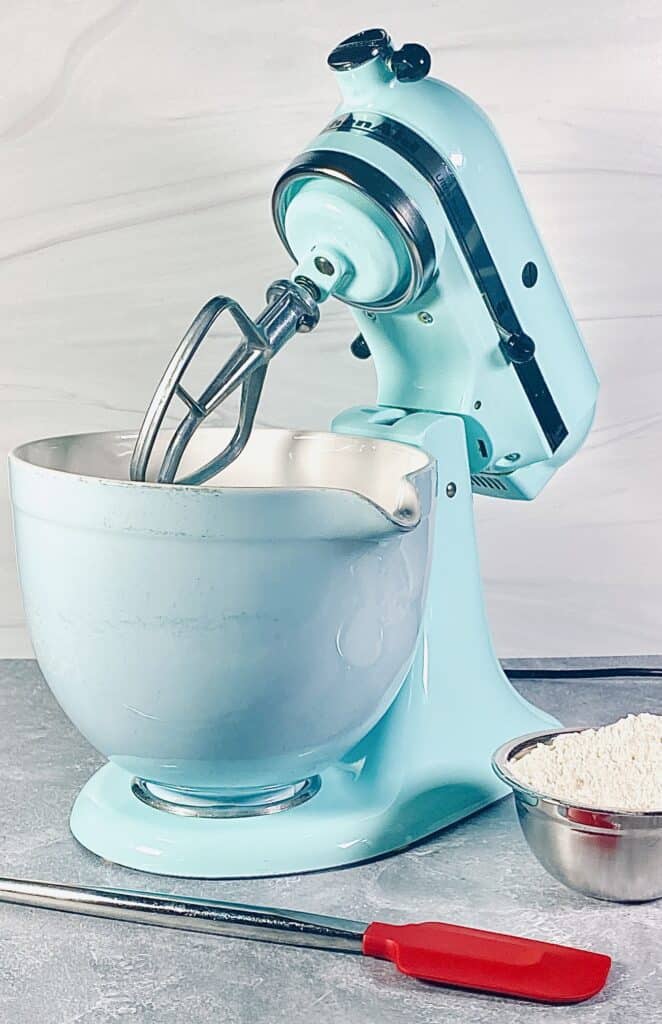
The most commonly-known brand in the U.S. is KitchenAid; they make several different stand mixers at several price points, they come in every color under the rainbow (and even some limited release versions that they make for other vendors), and they come in sizes from a 3.5-quart mini to a 7-quart professional.

All KitchenAid models have something called planetary motion. That is simply a fancy way of saying that, once the mixer is locked in place, the mixing mechanism automatically spins smoothly and evenly through batters and doughs. It’s typically faster than mixing by hand and requires minimal hands-on effort.

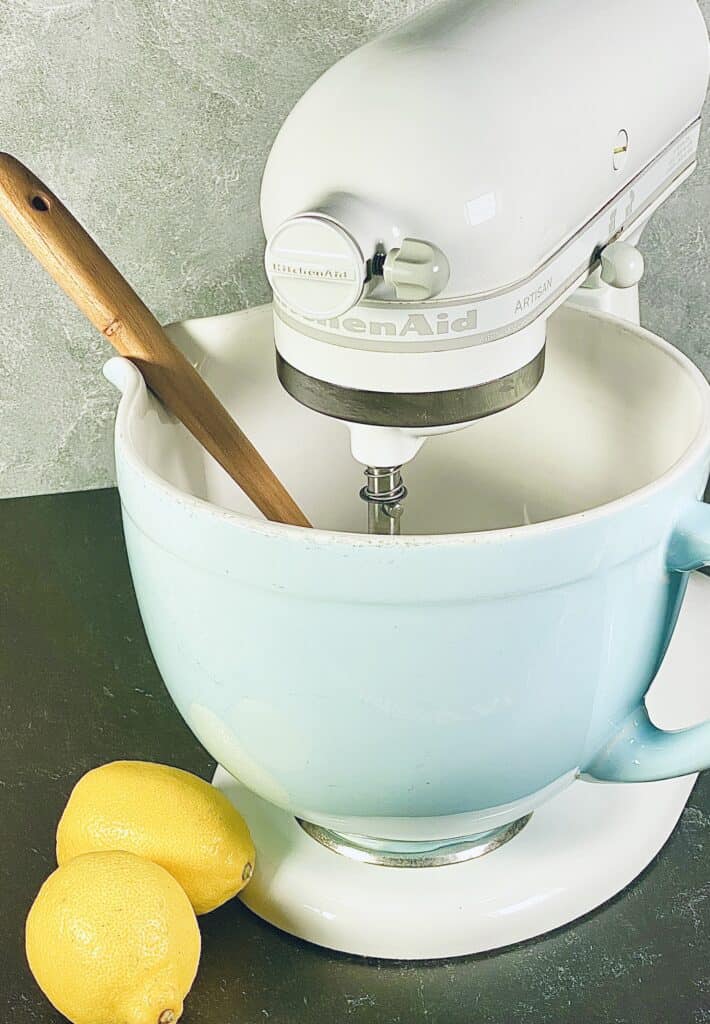
This is my KitchenAid Artisan. She was a gift to me from my mother-in-law, who saw potential in me years ago and invested in me. She is a beauty and she works HARD:
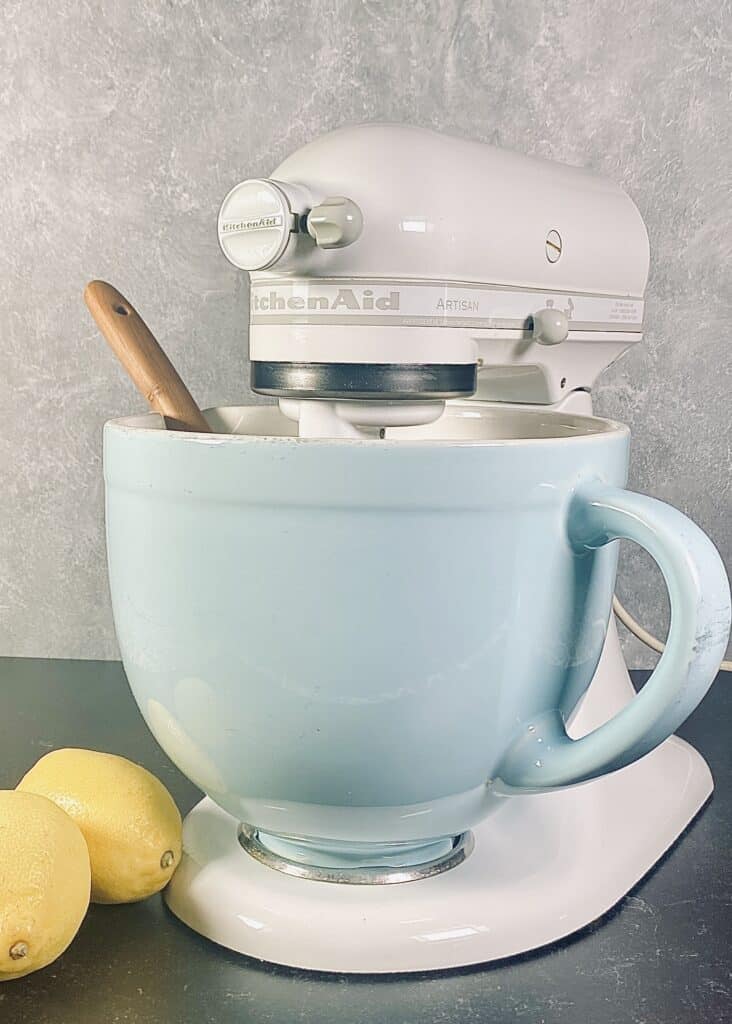
She is not just for show.

While there are some legitimate competitors for out there that are arguably comparable in quality, KitchenAid is the heavyweight champ for home kitchens, even if it’s just because of better marketing.

Put another way, when someone says they “got a new KitchenAid,” I have never once assumed that that person was talking about a washer/dryer. #NoShadeKitchenAid

About Hand Mixers

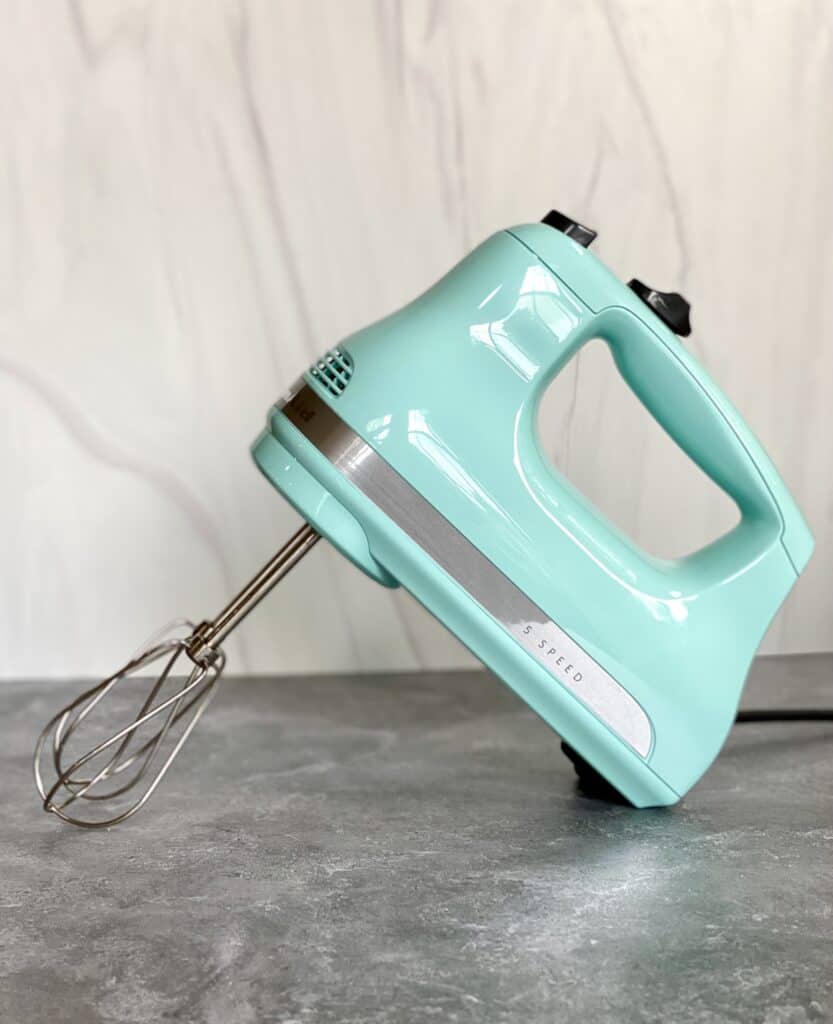
A hand mixer is another powerful kitchen tool that helps you mix batters and doughs evenly. However, the planetary motion from a hand mixer is created by your wrist, not the mixer itself. This means that you have to use sight and feel to make sure that everything mixes evenly; you can’t rely nearly as much on the machine. This is how you learn baker’s touch.

These small but mighty machines do a fantastic job of creaming butter and sugar and incorporating ingredients. With proper technique, it is impossible to tell whether a baker used a stand mixer or a hand mixer.

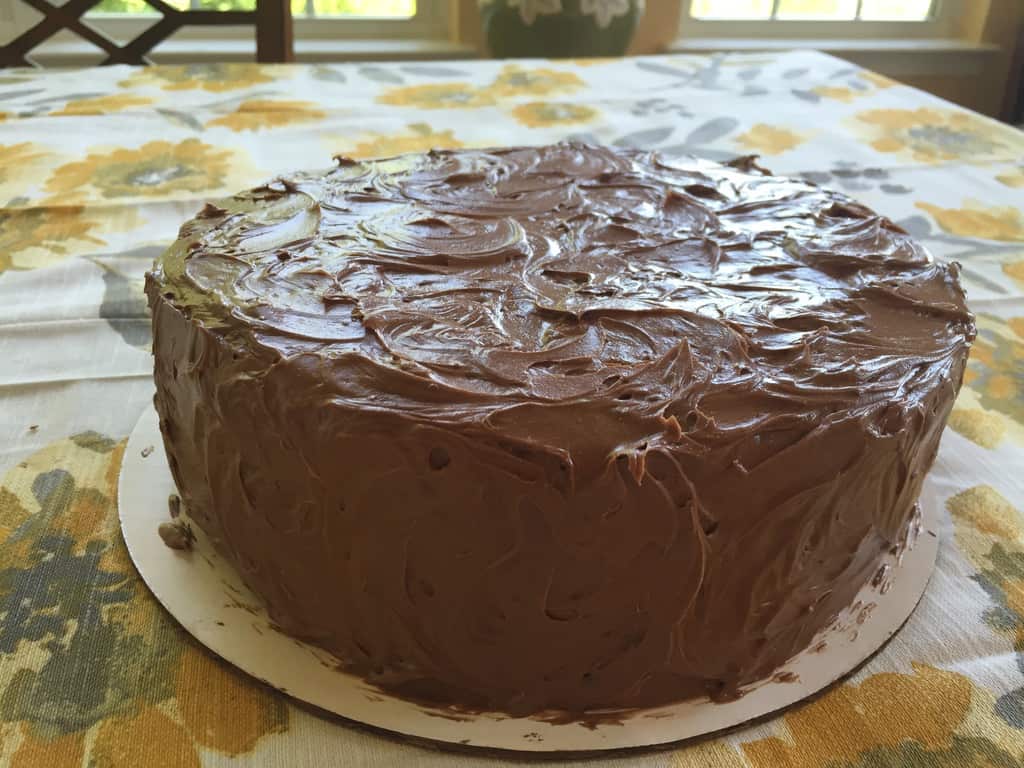
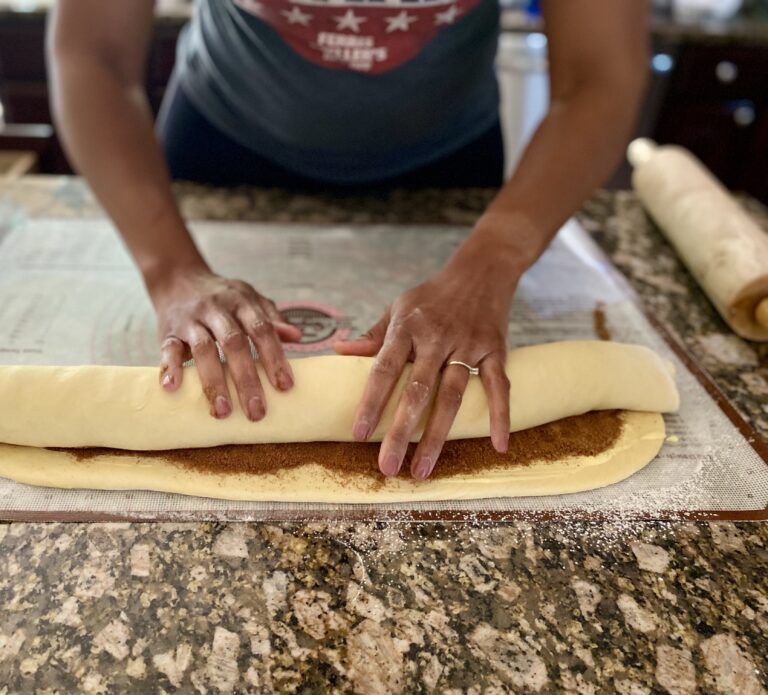
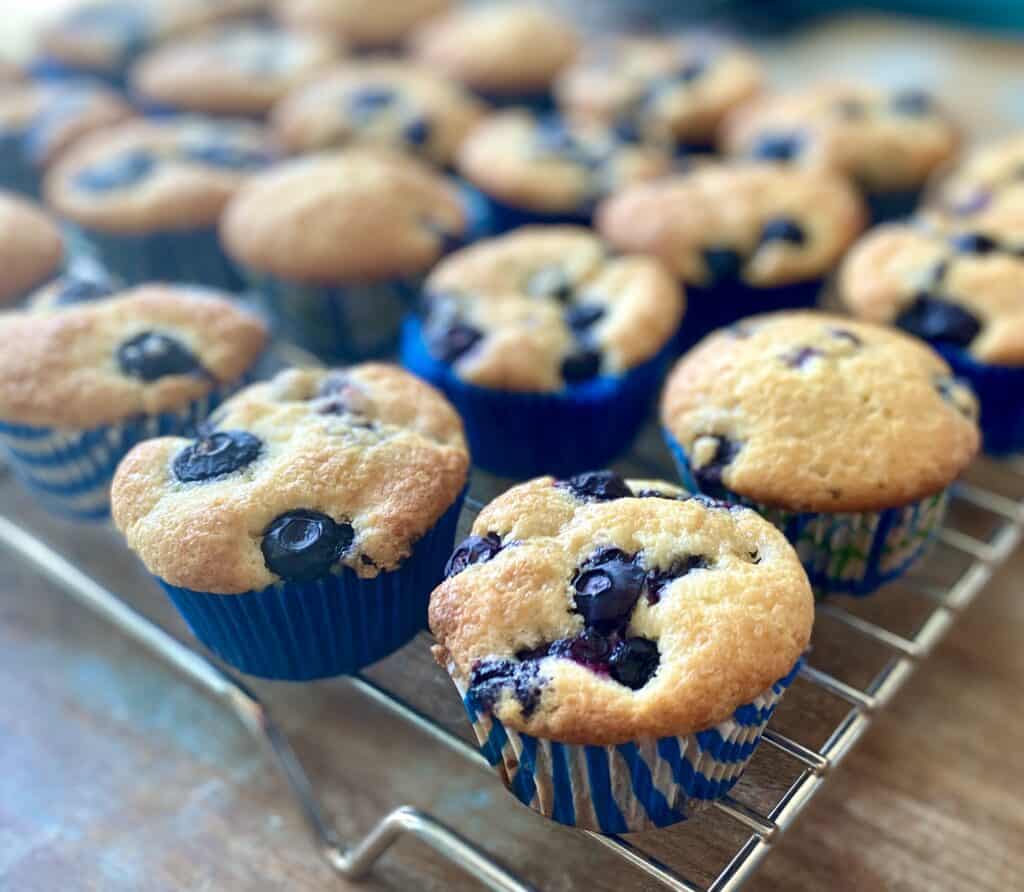
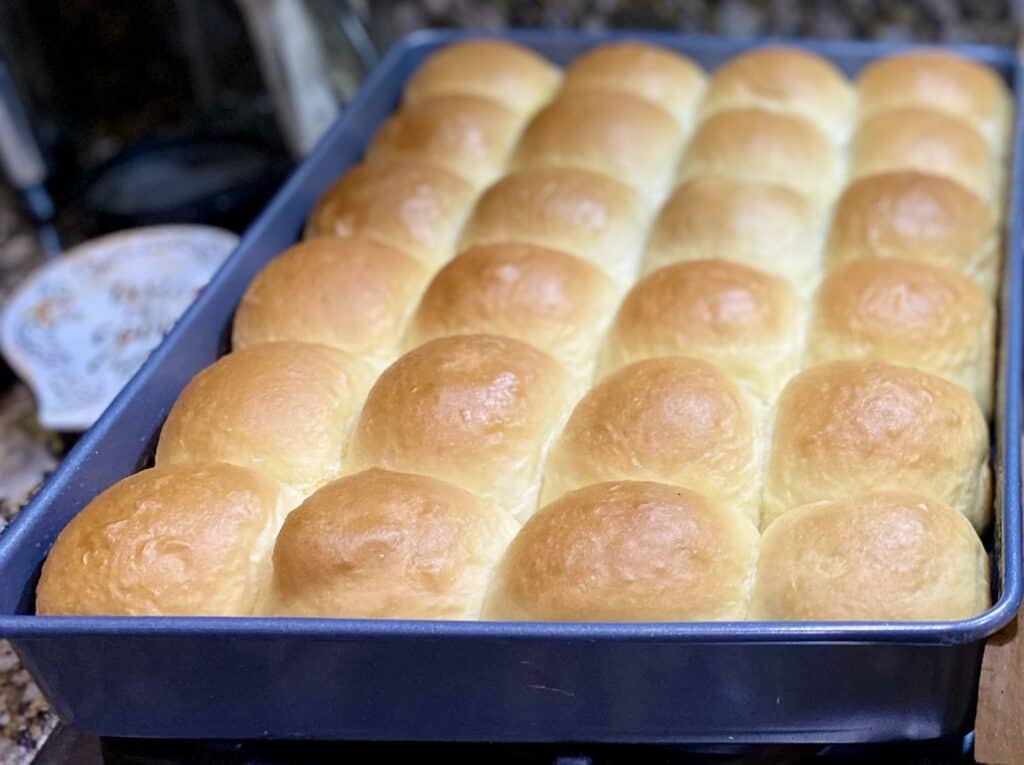
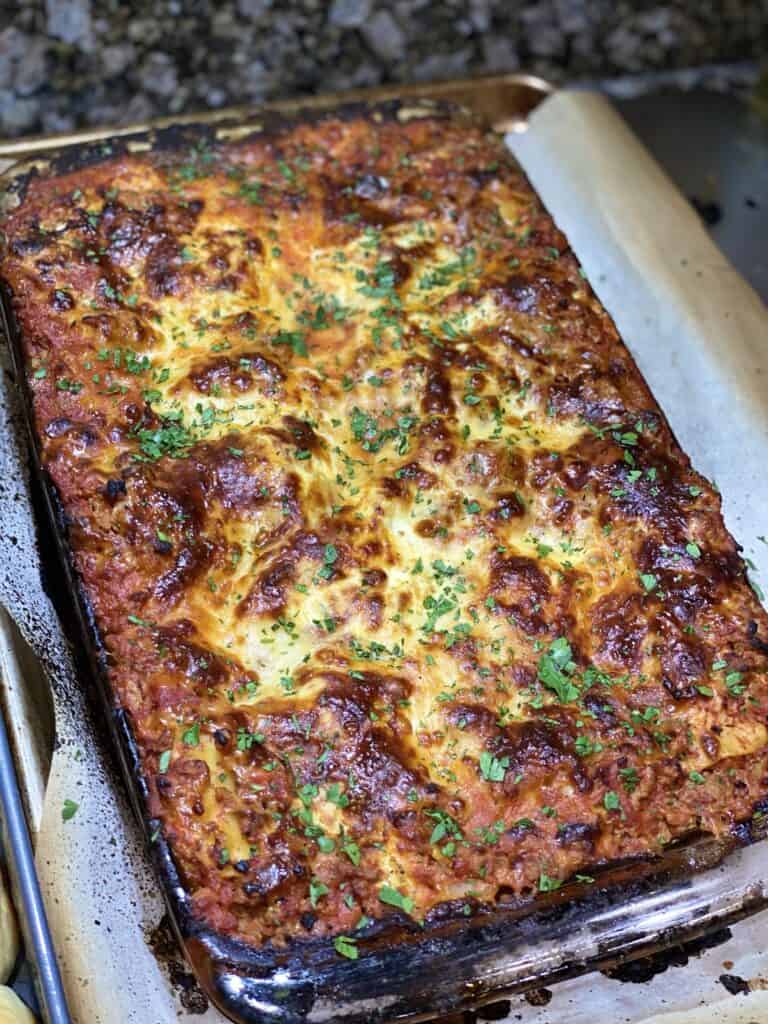
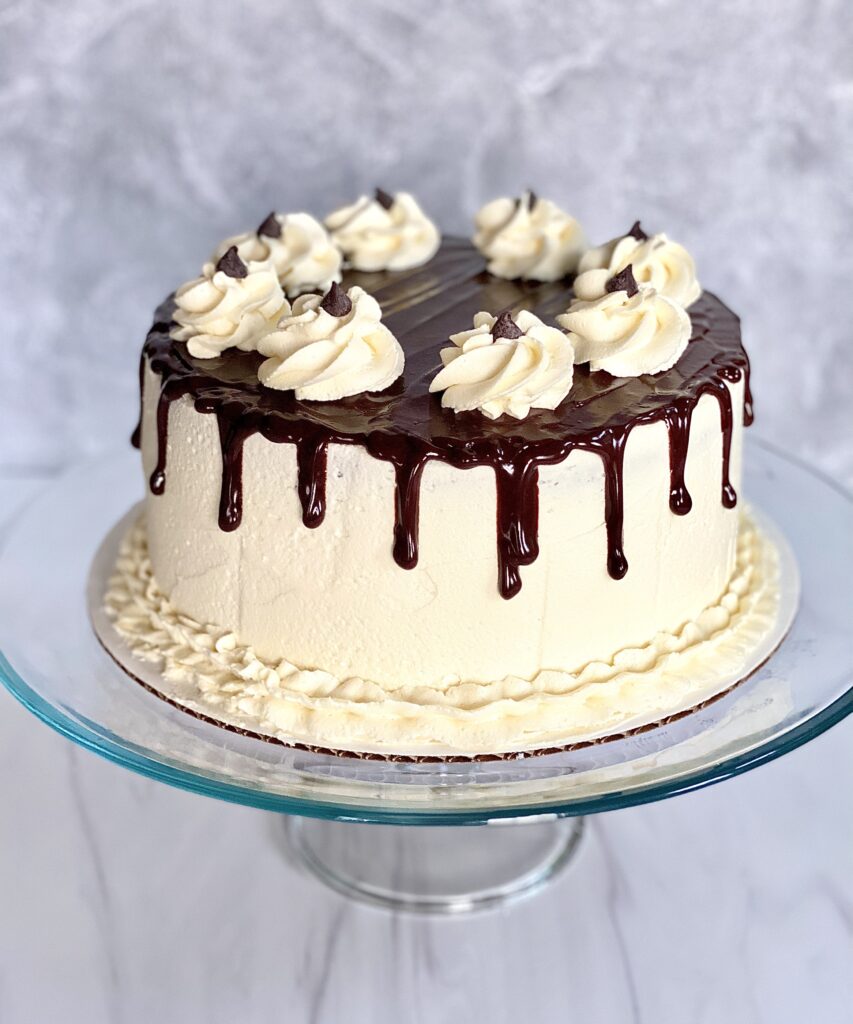
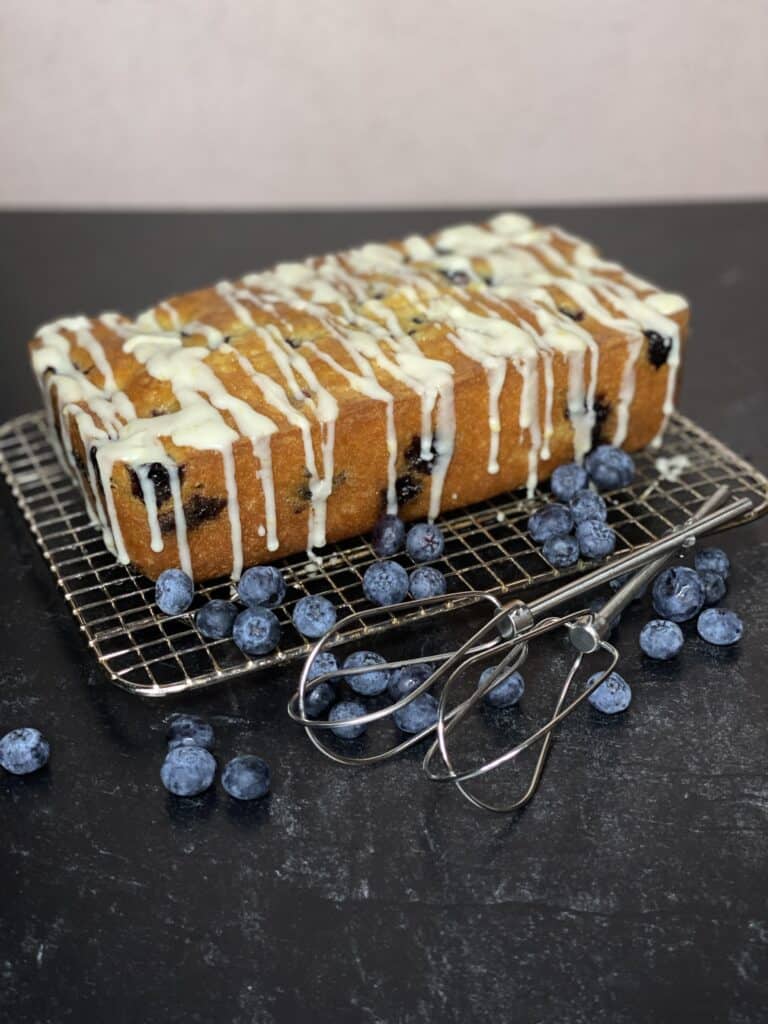
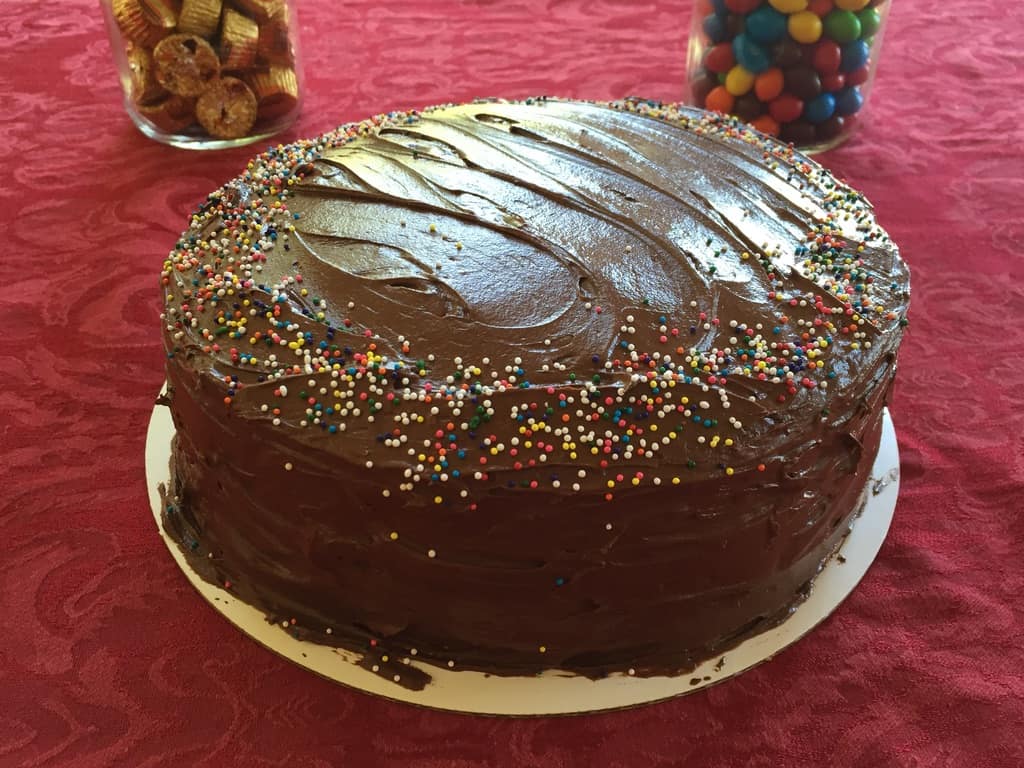
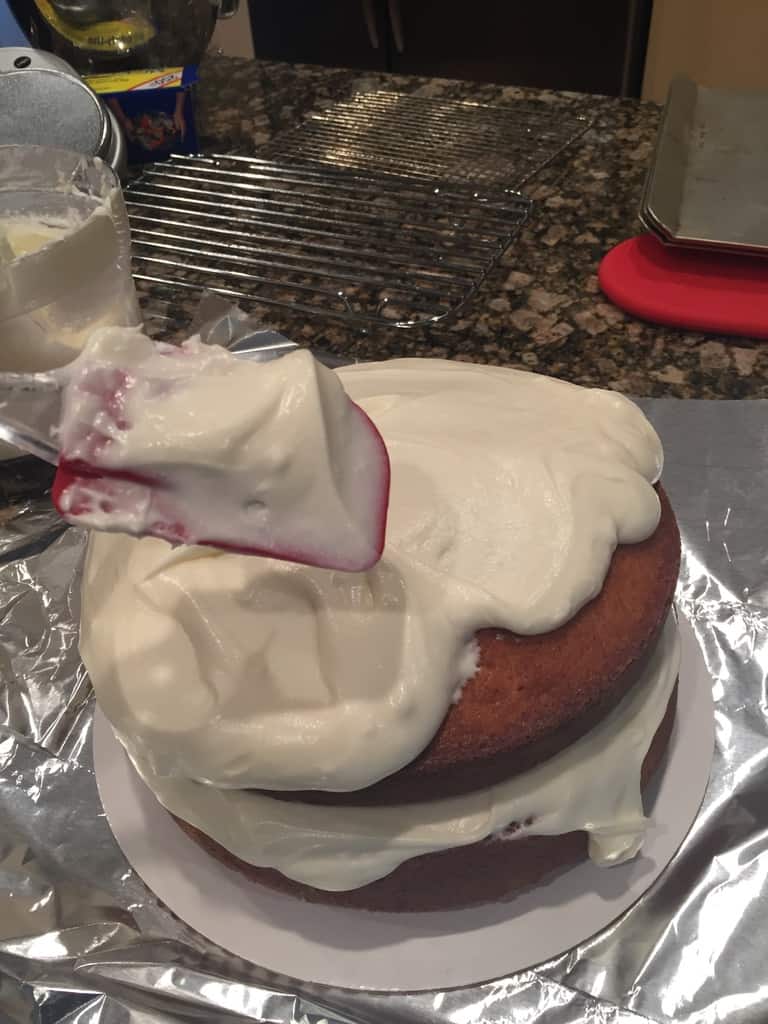
To further my point, last week, I made this:
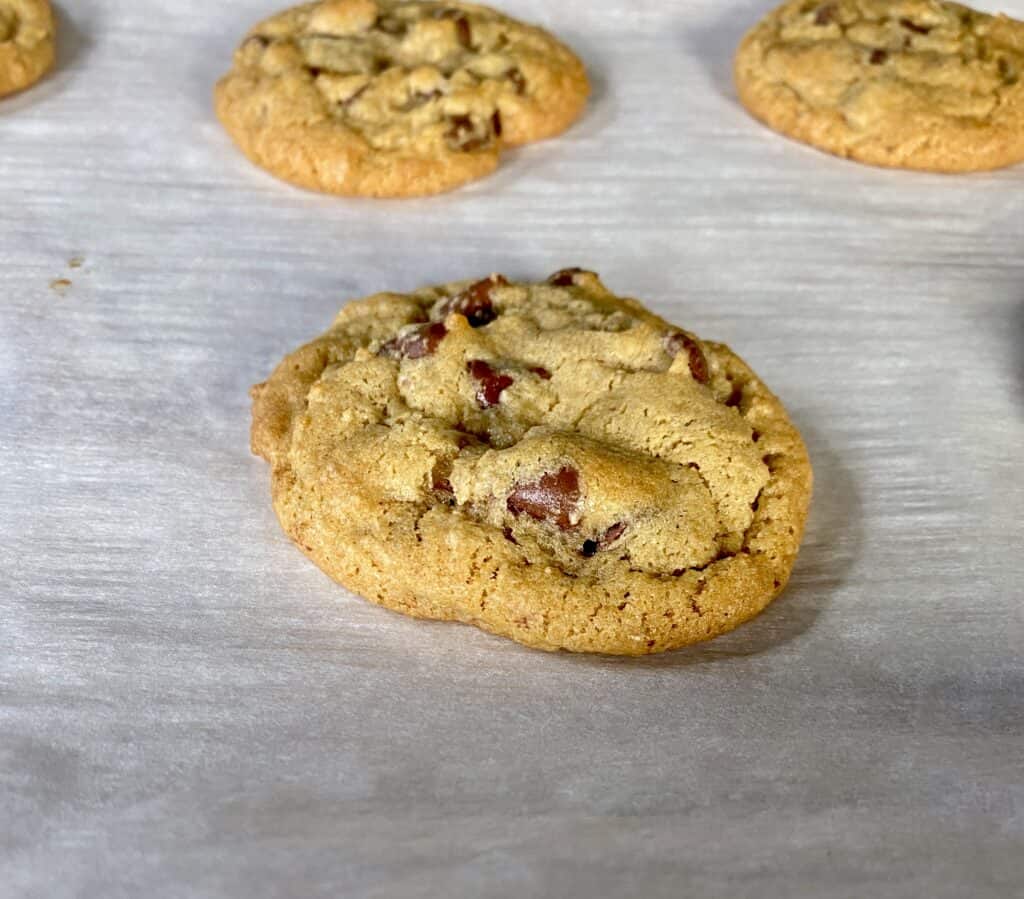
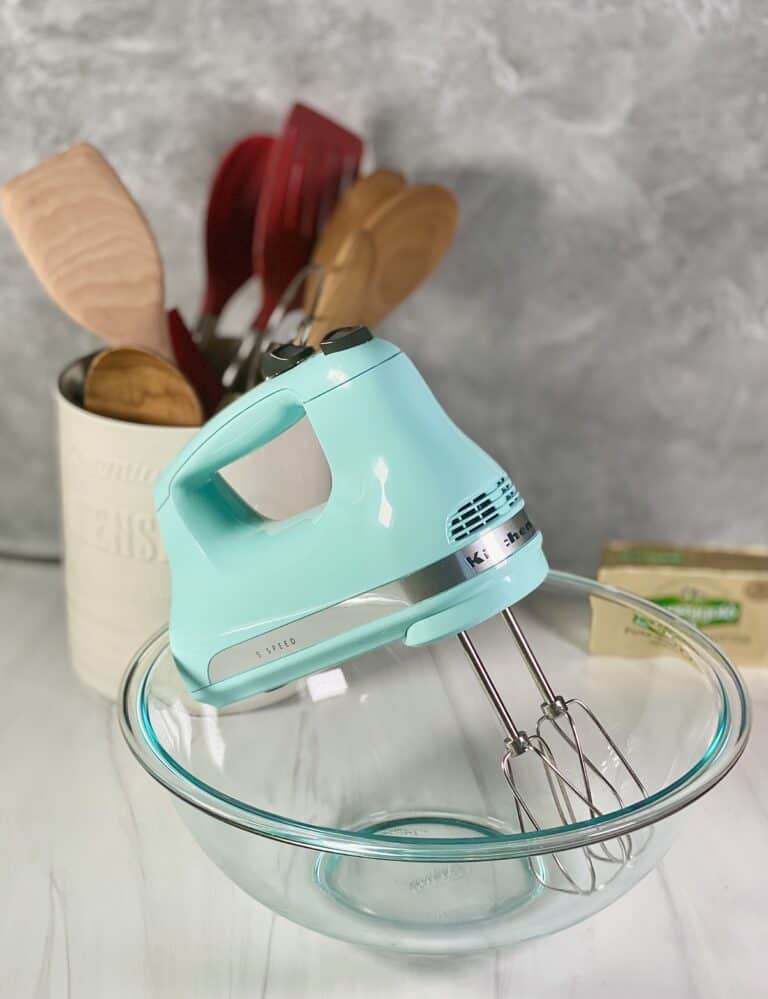
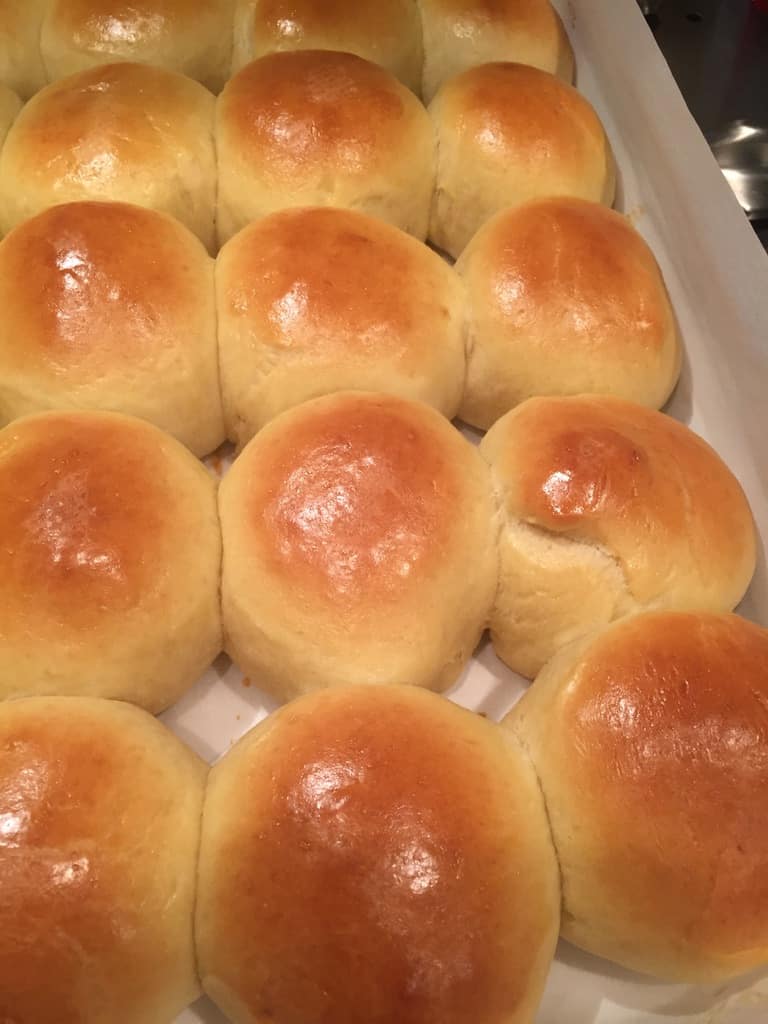
With this:
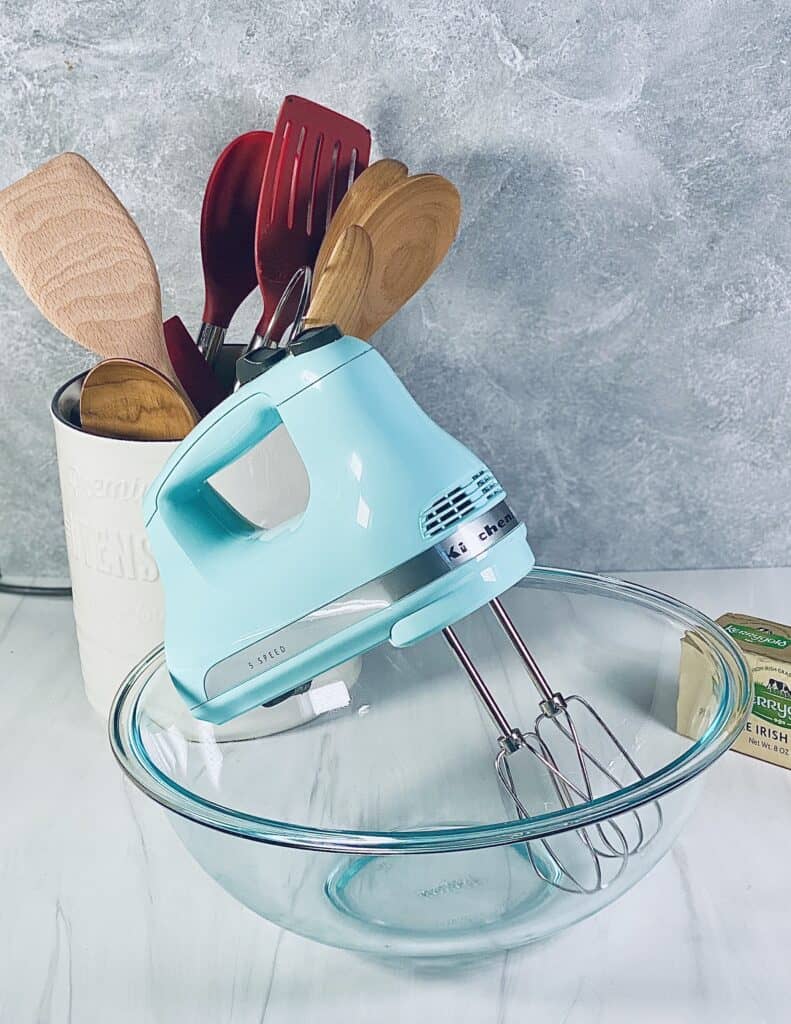
While KitchenAid makes an amazing hand mixer (I’m on my second one), there are several companies that make hand mixers that are wonderful. I honestly believe that every mother in my neighborhood growing up had the 80s versions of this Cuisinart or this Hamilton Beach hand mixer:

There are those among us who own these mixers today and they still work perfectly. And, as the story, below, will show, working with a hand mixer has done more to help me develop a better feel for batter and dough than working with a stand mixer ever has.

Don’t get me wrong! I use my stand mixer all the time. But, again, you don’t need one to start baking.

Time for a story of abject failure and devastation to prove my point.

Story Time

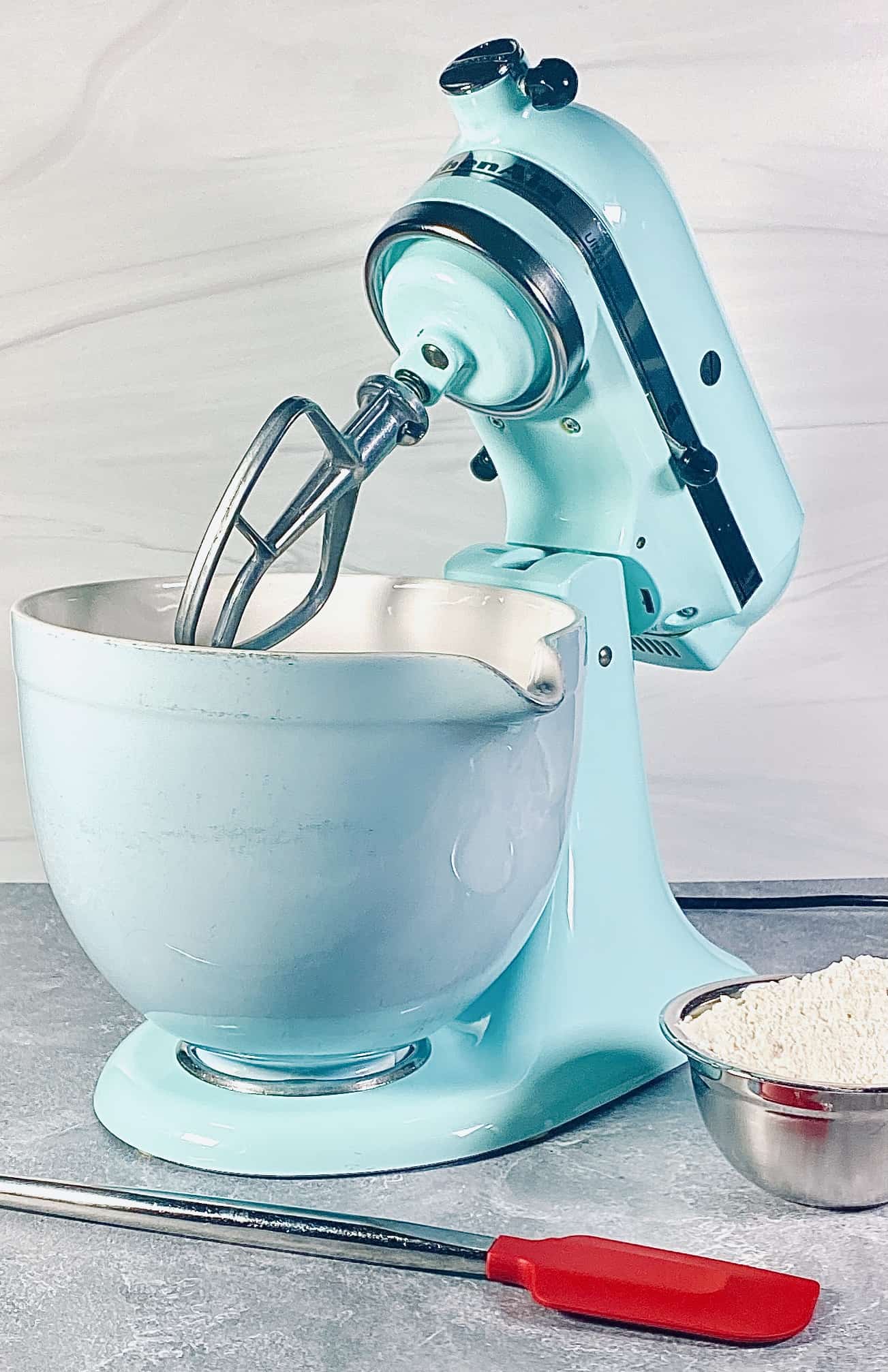
Before I had that beautiful KitchenAid Artisan stand mixer, my mother-in-law actually gifted me another KitchenAid Ultra Power mixer.

I am extremely fortunate and grateful that she did that for me.

I was a non-baker at the time, and I truly appreciated that KitchenAid as a beautiful countertop appliance. However, I did not initially appreciate the significance that this gift would play in my life.

She…was gorgeous. Still is:

Y’all. My mother-in-law is a literal angel sent from heaven. And not just because she gave me these mixers that catapulted my baking career. She is love personified, and she radiates sun beams of positivity wherever she goes. I just love her so much. #LoveYouMom

When this KitchenAid first appeared in my kitchen, I was awed by the gift (I’ve always loved kitchen gadgets, even before I started baking), but didn’t have a full appreciation for it until The Mediocre Sugar Cookie Bake of 2014. Before that experience, I was the cook whose KitchenAid hand mixer was in the kitchen, while the beaters for said mixer were in another room entirely. Or in a random “multi-purpose” box on the other side of the house somewhere. After that sugar cookie experience I caught the baking bug, and wanted to bake everything.

I also wanted to use my glistening new KitchenAid stand mixer for everything. At the start, I under-creamed butter and sugar for a solid year in this forgiving machine. Over-mixed cake batters and cookie doughs in this machine. Turned out the toughest muffins and driest cakes of my baking life in this machine. And got no more skilled as a baker just because I owned it.
I had all of the baking books and resources at my fingertips during those early days, but I wasn’t developing a baker’s touch with my Ultra Power stand mixer. And I worked it to the bone. Worked it until the top was super hot and it was dancing around the counter, trying to mix quadruple batches of bread dough.

It started one day as a modest thunk….thunk…thunk. Did I think anything of it? Nope. I powered through that bread dough (I kinda went through a phase were I was making large batches of bread all the time), and another bread dough, and another…
A couple of weeks later, the motor…quit. When I plugged in the machine and turned on the motor, it would glide lazily at low speed and low speed only. My machine went from superstar to paperweight in one bake. And that was one of many times that I cried in my kitchen. It has not been the same since, despite being “fixed” more than once.

After grieving (boy, did I grieve!) the loss of my stand mixer, I was determined to figure out what went wrong. I realized that I’d become too dependent on the stand mixer to do the work for me, and that I hadn’t fully committed to learning the techniques that would make me into a good baker.

I wasn’t developing the eye and the touch for when to stop mixing cake batter when I turned it on and left the stand mixer running while I did everything else. I wasn’t developing that eye and touch when I refused to watch the creaming process so that I could understand when to stop. I wasn’t developing that eye and touch for different bread dough textures when I just let the mixer knead huge batches for 15 minutes at a time.

The Moral of the Story

After ruining that mixer, I realized that I needed to see and feel what I was doing, so that I could develop a baker’s touch. That special touch developed very quickly when I started using my hand mixer. Now, I can use either mixer interchangeably, because I understand what the finished product is supposed to look like. I know what it’s supposed to feel like.

For those who started reading this post with the belief that they can’t bake without a stand mixer: I believed that and ran a beautiful machine into the ground. It’s absolutely not true. A strong commitment to learning the science and techniques with hand tools will make you a proficient baker more quickly than a stand mixer ever could.

Today, I have both mixers available to me. And guess what? Sometimes I don’t use either of them! If I have the time to use a wooden spoon or dough whisk to make something, and if the recipe is one that supports it, you’d better believe I’m reaching for those those implements first. Even if I’m doing something for my custom bakery! It’s all about touch.

Because, Dear Family, you do not need an expensive stand mixer to begin your journey as a home baker.

I hope you found this post helpful! If you have any questions, you can always send me an email!

Until next time!

-S

Don’t forget to subscribe so that you can get more fun baking motivation!
Join the List

Subscribe to get a free video lesson and our latest content by email!

    We won’t send you spam. Unsubscribe at any time.

    Check Out My FREE New Buying Guide for Beginning Bakers!

    0

    Welcome to Begin with Butter! My name is Shani, and I’m the resident Butter Ambassador and owner on this site. I’m the quirky, nerdy, self-taught, fun-loving guide that’s here to lead you through the initial phases of your baking journey.

    And I’m so excited today to share a brand new, FREE ebook that’s going to make your baking life much, much easier!

    Already ready for the download? Enter your email here to get it right now!

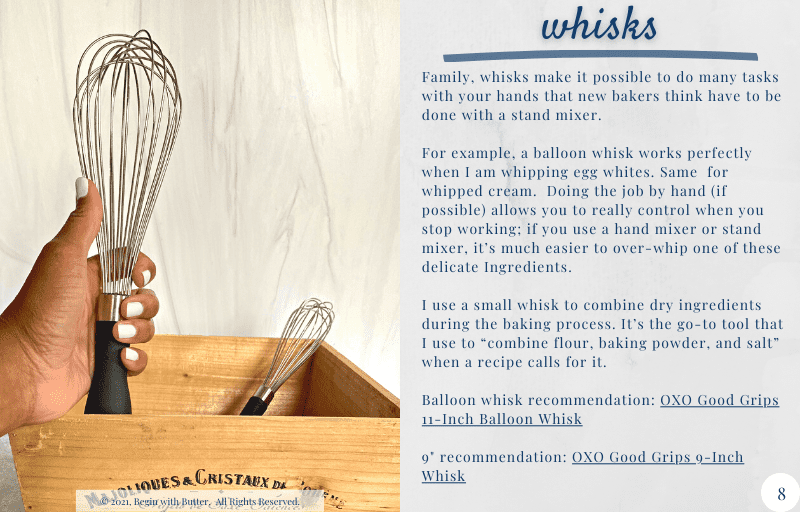
    Want to know what you’ll get if you download the ebook? Take a peek at this sample page!

    This site is for the newbies–the new bakers and non-bakers who want to become consistent and proficient bakers. I know proficiency is possible, since I went from a non-baker myself in 2014 to a custom bakery owner now.

    My philosophy is simple: you can become a great baker if you’re willing to start from the beginning and learn the hows and whys. If you already know that baking isn’t cooking, you’re off to a great start!

    In other words, it’s the technique for me. ???? But, in order to execute those techniques, you need a few simple gadgets.

    And that’s where lots and lots and LOTS of people get stuck.

    Don’t Worry! I’ve Got the Solution! And it’s Free!
    With all of the resources and baking shows out here, it’s easy to think that you need a stand mixer, a blast chiller, fondant, and an unlimited supply of bowls to even get started as a baker. And that, all by itself, is discouraging enough to make you quit before you’ve started.

    While those things are nice, they’re not necessary. So, I wrote my new, FREE “Buying Guide for Beginning Bakers” with my favorite starter gadgets to help you understand exactly what you need for your first foray into cupcakes, muffins, and cookies.

    In addition to telling you what you need to get started, you’ll learn why you need it. There are even (non-affiliate) links in the book so that you can go directly to individual sites and find the exact same gadgets that I use in my kitchen!
    It’s a F R E E resource that’s available for download right now. For those of you who have some things, but aren’t sure whether you have everything you need, you can double check the list and be confident that you’ll be ready to get started. After reading this guide, you’ll be able to confidently start executing many baking recipes without a trip to Target or the agonizing wait for the Amazon delivery truck.

    And did I mention that it’s free?

    Maybe you have an aspiring pastry chef at home and want to make sure that they have everything they need? Then this guide is great for you too! With this guide, you’ll know whether your aspiring chef has the tools that they need to confidently go for it on their first try.
    Guys, I am so excited to share this ebook with you, and I hope you find it useful as you step into your new life as a home baker!

    Ready to download? Enter your email now!


    Thanks for Stopping By!

    Three Tips for Amazing Home Cooks Who Want to Be Amazing Bakers!

    0

    Before I started my baking journey in 2014, I said this all the time about baking:

    “I can cook but I can’t bake. It’s too hard.”

    Does this describe you? Well, today I have three tips to help you overcome this belief and become an amazing baker, even if you’ve never tried to make a cupcake in your life.

    I was lying to myself.

    If you want to bake, you can bake. Today I’ll help you get to the root of that frustration and help you figure out how to get on the good foot with this beautiful science.

    In this Post:

    The Fundamental Truth: Cooking and Baking are the Same, but Different

    Cooking, Friend, is the process of taking raw ingredients and transforming them into a completed dish. This could include those black eyed peas that you had for Sunday dinner, or those blueberry muffins that you made yesterday.

    Yes, Friend. Baking is a form of cooking. It’s true! Cooking is anything that involves transforming raw ingredients. Baking, as we commonly know it, is transforming raw ingredients into pastries, cakes, or bread.

    In fact, according to this very scientific definition from The Spruce Eats, baking is “fully cooking food in an oven.” This could easily refer to any number of chicken or beef dishes. However, as the same article points out, when most us refer to “baking”, we are referring to pastries and breads, not those yummy Thursday night crispy chicken thighs.

    That is where the difference comes. Baking (by its common definition) requires a very scientific approach in order to reach a desired result, and the margin for error is narrow. With cooking, there is much more flexibility, as there are usually many opportunities to taste and adjust something before serving, and it’s a much more hands-on technique (with stirring, seasoning as you go, etc.).

    Tip #1: Start with the understanding that while baking is a form of cooking, it follows its own set of rules.

    Cooks are Artists: Baking Activates a Cook’s Scientific Mind

    The biggest obstacle that I had to overcome in the early days was my belief that cooking and baking followed the same rules.

    The way I laugh when I think about that now…

    I don’t know who needs to hear this, but cooking and baking do not follow the same rules. And this is the fundamental truth that frustrates good cooks.

    They don’t follow the same rules. At all!

    If you’re used to pinching and dashing over a pot of something, tasting to adjust, then pinching and dashing again, that action becomes a part of you. Your identity as a home chef depends on your ability to season, taste, and season some more. It’s an instinct. An art form. You know your palette. You know what you’re trying to achieve. And you know that you can take baby steps to get there. Even after a dish is complete, there’s an opportunity to alter the flavor with some salt and pepper or a splash of lime juice.

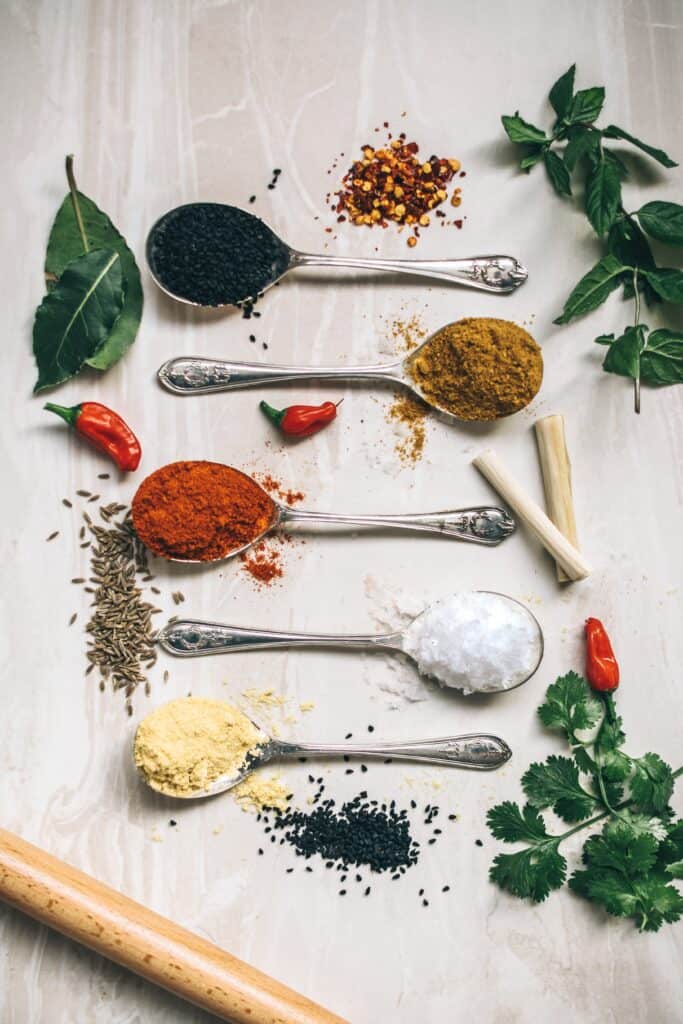
    Cooking allows flexibility on the issue of substitutions as well. Don’t have cilantro? You can get by with parsley. No dry white wine in the house? White wine vinegar could work just as well.

    Photo by Calum Lewis on Unsplash

    Baking is NOT THAT; successful baking relies on scientific principles as much as artistic ones. To make baked goods that taste good, bakers understand that their recipes have to rely on certain fundamental principles of chemistry and physics. For example, certain ingredients, when combined with heat, cause the Maillard reaction (browning) on the top of your cakes, cookies and breads. Leavening, combined with liquid, creates carbon dioxide and alcohol which is responsible for rise when trapped by a gluten structure. Oh, and the strength of the gluten structure depends on the protein content that’s often found in your flour and eggs.

    Bakers know these rules before they take out a single bowl or spatula. Knowing these rules means that bakers have a very good idea of what to expect when they open their ovens at the end of a bake. They know exactly what to expect if they reduce the sugar by 1/2 cup or add an extra egg.

    While you don’t need a chemistry degree to be a good baker, it’s important to understand that there’s no “winging it” without some basic scientific knowledge about how it all works. There are lots of opportunities for things to go wrong if we insist upon being creative without learning the basics. Without a strong understanding about ingredient properties and baking techniques, it’s simply not possible to create consistent baking recipes that will work.

    These scientific requirements are so frustrating for good cooks because they can feel constricting and lacking in imagination. This is especially true for those imaginative cooks who love to tweak their dishes on the fly. If this is you, Dear Reader, take heart. Once you read through the next section, you’ll know that you can get to that imaginative place again with baking, if you just give it a little bit of time and approach it with a beginner’s mind.

    Tip #2: Understand that baking uses a different, science-based skillset and that that skillset is different than general cooking.

    The Key to Becoming a Great Baker: Adopt a Beginner’s Mind

    Before the mediocre baking attempt in 2014 that ultimately led to the blog you’re reading today, I had been a failed baker for my entire life.

    In other words, before 2014, I couldn’t bake a potato to save my life.

    The proud look on my daughter’s face as she took those mediocre sugar cookies to her class jump-started the nerd in me, so I decided to take a deep breath and start from the beginning with baking. Zen Buddhists call this a “beginner’s mind”; it involves humbling oneself and actively accepting where you are. Because you can learn how to do anything when your mind is truly open.

    black and white stones on brown wooden table
    Photo by cottonbro on Pexels.com

    For me, this meant that I had embrace the fact that I didn’t know the first thing about baking, even though I’d been a proficient home cook since the 1980s. Not accept it begrudgingly. But embrace every part of the journey.

    Approaching baking with a beginner’s mind meant that I didn’t attach any preconceived notions about what I should know or feel any shame about not knowing. It simply meant that I made myself available to learn how to bake, without judgment or expectation. It also meant that when questions arose about why and how to bake, I was able to target my study organically and learn the answers over time.

    Don’t get me wrong, proficiency and creativity came with practice and study. But by adopting a beginner’s mind, I was able to take my ego out of the equation so that I could truly learn something. And that lesson, dear friend, has been invaluable. This blog is a compilation of what I have learned organically (and concepts that I continue to learn organically), wrapped up in one place for you.

    Tip #3: A beginner’s mind is key to becoming a baker. This is especially true if you’re already a great cook.

    Conclusion

    I still approach baking with a beginner’s mind. There’s always so much to learn in this space and being curious has helped me grow from a non-baker, to a new baker, to a good baker, to a consistent and proficient baker, to someone who is confident enough in my baking ability to create my own recipes and sell baked goods to the people in my community through my custom bakery. There’s literally no downside to admitting that you’re always a beginner on some level.

    If you think about it, great cooks, we all had a beginner’s mind at some point. We weren’t born with a knowledge of flavor profiles or salt and acid levels. We learned that over time; some from parents, others from grandparents, and others still from culinary schools or chefs. Baking is its own discipline that deserves the same respect. If you give it that respect, the dividends will be more than you could ever imagine.

    Home chefs, the best advice I can offer about baking is to adopt the beginner’s mind. The science and technique will come with time. Be kind to yourself during the learning process and embrace where you are. And for goodness sake, laugh at yourself sometimes! There are mistakes to be made during the learning process and that is okay. Sometimes those mistakes are delicious.

    Until next time!


    Feeling encouraged? Looking for other encouraging articles to help you get started as a baker? Sign up for the email list!

    Join the List

    Subscribe to get a free video lesson and our latest content by email!

      We won’t send you spam. Unsubscribe at any time.

      The Role of Eggs in Your Baked Goods!

      Today, in our Ingredient Series, we’re taking on eggs! We’ve already talked about flour, sugar, butter, yeast, baking powder, and baking soda, so it’s time that the humble egg has its day.

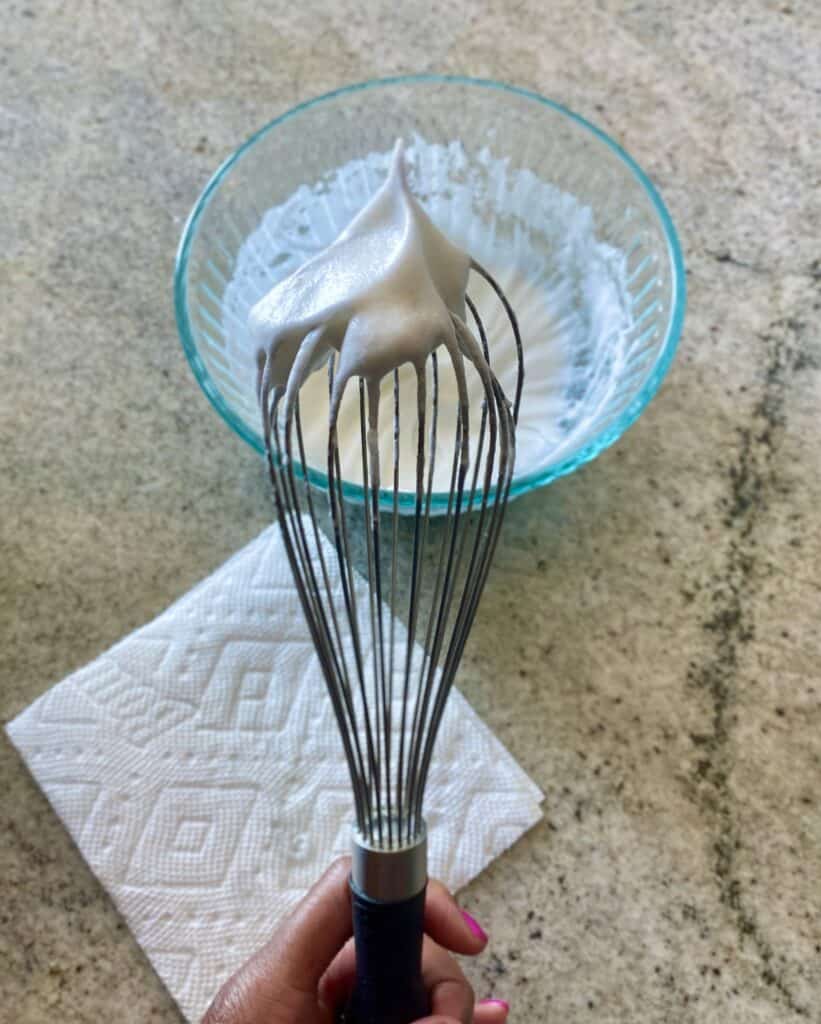
      Not to be dramatic (????), but eggs are transformative. When combined with flour, they add to the structure and texture of cakes, cookies, and breads. Egg wash is the secret ingredient for beautifully caramelized pie crusts and challah; it can even be used as a kind of edible glue for slivered almonds or sesame seeds.

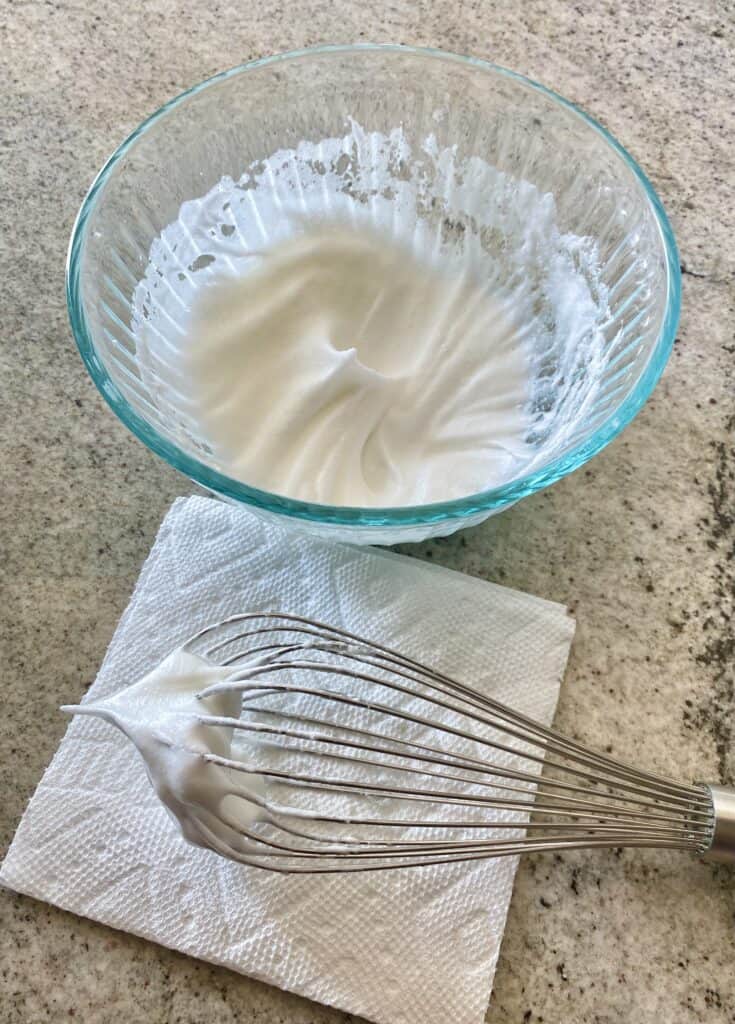
      Eggs can also be reduced to their parts: fatty egg yolks are a natural emulsifier that give a rich, luscious and creamy texture to lemon curds, while egg whites can morph into a natural leavening agent when whipped to stiff peaks.

      Let’s get started, shall we?

      In this Post:

      The Composition of Eggs

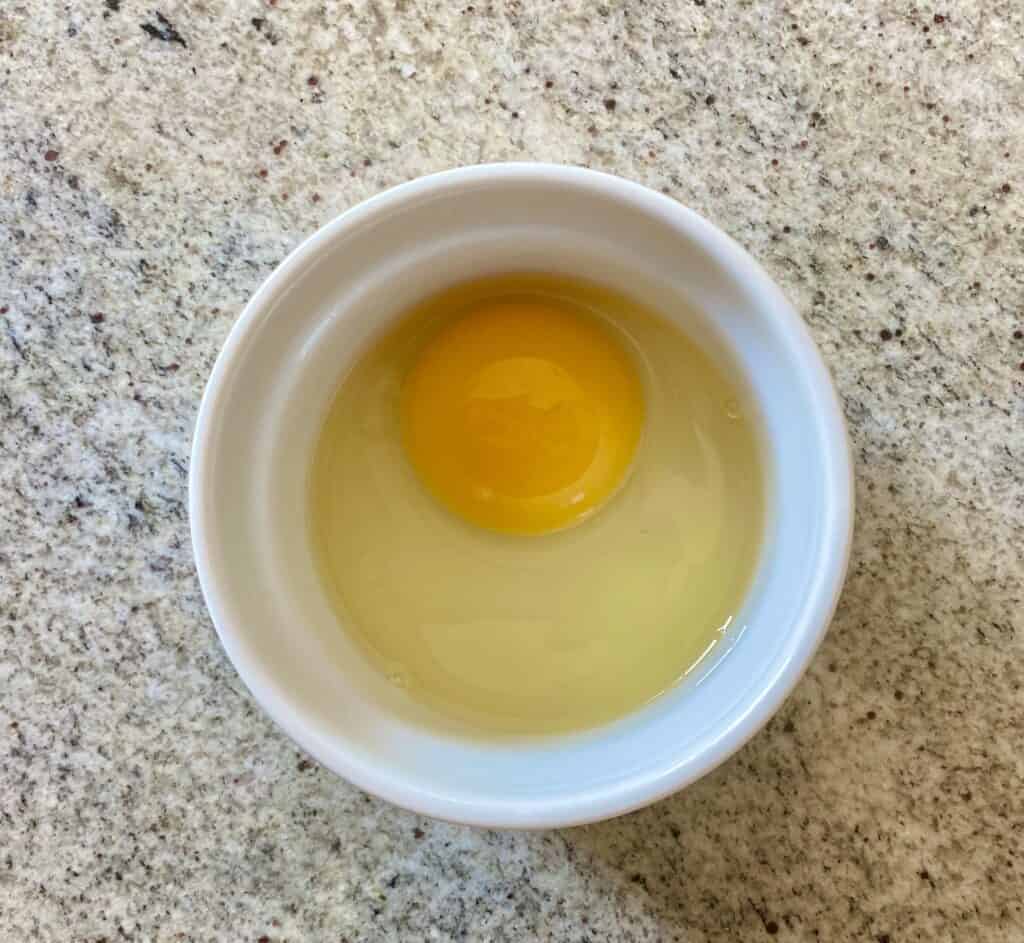
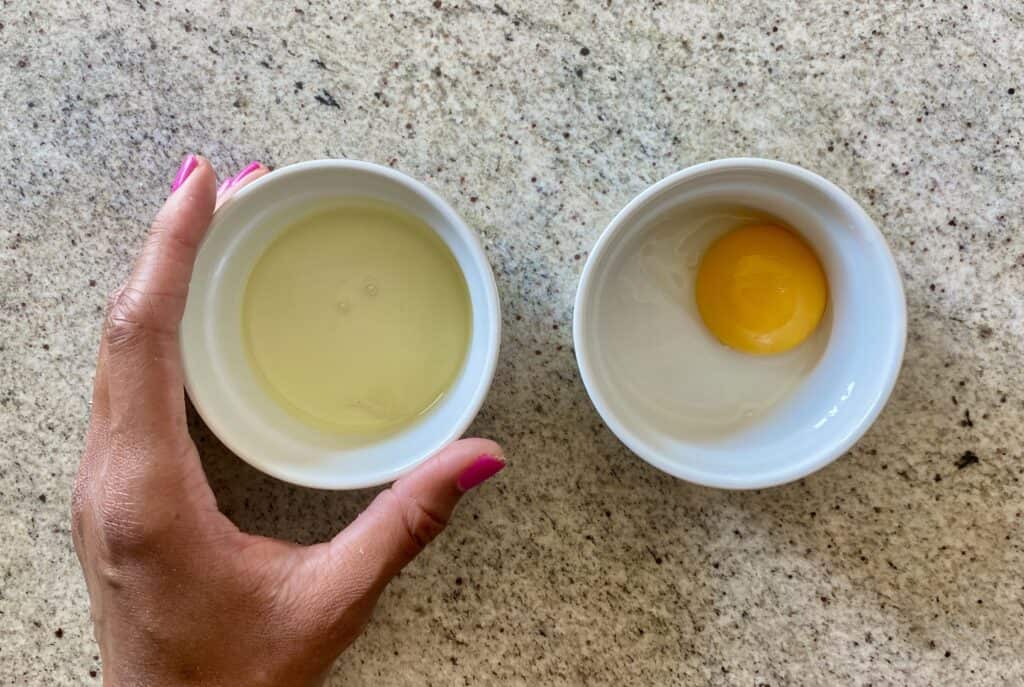
      Eggs are composed of two seemingly inconsistent parts: the egg yolk and the egg white.

      The egg white is made of a tangled network of protein. Protein is the literal building block for baked goods, in that it creates the physical structure for leavening (e.g., baking powder, baking soda, or yeast) to do its work. The combination of structure and leavening is what gives baked goods their rise. The more eggs that are added, the stronger the physical protein bonds will be.

      While the yolk also contains some protein, it’s more famous for its fattiness. Egg yolks give a smooth, velvety texture to whatever they’re added to, whether it’s a cake batter or my favorite luscious lemon curd from Bakes by Brown Sugar. The egg yolk is also known for adding beautiful color, both on the interior and exterior of your baked goods.

      The Default Egg for Baking (With a Cheat Code!)

      When I was first learning to bake, I truly believed that my baking endeavor had to come to a full stop if I didn’t have large chicken eggs. Like, I would give up and save the baking for another day if I only had medium or extra-large eggs in the house.

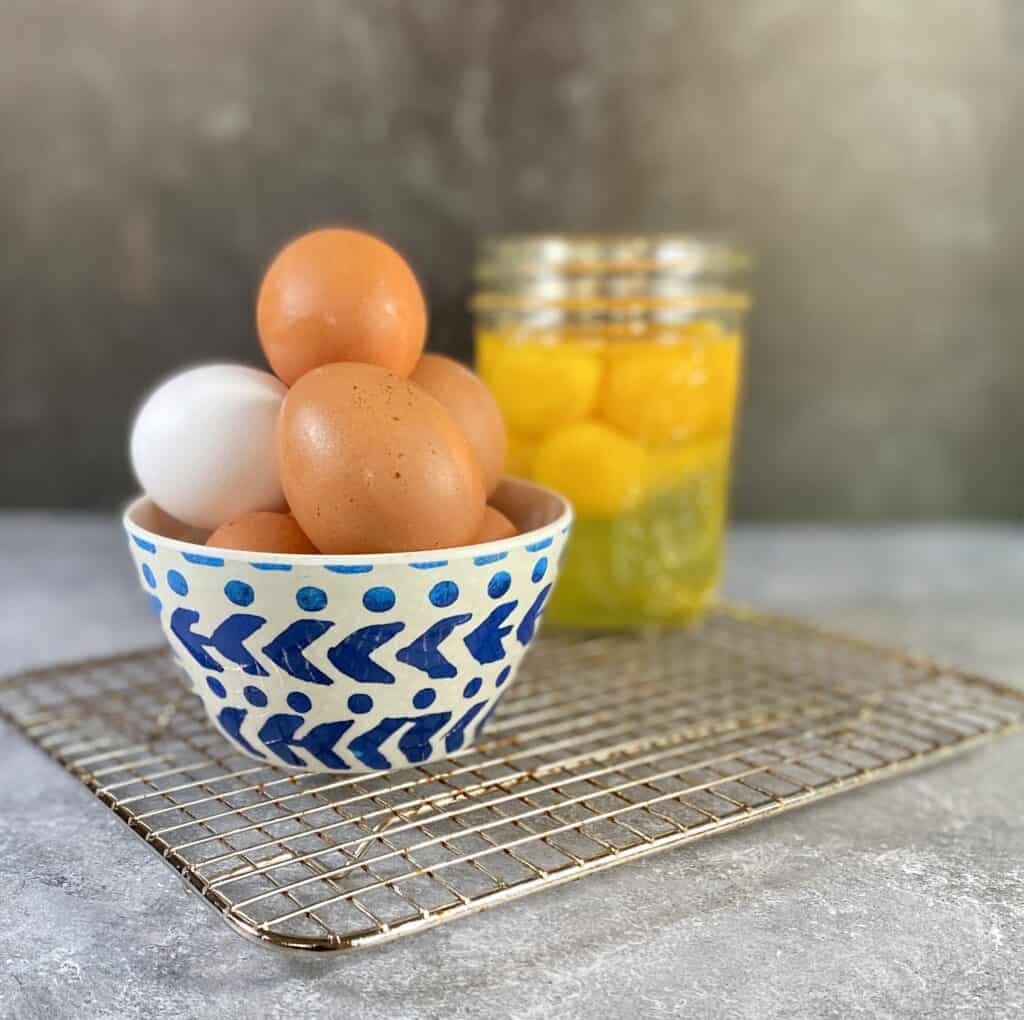
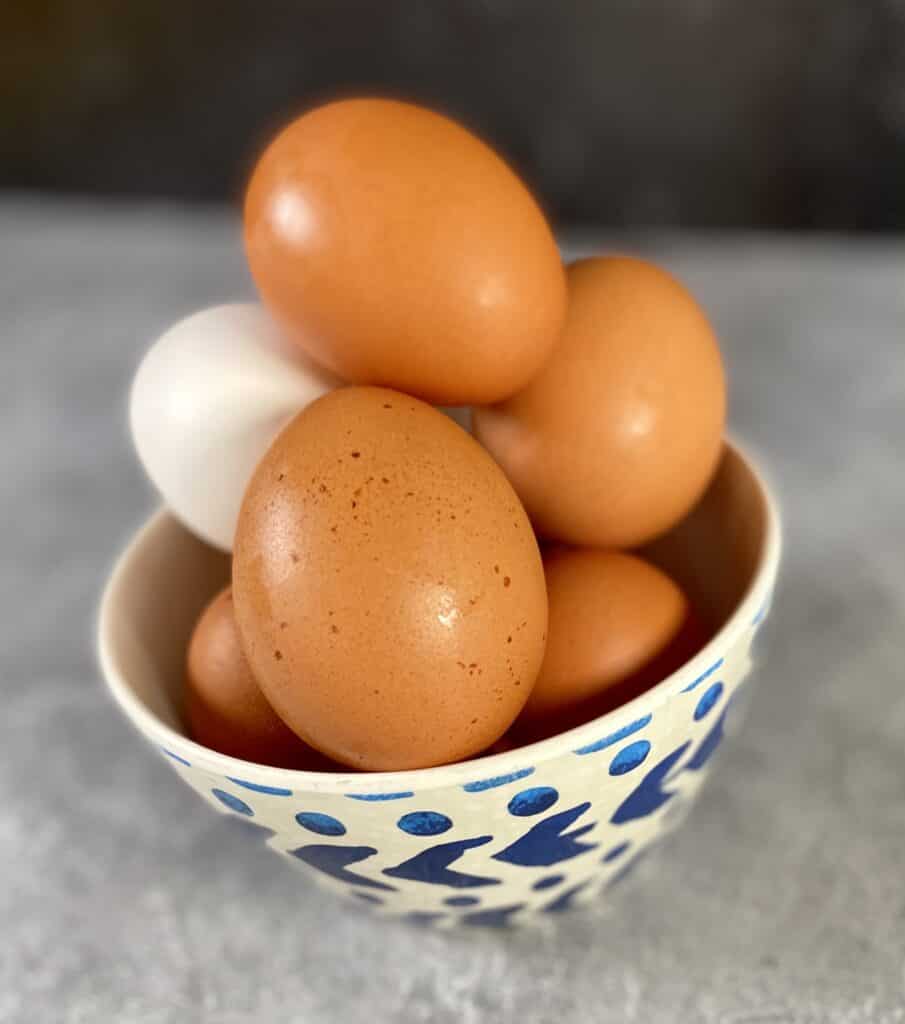
      You see, large chicken eggs are the gold standard for baking recipes. They are so commonly used for baking that many recipe authors don’t specify the size and type of eggs to be used in a recipe. They simply say: two eggs.

      Translation: two large chicken eggs, or ~114 grams of eggs.

      Friend, if you don’t have large chicken eggs in your home, please don’t fret. If you have chicken eggs and a food scale, you’ll be perfectly fine.

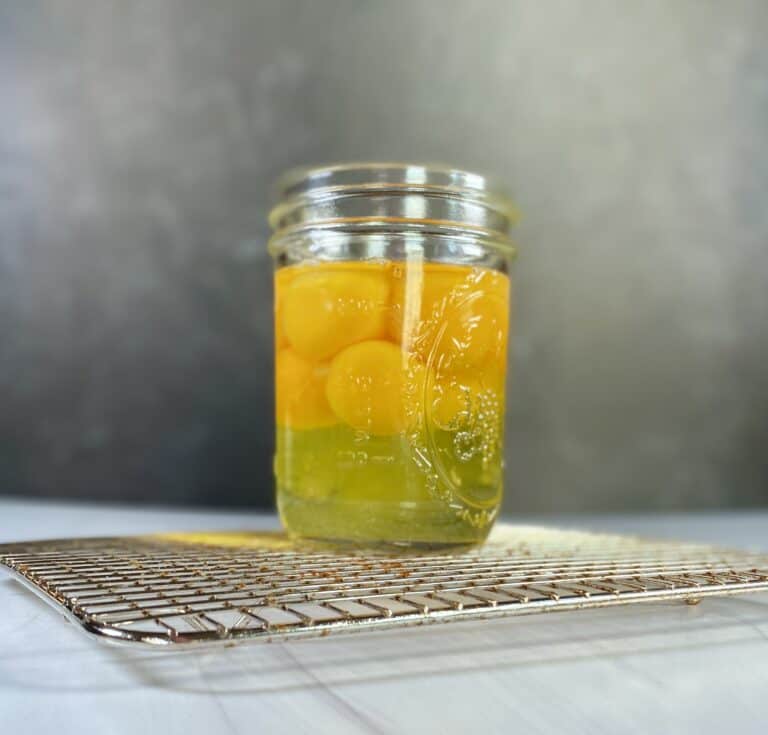
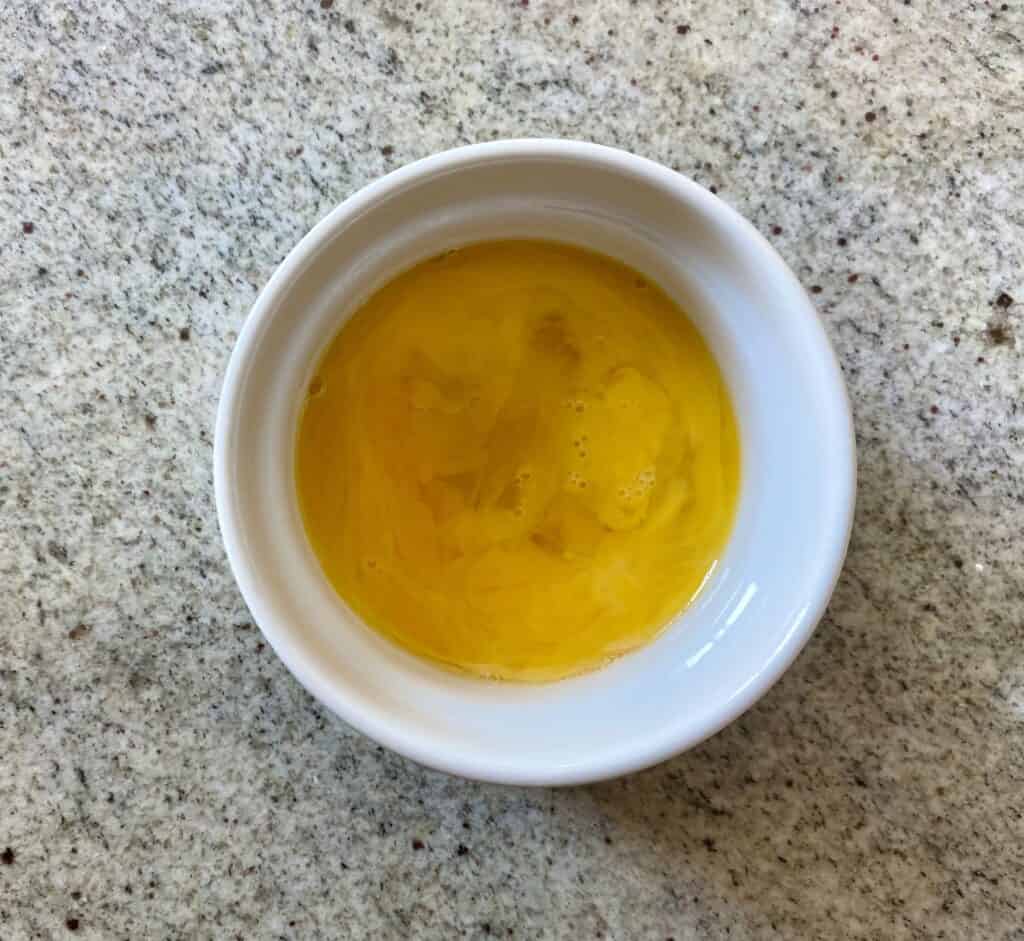
      To measure eggs using a food scale, simply crack a little more than you need, scramble gently, and remove the excess once it’s just starting to combine. You don’t want perfectly scrambled eggs here. You want slightly combined; the objective is to try and maintain the white/yolk ratio in your batter or dough.

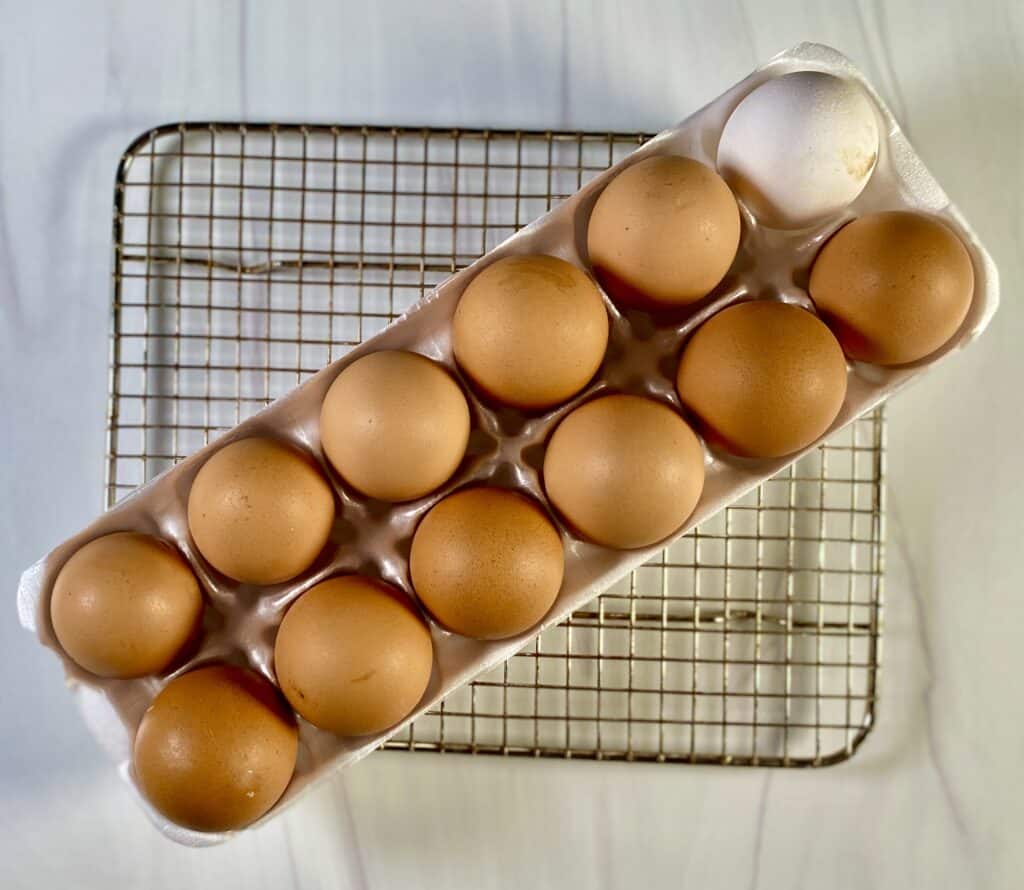
      Of course I would crack a double-yolked egg for this demo. The objective is to slightly combine the eggs for this technique, and not to completely combine them.

      For example, if your recipe calls for two large eggs (~114 grams) and you only have medium eggs, crack three medium eggs (about 150 grams) and scramble gently. Remove the excess grams of egg and you’re good to go!

      The Impact of Eggs on Structure

      In my post about flour, I talked about how flour creates the structure for cakes, cookies, muffins, and all manner of baked goods. The protein percentage of your flour impacts the strength of that structure (higher protein content=stronger structure=more chew).

      Both egg whites and yolks contain protein. When eggs and flour are combined in a recipe, the egg adds an additional protein layer to the flour and creates a stronger gluten network that traps more gases from your leavening and gives your baked goods even more lift!

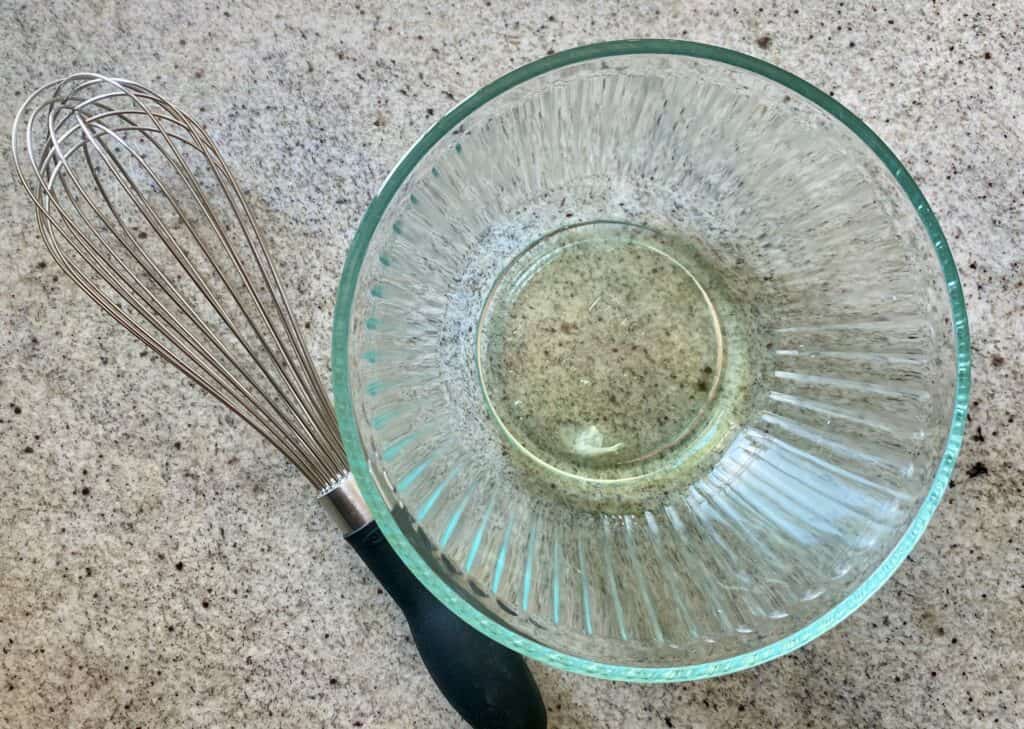
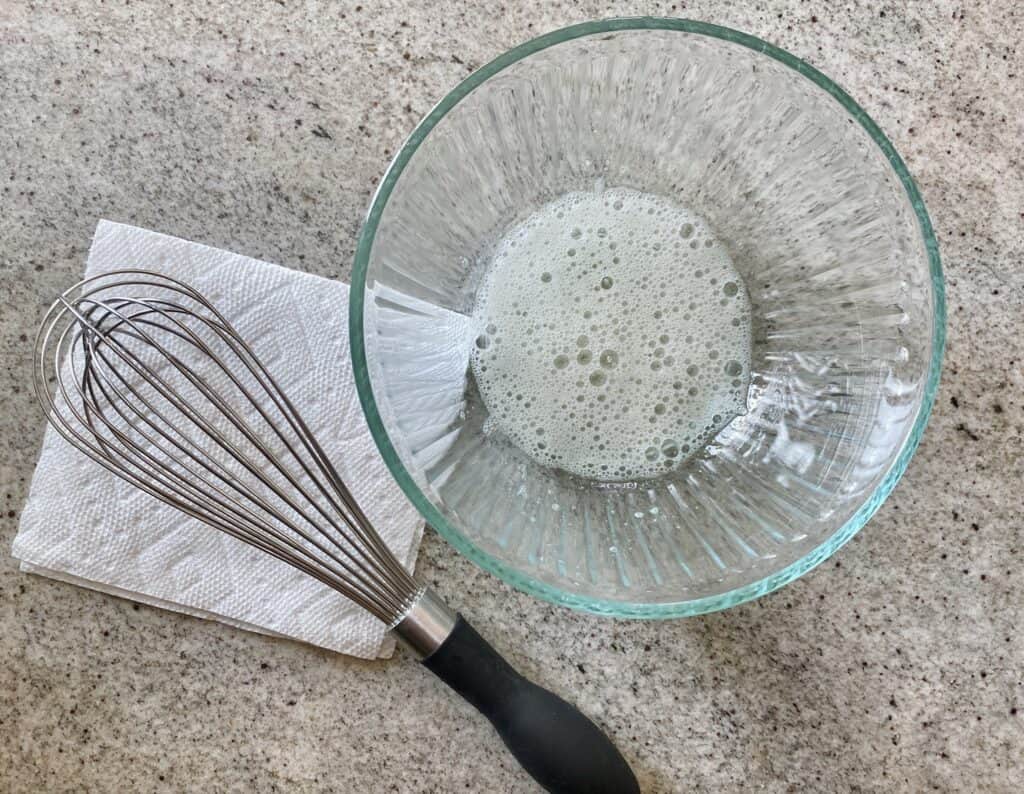
      Egg whites can play dual roles in the texture your baked goods! Have you ever tried whipping egg whites to stiff peaks? The reason that that happens is because the whipping action actually separates the proteins from one another, reducing the strength of the protein network in the egg white and transforming it into pockets of air that can be used for leavening. That’s why, when egg whites are overbeaten, they crumple and become useless. It’s because the proteins have separated from one one another and expanded until they’ve popped.

      Eggs can also thicken desserts like custards. It’s amazing really. When heated, the proteins in the egg whites coagulate (bind) into a gel-like structure to help create a cohesive custard instead of a milky mess when heated. That velvety mouth feel comes from the fatty yolks.

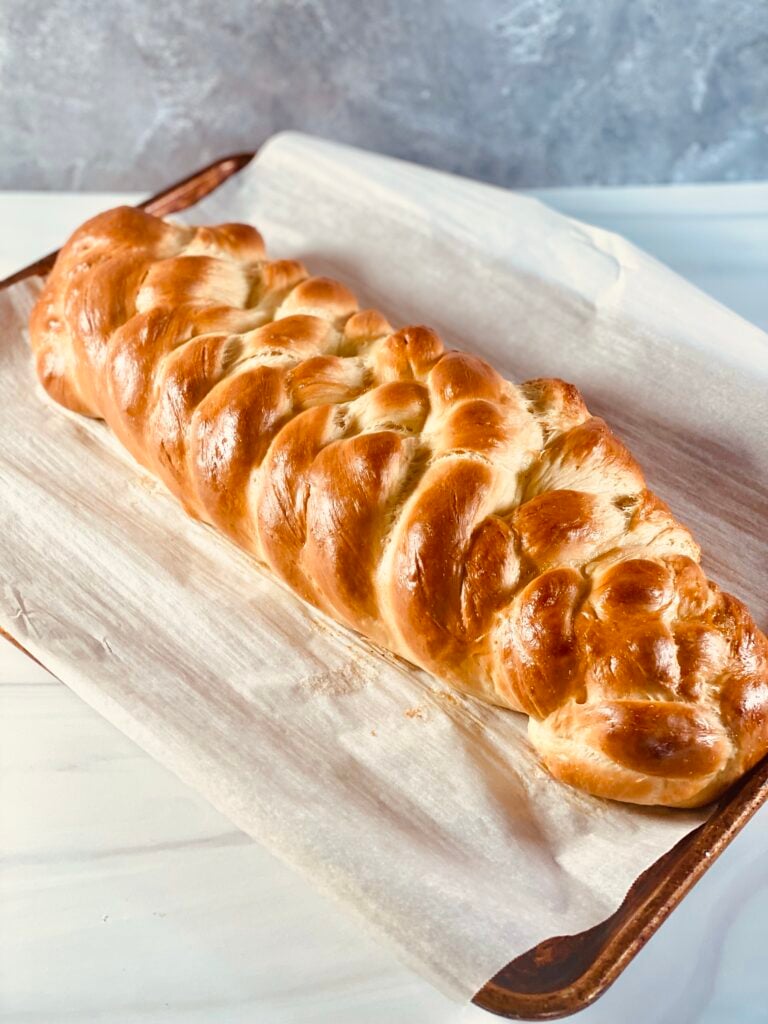
      I personally love the glazed texture that an amazing egg wash gives to baked goods. Like this!

      That sheen? That’s from scrambling a whole egg and a teaspoon of water and brushing it across the entire challah before baking. The egg promotes both the beautiful browning and a glazed texture to the finished product.

      The Impact of Eggs on Color

      Both parts of the egg contribute to color in your baked goods. The egg white helps cakes (in particular angel food cake and white cake) retain their characteristic white color. Egg whites are also used in Swiss and Italian meringue buttercream recipes and they help those buttercreams retain their beautiful, glossy white color.

      The yolk, on the other hand, does double duty. The fatty yolk helps contribute to the Maillard reaction (that’s just a fancy word for browning) on the top of your baked goods, and also adds to the beautiful, slightly yellow color that we’ve come to see in sliced yellow cake and pound cake, and also in all manner of cookies. Additionally, the yolks add color and fatty decadence to French buttercream recipes.

      I clearly need to work on a buttercream tutorial. ::adds to list::

      Conclusion

      When it comes to baking, every ingredient plays an important role. Understanding the properties of each ingredient and the role that they play in your baked goods will help you become a better baker.

      The humble egg doesn’t demand as much attention as its counterparts flour, sugar and butter, but it’s just as important! I hope you enjoyed reading about one of my favorite ingredients, and that this ingredient series is helping to deepen your knowledge about baking so that you too can understand what you’re baking and why it works.

      Until next time!


      Love the Ingredient Series? Subscribe here for more helpful content!

      Join the List

      Subscribe to get a free video lesson and our latest content by email!

        We won’t send you spam. Unsubscribe at any time.

        Eight Baking Tools That Will Improve Baking Consistency

        2

        Hey BwB Family! It’s gadget day!

        If you’ve been here for a while, you probably know that my absolute favorite thing (besides my family) is baking. And I am admittedly a huge nerd about baking gadgets.

        Y’all, I’ve tried all the gadgets. And–spoiler alert–a lot of them have better marketing than “cutting edge design that makes them a kitchen must-have”.

        There are a few baking gadgets that have earned my everlasting devotion. I’m talking about the tools that I cannot remember being without in my kitchen. The unsung gadgets that have made baking a much easier and fun experience for me. This post is my love letter to them.

        Here we go!

        In this Post:

        Deli Cups

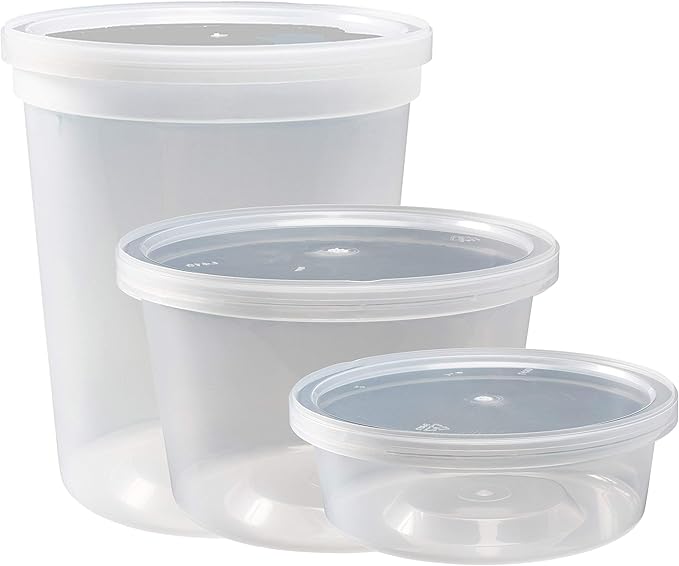
        Let me introduce you to the unsung heroes of my kitchen: deli cups. They are inexpensive and unglamorous, but they are absolutely essential to any serious baker’s mise en place.

        These stackable wonders are the backbone of my preparation process. When I’m tackling a complex recipe, having all my ingredients measured, chopped, and ready to go isn’t just satisfying—it’s necessary for me to maintain my kitchen composure and execute beautiful, consistent recipes. And deli containers are the perfect vessel for this prep work.

        Mise en place (everything in its place) becomes effortless with these clear containers lined up on my counter. I place pre-measured dry ingredients in one, eggs in another, sugar in a third, and liquid in a fourth—all visible, all organized, all ready for the precise moment they’re needed. Proper mise en place keeps you from scrambling to measure ingredients while your butter and sugar are creaming or your eggs are warming to room temperature. This is not the ideal time to realize that you don’t have any leavening at all. #LifeLesson

        The beauty of deli cups in their uniformity. I typically keep two sizes on hand: 16 ounces (ideal for most egg and liquid amounts in a home baking kitchen), and 32 ounces (usually for dry ingredients, butter, sugar, and sometimes large quantities of fruit or vegetables like carrots for carrot cake). Some sets come with an 8 ounce size that is great for extracts, though I typically use my tiny mason jars for those because they make me feel cute and demure 😂. The clear sides of a deli cup let me see exactly what’s inside, eliminating guesswork during the high-pressure moments of assembly.

        As a bonus, they’re fantastic for storage too. That leftover buttercream? Deli container. Those chocolate chunks you chopped for tomorrow’s cookies? Deli container. The uniformity means lids are interchangeable within size groups, so no more hunting for the one lid that fits. These sets come with several lids.

        They’re dishwasher safe, which keeps my sanity intact. And they’re inexpensive enough (about $20 for a good starter set) that I don’t stress when one inevitably grows legs and walks away.

        So while they may not be the sexiest addition to your kitchen arsenal, deli containers are the practical workhorses that transform chaotic baking into an orderly, enjoyable process—starting with perfect mise en place.

        Oven Thermometer

        I’m going to put it out there. Your oven is a liar. Not a liar in the malicious, manipulative kind of way. But a liar like your dog, when they’re trying to convince you that you didn’t just feed them dinner two minutes ago.

        The same way you don’t want to start baking in a cold oven (unless a recipe specifically calls for it), is the way that you don’t want to start baking in an oven that’s not the right temperature. But if your oven is unwittingly lying to you, what’s the fix?

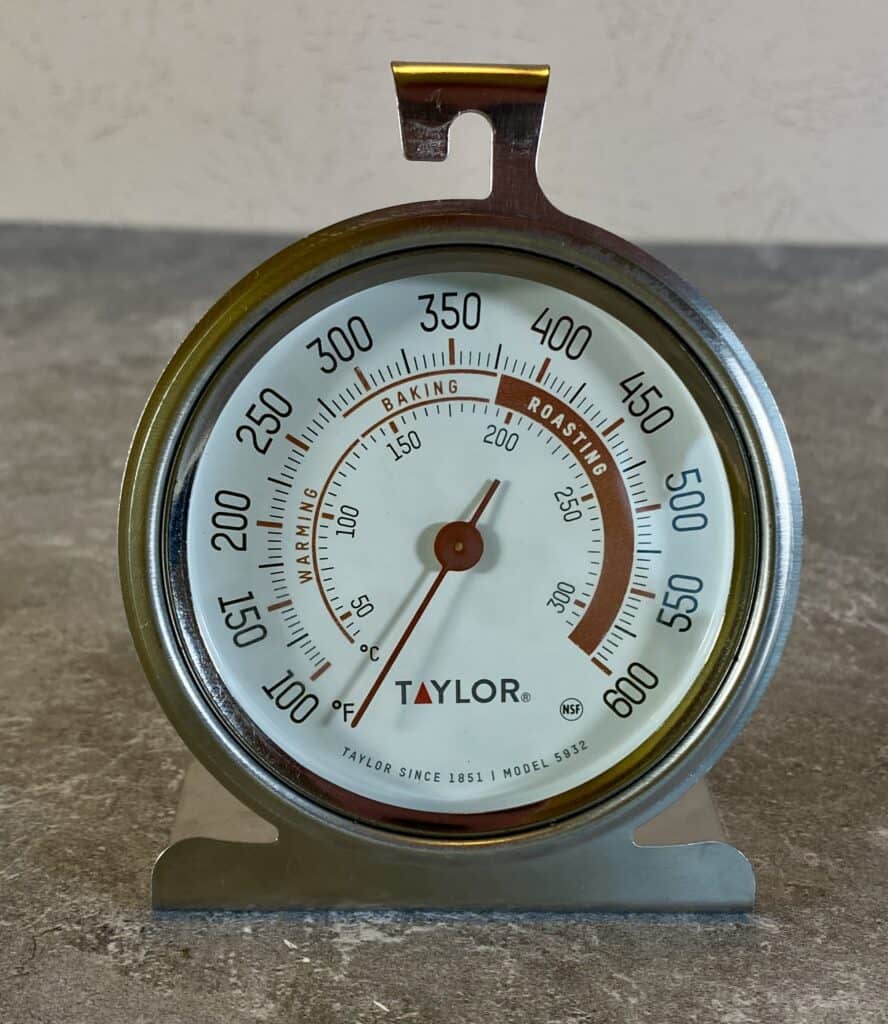
        The fix is this.

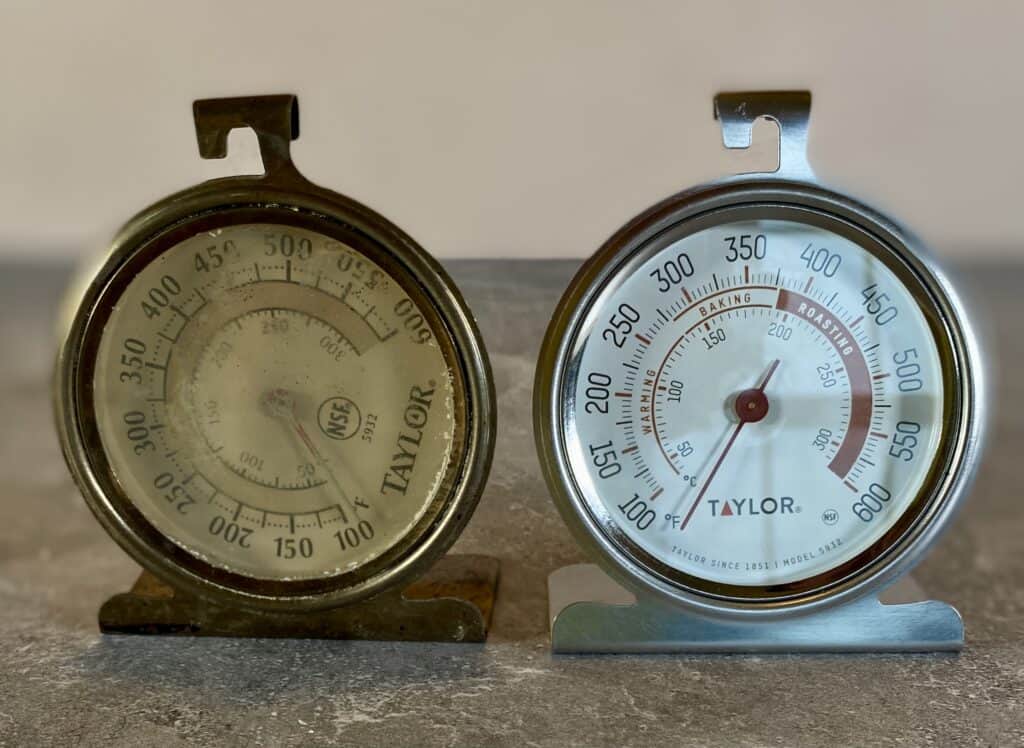
        This, my friends, is a low-tech godsend called an oven thermometer. You can either hang this on an oven rack or set it right on top of the oven rack and it will tell you the exact temperature of your oven at that time. My oven thermometers live in my ovens at all times because they tell me the real deal about what’s going on in there.

        Baking demands as much precision as possible, and this includes your oven temperature! Exact temperature is key to achieving a perfect result. That’s why an oven thermometer is so important; it’s calibrated to tell you when you’ve reached the proper temperature and it will let you know exactly how far off your oven is.

        If you set your oven to 350°F without having this failsafe in there, it’s highly unlikely that the oven will be at exactly 350°F when you’re ready to bake. And an oven that’s too hot or too cold could definitely lead to a ruined result.

        Digital Kitchen Scale

        Not to be dramatic, but…

        A DIGITAL KITCHEN SCALE IS THE MOST IMPORTANT TOOL IN YOUR KITCHEN.

        I admit that that was dramatic. But a digital kitchen scale is definitely the most important tool in a baker’s kitchen.

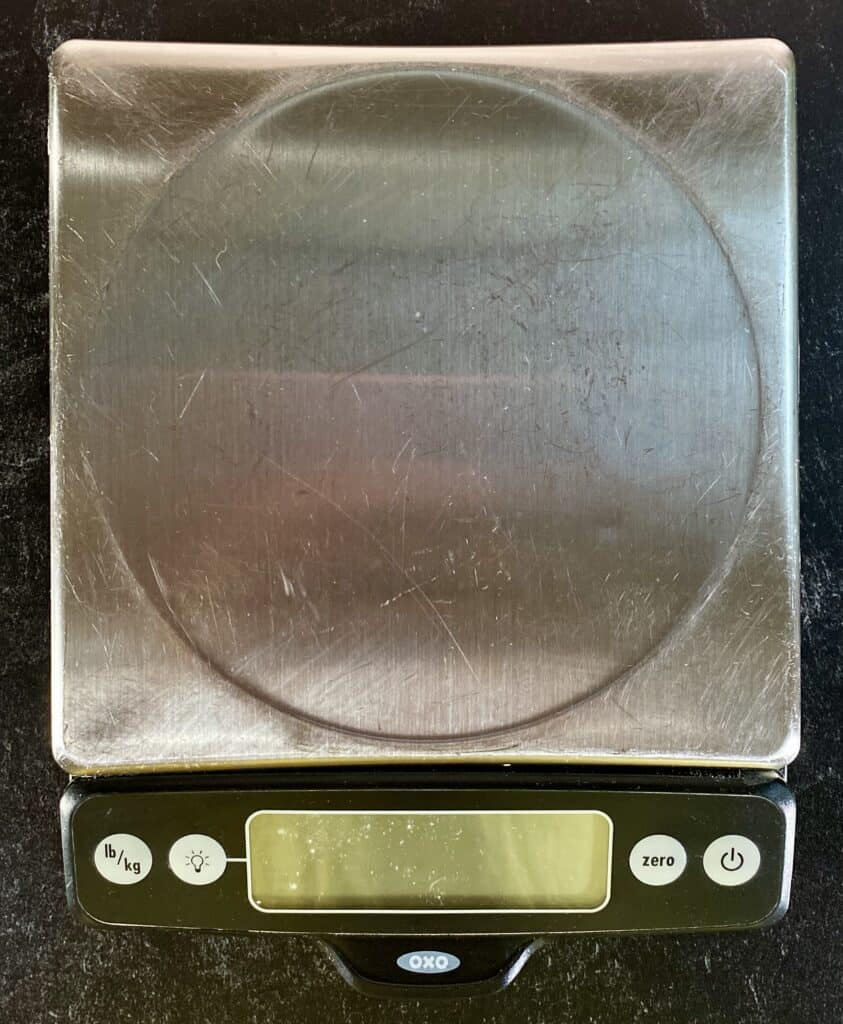
        I’ve said it before and I’ll say it again: baking is a game of inches, and how you measure ingredients will make or break your recipe every single time.

        I’ve written two posts about why a digital kitchen scale is important, and how to measure using a digital kitchen scale, so it’s not surprising that this darling item ended up on this list.

        I have several digital kitchen scales in my kitchen and currently love this one by Oxo the most. It’s the newest iteration of the food scale that my sister gifted me all those years ago. This digital kitchen scale by Ozeri was my first food scale (circa 2015) and it’s still going strong as well! And for you design lovers, this Nicewell kitchen scale is sleek and beautiful but also gets the job done!

        Parchment Paper

        I told Y’all that my baking beginnings were humble. This is the point where I share with you that I didn’t know about parchment paper when I started baking. Now, I can’t live without it.

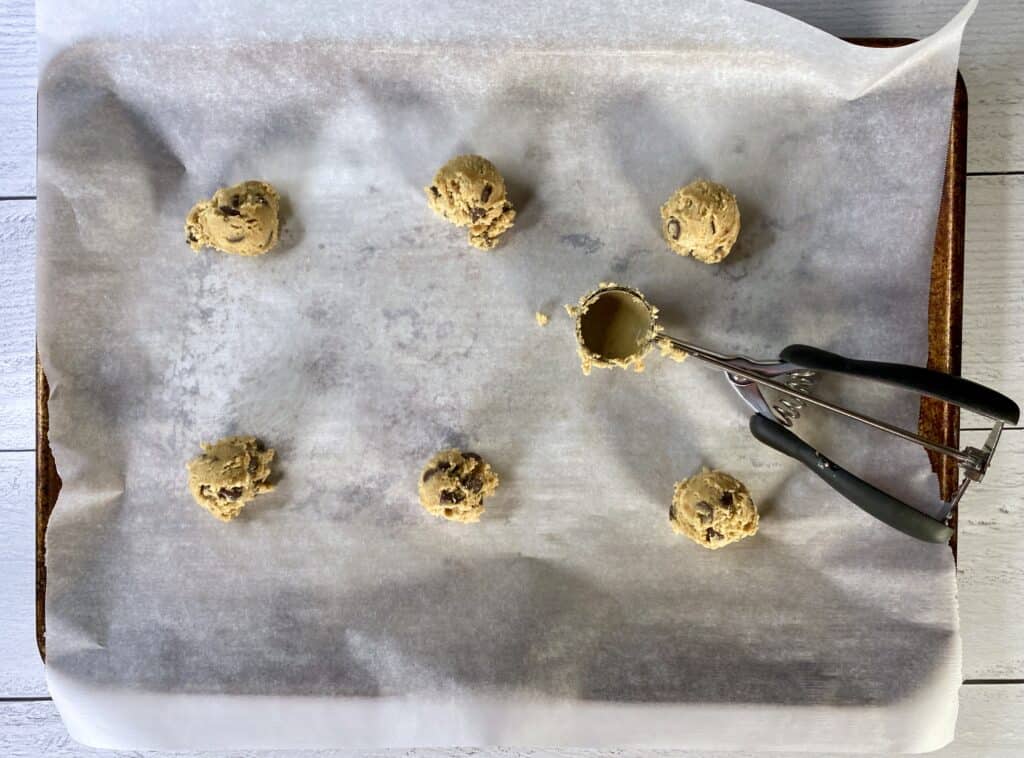
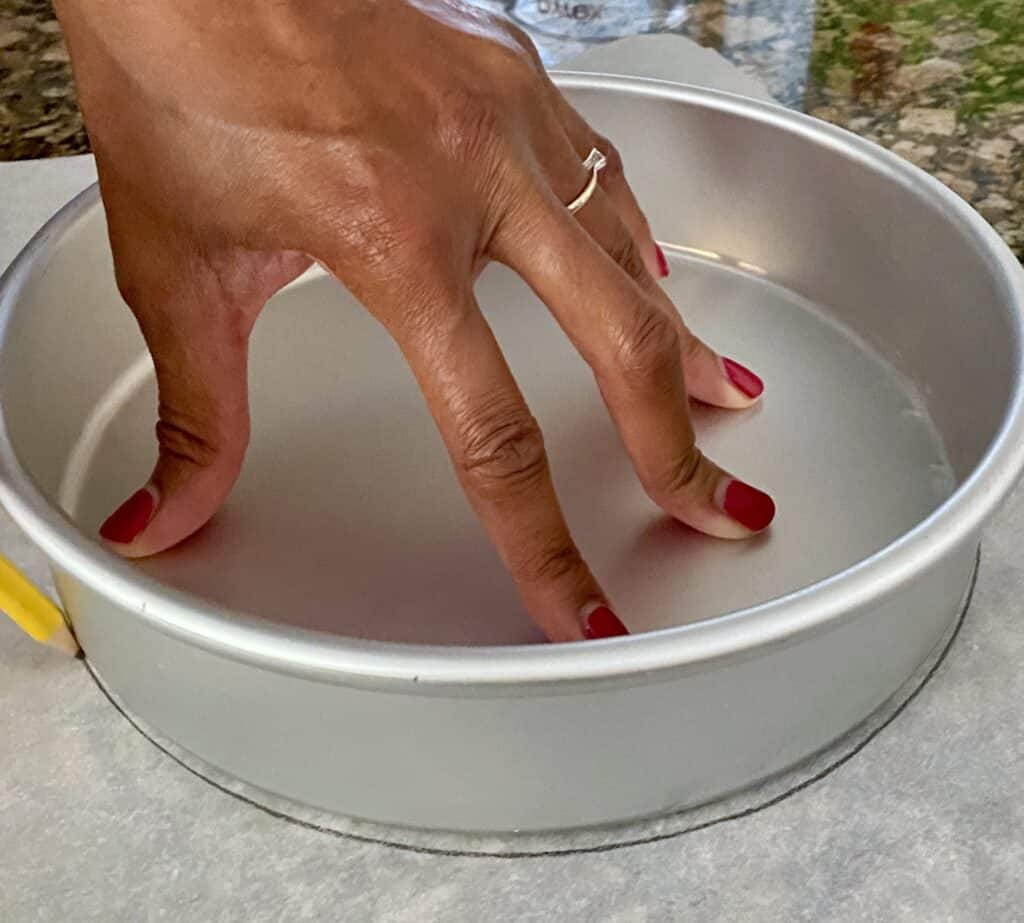
        Parchment paper is literally heat-resistant paper that’s used to prevent food from sticking to cake pans and cookie sheets. It’s also tough enough to stay in one piece when there’s a mess on top of it, which means that clean up is a quick business that includes throwing away the used parchment paper and giving my cookie sheet a quick wipe and rinse with soap and water.

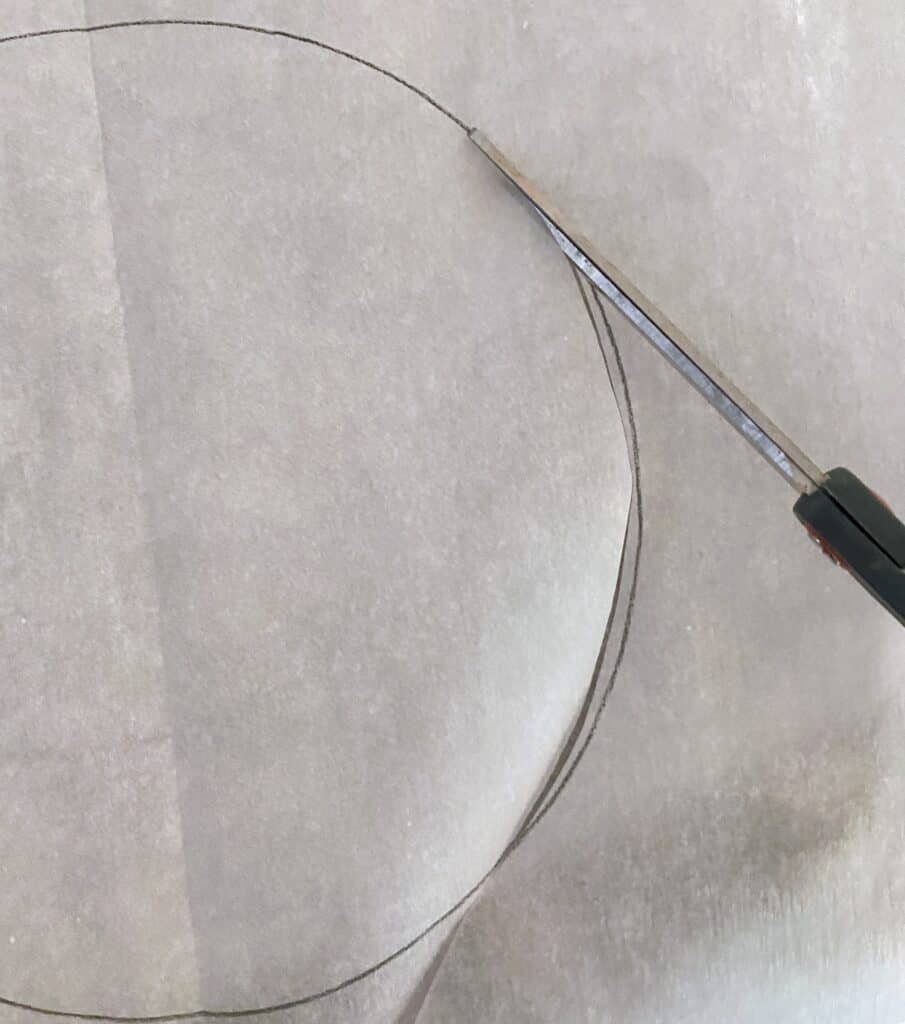
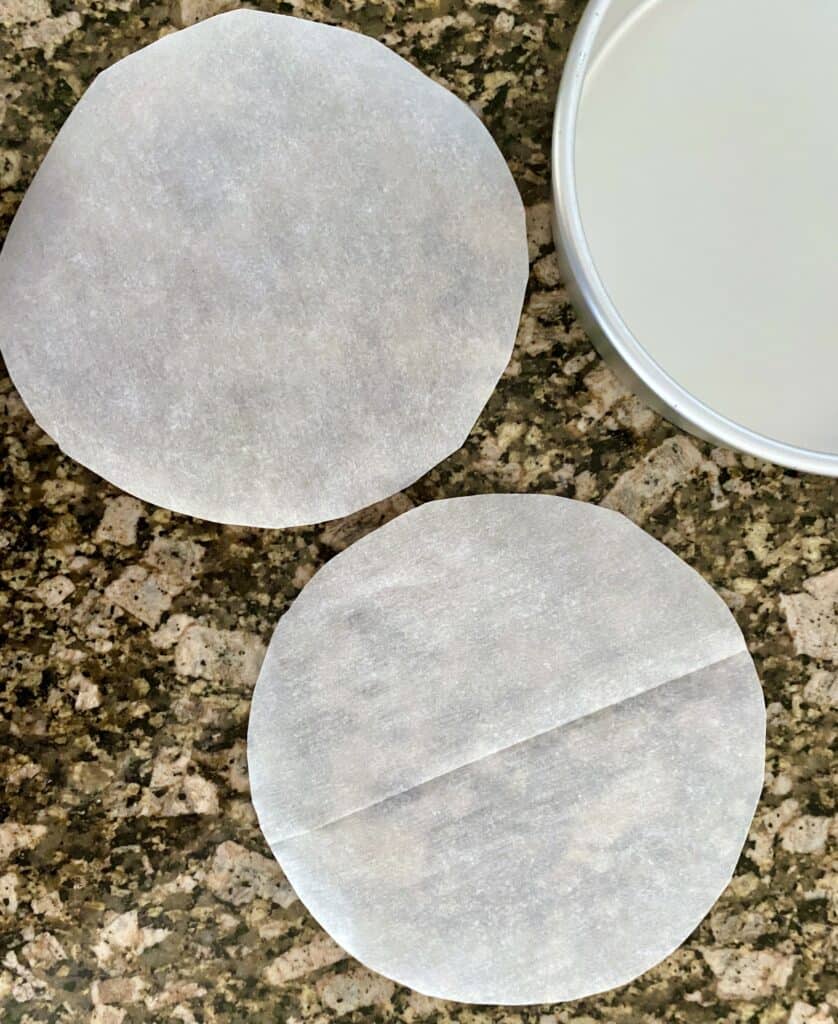
        It is genius for those moist (I know) layer cakes that have a tendency to stick. Simply cut a round of parchment in the shape of your cake pan, butter your cake pan, place the round at the bottom of your buttered cake pan, put butter on the top of the parchment, flour the whole thing and NEVER HAVE A CAKE STICK EVER AGAIN.

        Some people prefer silpat silicone baking mats, which do the same thing as parchment but are reusable. I say try both! I did and I ended up choosing parchment paper because cookies spread more thinly (and get more brown around the edges) on slicone mats, but your taste buds might like what the silpat mat has to offer!

        Multi-Level Cooling Rack

        Friends.

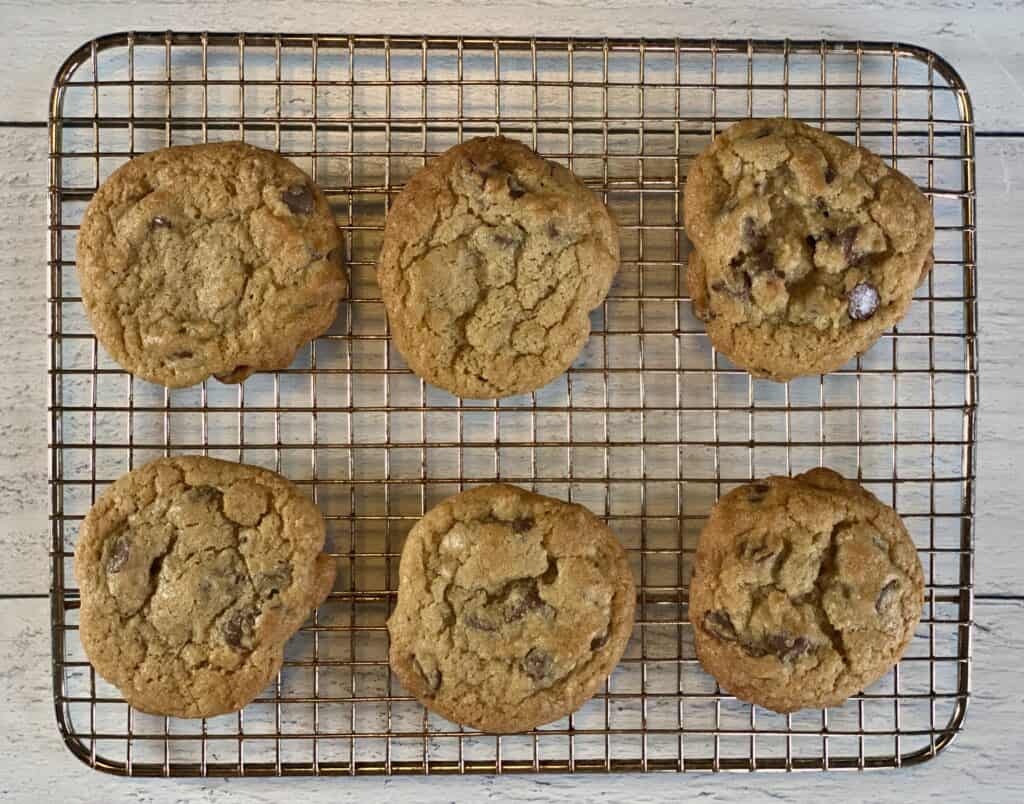
        Again, when I began, I did not own a cooling rack. I quickly found out that this was a must for baking, so I started with ONE of these:

        The way I’m laughing at myself right now is not ladylike. It holds SIX cookies. But this is actually my favorite size for layer cakes, because I’m weird and I like each layer to have its own autonomous cooling zone.

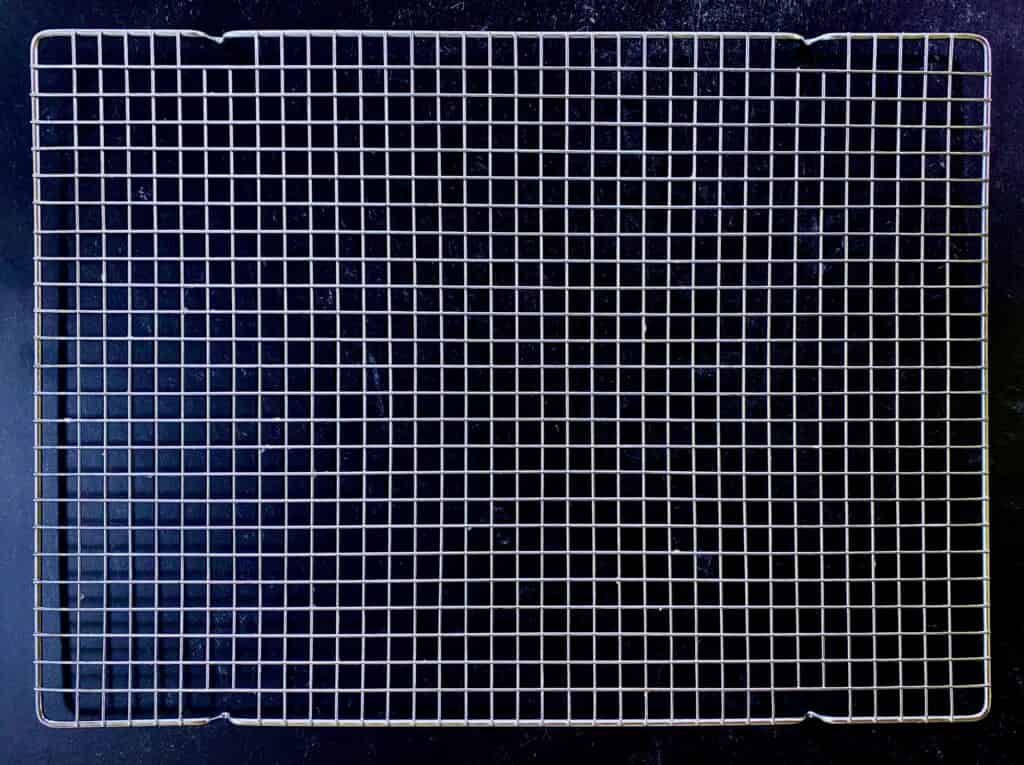
        I bought three more of the six-top cooling racks before I discovered this:

        This was much, much better but it takes up a lot of valuable real estate on my countertop. It holds 24 standard sized-cookies or muffins and is a great fix when you have room for it.

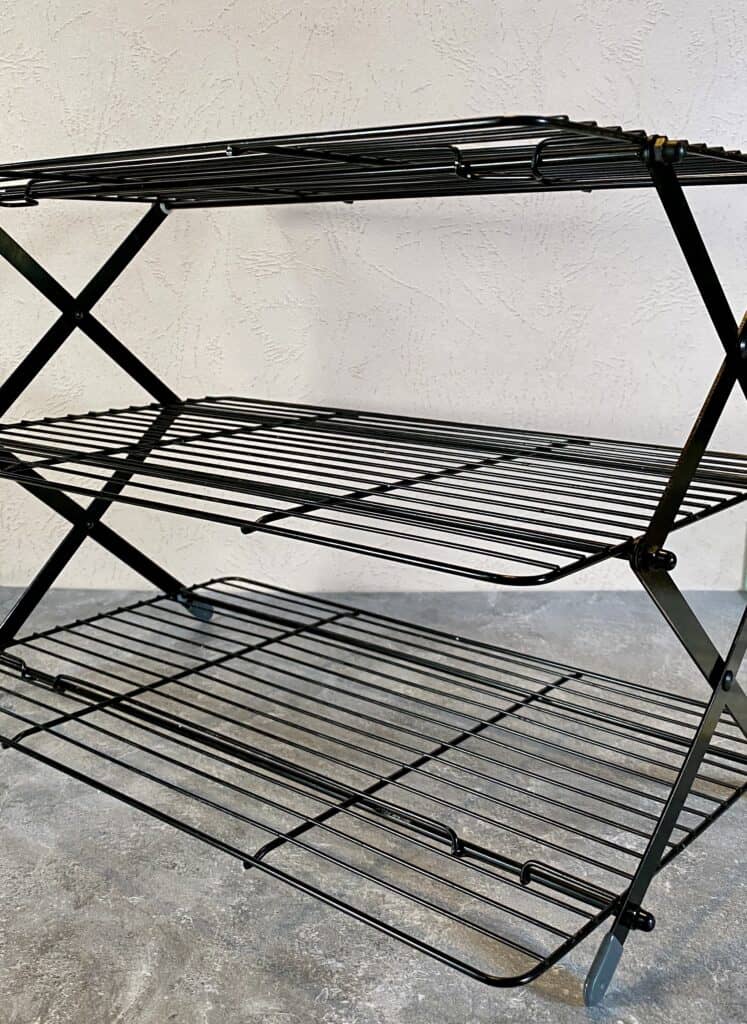
        I was slow-walking around Michaels one day and stumbled upon this multi-level cooling rack:

        Family, please understand that this was an act of pure happenstance.

        A multi-level cooling rack is genius because it holds 45 standard sized cookies and has a small countertop footprint. Instead of spreading out, this one goes up. I’ve used it to cool everything, from cookies, cupcakes, muffins, boules (and other artisan bread loaves), and my famous Perfect Sunday Dinner Rolls. It’s truly a space saver and it helps you get lots of baked goods off of hot pans in a hurry, which is important!

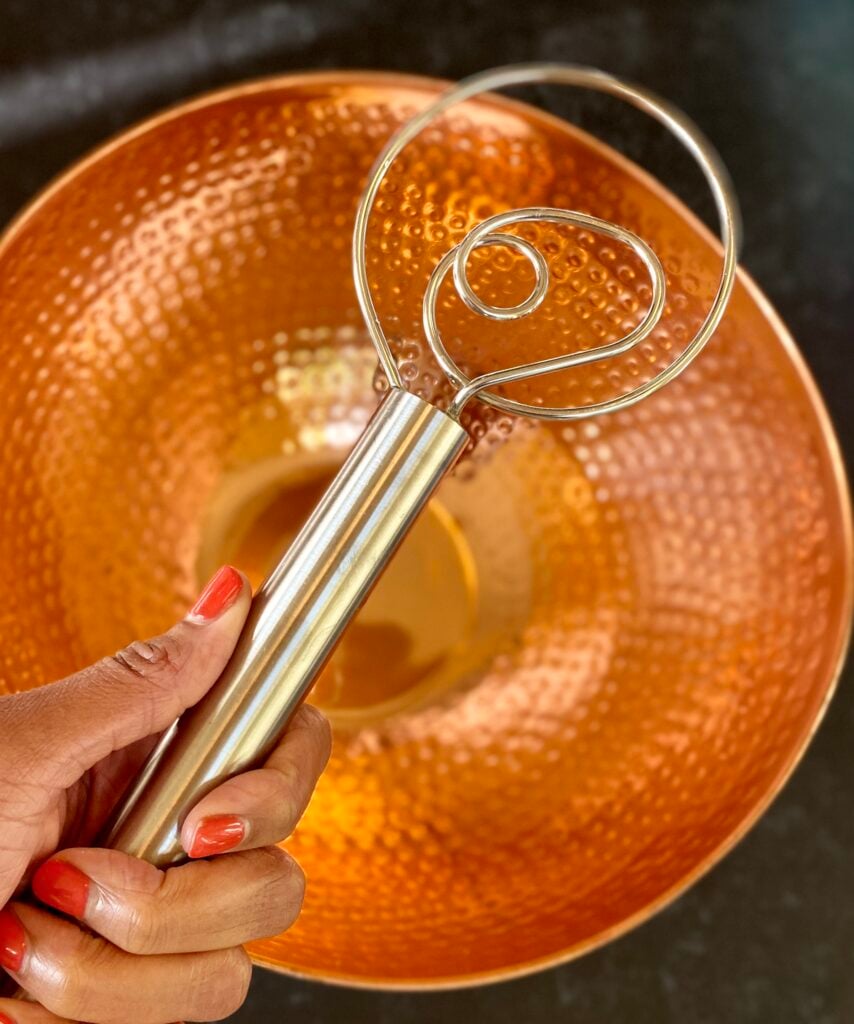
        Danish Dough Whisk

        A Danish dough whisk is the most amazing tool for making any kind of bread dough by hand. Unlike a wooden spoon (which is also a great tool for making bread, by the way), a Danish dough whisk works through tough doughs much more easily, thus making mixing more efficient and less backbreaking.

        For those who enjoy making bread dough by hand, this tool is it. You can work through harder doughs much more easily because there’s not a solid spoon for resistance.

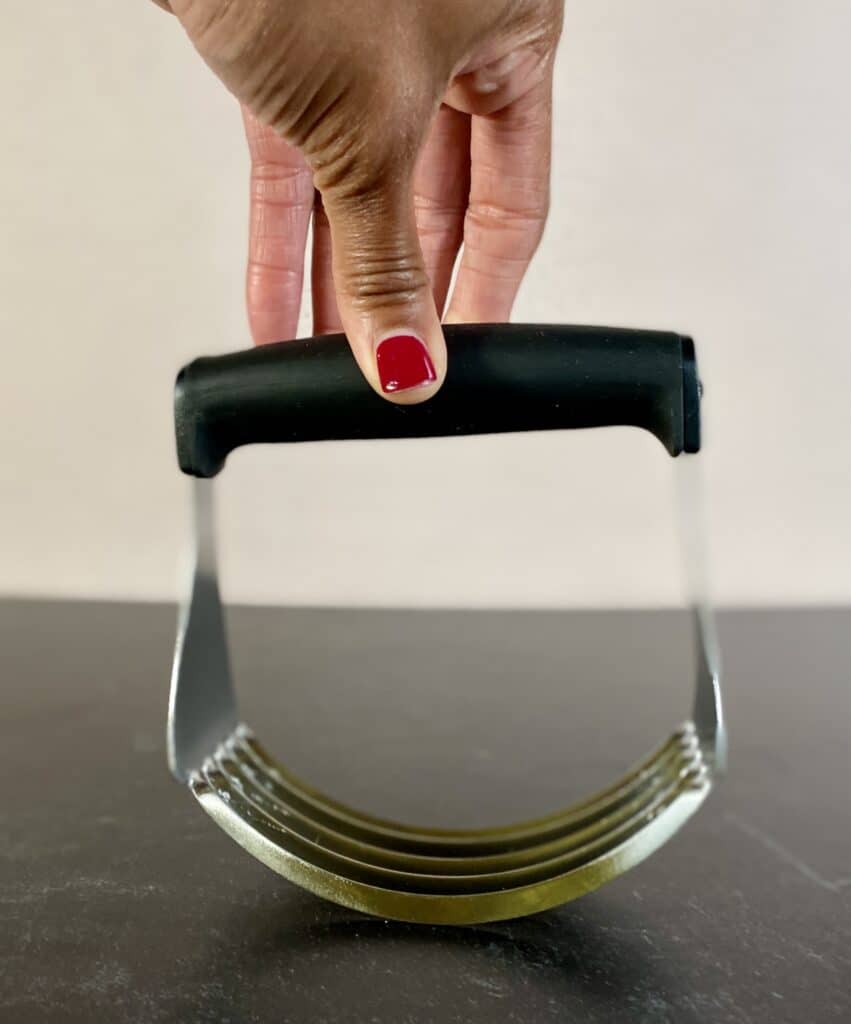
        Pastry Cutter

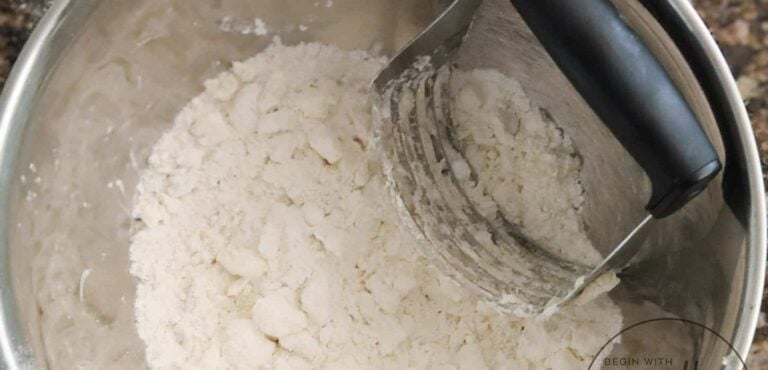
        A pastry cutter is a tool that’s used to help cut solid fat into flour, and is specific to pastry (pie!) making. For pastry, it’s important to have larger chunks of solid fat in your dough. Those large chunks of butter (or shortening, or even lard) release small amounts of steam as they’re baked, which creates tiny pockets of air in your pastry dough. That’s where the flakiness comes from!

        Some people like to use a food processor to make pastry dough, and that’s a great technique too. I am a very hands-on home chef, and I actually prefer to use hand tools to mix things like pastry dough and bread. With practice, using your hands helps you develop a great baker’s touch. Because one of the best kept secrets in baking is knowing when to stop.

        A pastry cutter is a low-tech tool, to be sure, but it’s an amazing gadget and an absolute must for the home baker who wants to make pie without investing in a countertop appliance.

        Air Tight Storage Containers

        ::Cambro storage containers have entered the chat::

        Family. Food waste saddens me more than just about anything. It…it just…stings.

        When you start baking all the time (if you haven’t already), proper storage containers for raw ingredients like flour and sugar will be key. True, once you’re baking 4-5 times a week, you’ll consume flour and sugar and a scarily rapid rate, but that’s probably about the time you’ll realize that you can buy these ingredients from restaurant suppliers.

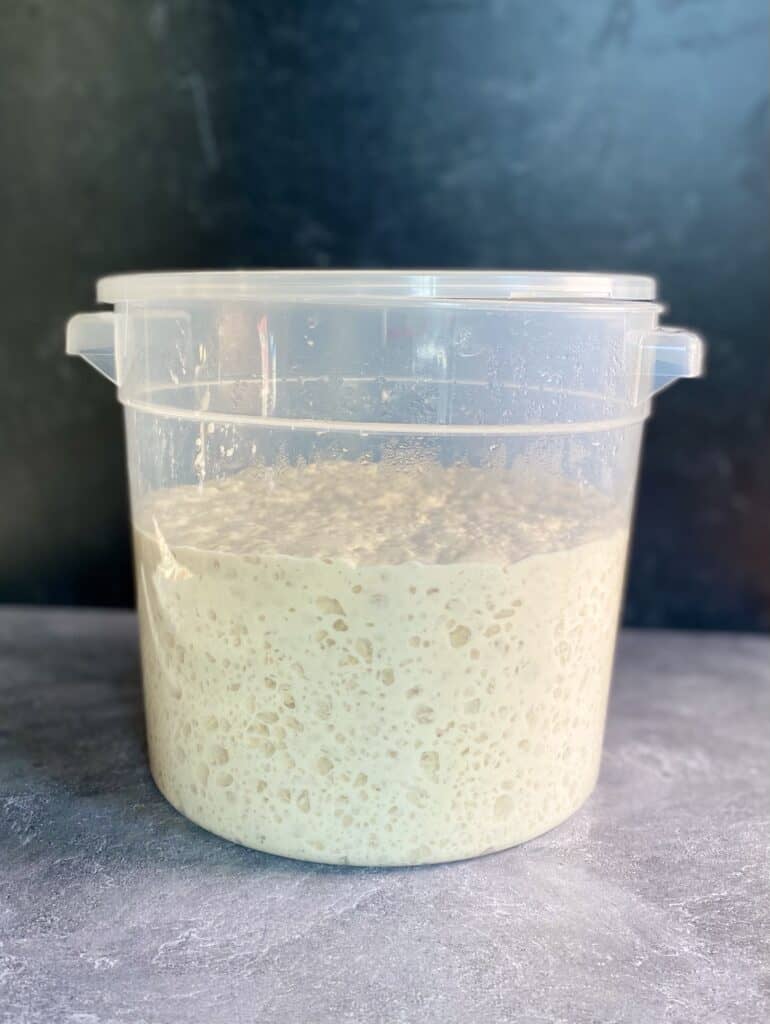
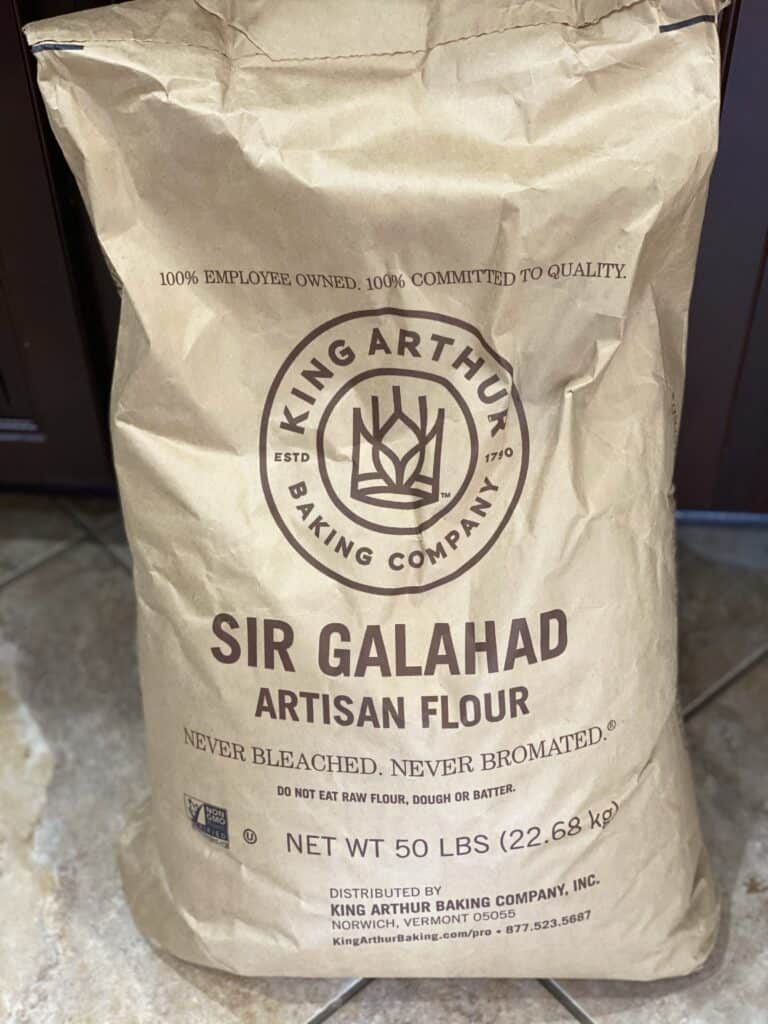
        You’ll want somewhere to store this:

        That’s where my favorite Cambro containers come through like a champion. They seal tightly, come in a range of sizes, and they keep flour and sugar fresh for a long time. Because I have these, I can buy flour and sugar in bulk and have a great place to store it!

        Once you get serious about baking, being able to buy in bulk is so important. Having proper storage for those bulk ingredients will be so helpful for making those bulk dollars stretch.

        Conclusion

        It took a while for these gadgets and tools to become part of my working baking repertoire, but once they did, I noticed big improvements in my baking. They each solved a big problem with a small effort, and collectively led to huge improvements in my overall baking.

        Are you going to try one or more of these fun gadgets? Let me know in the comments below! And while you’re here, go ahead and subscribe!